- Solar advice hub
- Installation
- Is it time to replace your solar panels?
Is it time to replace your solar panels?
If your solar panels are declining, you may want to consider replacing them. Here's how to decide, and how much it costs.


Why you can trust our content
We know that the solar industry is full of misinformation, but we only use reliable sources, including:
- Our experienced solar experts, installers and system designers
- Our own database of solar & battery system designs
- Authoritative bodies like MCS and the UK government



Calculate savings
What kind of home do you live in?


Calculate savings
What kind of home do you live in?
At a glance
When you've invested in a solar panel system, you want it to provide you with as much electricity as possible.
But over time, your panels will degrade, as all technology does, and your solar output will decline as a result.
If your generation has fallen too far, your usage has increased significantly, or you're having major work done on your roof, you should consider replacing your panels.
In this guide, we'll run through the different considerations behind this decision, how much it costs to replace a system, and whether it's worth it.
At Sunsave, we're happy to quote you for the removal of your existing panels and installation of a new system. Enter a few details below and we’ll provide an estimate.
Find out how much you can save
What kind of home do you live in?
How long are solar panels meant to last?
Modern monocrystalline solar panels are expected to last 30-40 years, while older polycrystalline panels – which were popular until the mid-2010s – usually last around 25-30 years.
All of these panels contain no moving parts and are made from resilient, durable materials that provide excellent protection to the cells inside.
They're designed to be 'fit and forget' tech, unlike some other parts of the system, such as the inverter. More on this below.
There's no clear end point, either – a solar panel doesn't just suddenly stop working one day, but instead gradually declines over time. As with all tech, this process begins straight away.
Fortunately, each panel comes with a performance warranty that guarantees it'll still work above a specific level at various points in its lifespan.
For most modern panels, this level is 91% of their original efficiency after 25 years, and around 88% after 30 years.
Performance warranties were much less impressive when it came to old polycrystalline panels, which were generally limited to promises of 80% or 82% after 25 years.
Just over 200,000 UK homes had solar panels installed in 2011 – more than any year since – and the vast majority of these were polycrystalline panels.
All of these panels have now experienced more than 15 years of gradual decline, so if the industry's estimates are correct, they're well into the second half of their useful lifespans.
To learn more, read our guide to how long solar panels last.
Why your inverter will need replacing first
A solar inverter converts the direct current (DC) electricity generated by your solar panels into alternating current (AC) – the type of electricity used by most homes, plus the grid.
It's the brains of the system too, making an unending stream of decisions that keep your solar equipment operating as effectively as possible.
Like any other machine, your inverter has a limited lifespan – but it's significantly shorter than that of your panels. 34% of inverters fail by the end of year 15, according to a Bern University of Applied Sciences study.
This is because unlike panels, inverters contain active parts that consistently undergo electrical strain. They also regularly heat up, which over time leads to increased wear and tear.
An inverter's effective lifespan can also fall if you don't keep it maintained, such as by regularly examining it, wiping it down every six months, checking your solar app to see if it's working properly, and hiring a technician to inspect it every so often.
When you do ultimately need to replace it, you'll pay around £1,400 for a string inverter. If your inverter breaks down before your panels do, it's worth replacing it, since your panels can't function without one.
If you got your system in the early 2010s, you may well have already replaced your inverter.
The larger question is when you should take the leap and replace your entire system, rather than just your inverter – which we've answered just below.
Signs it might be time to replace your solar panels
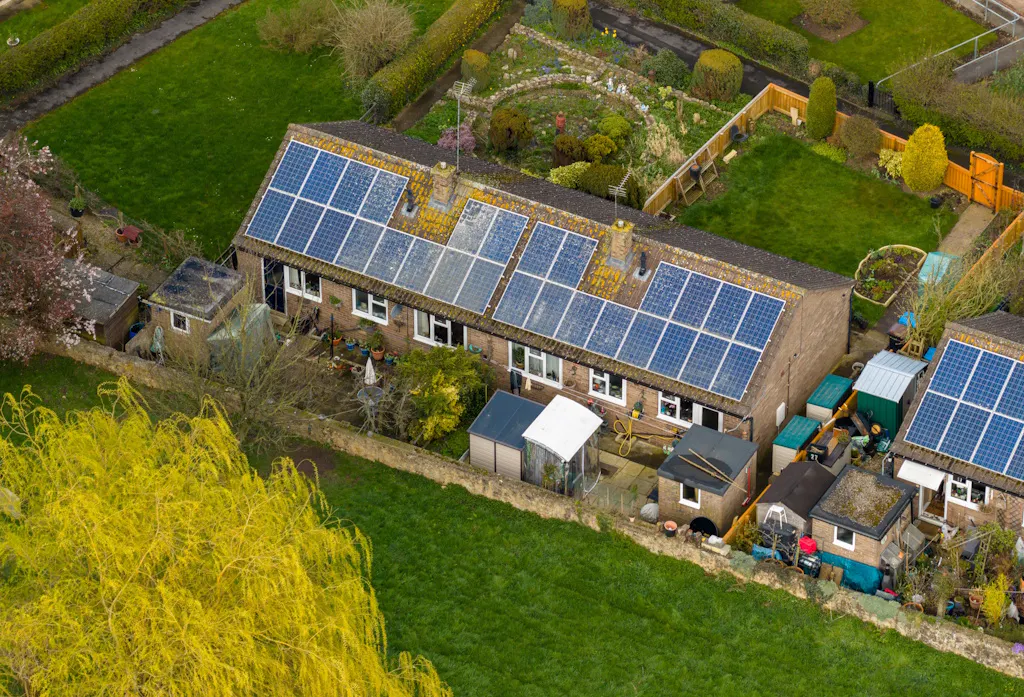
If you want your solar panels to save you a significant amount of money on your energy bills, an old system may no longer be making enough of a difference.
15-year-old solar panels can still provide plenty of electricity, especially if they're top-tier products that have been well installed and properly maintained.
But if you want to maximise your savings with solar, and you're not satisfied with your current output, you could get a fresh system.
Before you do though, it's worth taking into account any Feed-in Tariff payments you receive. Learn more further down.
There are three key scenarios in which a new system could make sense:
- Your current system isn’t producing much
- You’re having major roof work done
- Your electricity usage has significantly increased
Here's some more detail about each of them.
1. Your current system isn't producing much
Reduced output is the main reason why you'd want to replace your solar panels, since their only purpose is to generate a significant amount of electricity.
If your system's output is small, your savings will be too.
If you're not sure whether your system's output has dropped, look at your solar app and compare your first year of generation with what you're seeing now.
You could also potentially compare old electricity bills, while also taking into account your supplier's price rises – or if this sounds too complicated, you could ask an accredited solar installer to quote you for a new system.
You could then compare your current system with the estimated output of the new system, which should come with sleek, black panels that operate at 20-25% efficiency, and have peak power ratings of 450-500 watts (W).
There's every chance the difference will be enormous, considering that a typical solar installation in 2011 would've featured 10 panels, each rated at around 250W for a total of 2.5 kilowatts-peak (kWp).
In contrast, it'd be completely standard for a 10-panel system installed now to hit 5kWp, because efficiency levels have increased so significantly across the industry – meaning you'll get double the output.
Before you take the leap though, check if your reduced generation levels are down to inverter issues – which can be solved by hiring an electrician or replacing the inverter – or your solar panels needing a clean.
At Sunsave, we're happy to quote you for the removal of your existing panels and installation of a new system.
You can also go solar with no upfront cost, and with a maintenance guarantee for the length of your contract. Enter a few details below and we’ll provide an estimate.
Find out how much you can save
What kind of home do you live in?
2. You’re having major roof work done
If your roof needs significant repairs, or if you're getting a loft extension, you'll probably need to arrange for your panels to be removed.
Since you'll already be paying for the two most expensive parts of solar panel replacement – their removal and the scaffolding required to make this possible – you may want to take advantage and get new panels while you still have scaffolding up.
If your old system has declined substantially, it may be worth upgrading to a more powerful array that should last much longer – and will almost certainly better suit your new roof.
3. Your electricity usage has significantly increased
If you've added multiple energy-intensive appliances to your home since you got your panels, this may have massively raised your usage levels.
Millions of households have purchased electric cars, heat pumps, or air con in the past decade, as part of a growing trend. The Climate Change Committee has estimated that by 2050, annual electricity demand could be more than double what it was in 2023.
If you're part of this trend, your solar savings will have shrunk as a result.
For example, if you were using 2,500 kilowatt-hours (kWh) per year in 2011 while your solar panels generated 2,500kWh per year, you would've significantly lowered your bills – though not by 100%, as solar output varies across the year.
If you've bought any energy-intensive products in the meantime – or if more people now live in your home – you could be using 3,500kWh per year or more, while your annual solar generation could have realistically dropped to 2,200kWh.
You may want to address this increasingly wide gap between output and usage with a new installation, especially as a solar & battery system can now cut a UK home's electricity bills by 94%, on average.
This is based on projected first-year savings from a sample of over 600 systems installed by Sunsave across the UK in 2025. The average system is 5kWp, with 44% of solar electricity used at home and 56% exported to the grid.
If your system's savings have fallen well below this mark, it may be worth considering an upgrade.
How much does it cost to replace solar panels?
There are two stages to solar panel replacements.
The first is removing your existing panels, then the second is getting new panels installed, probably alongside a new home battery.
There are many benefits to getting a battery: you can use more of the solar electricity your panels produce, gain access to the best export tariffs and time-of-use import tariffs, and join a virtual power plant.
That's probably why around 94% of new solar panel installations in the UK include a battery, according to data from Flexi-Orb and EPVS.
Here's more information on these two stages.
1. Removal of existing panels
You should be able to get quotes for your panels' removal from multiple local solar installers.
The job will probably cost about £2,000, though that depends on factors including the complexity of the scaffolding, how long the process takes, and where you live.
You could arrange for scaffolding to be set up separately by a local firm, which may work out cheaper, though it's usually also more of a hassle.
And if anything at all goes wrong – from a small leak to structural damage to your home – the scaffolders and solar installers could blame each other and refuse to fix it.
In this case, it'd be your responsibility to come up with an effective solution.
2. Installation of new panels
You should get a few quotes from different firms, but a typical solar & battery system in the UK costs about £12,000, based on government data from May 2026.
This is based on a 4.9kWp solar panel system, which was the average size of a domestic solar installation in 2025, according to MCS.
It costs roughly £8,000, including installation. If you add a 10kWh battery, which is about right for a home with typical electricity usage, that'll set you back approximately £4,000.
To learn more, read our guide to solar panel costs.
What about your Feed-in Tariff payments?
The Feed-in Tariff (FiT) is a government scheme that compels energy suppliers to pay homes and businesses for generating and exporting renewable electricity.
From when it was launched in April 2010 to when it closed to new customers in March 2019, more than 850,000 solar homes joined the initiative.
Contracts either lasted 25 years if you signed up from April 2010 to August 2012, or 20 years otherwise – meaning they'll only start ending in 2032, while some will stretch to 2039.
So even though the scheme has long been replaced by the Smart Export Guarantee (SEG), hundreds of thousands of households with systems installed in the 2010s are still receiving FiT payments.
If that includes you, and you replace your solar panel system, your FiT payments will unfortunately end.
Thanks to the SEG, you can still get paid for all the electricity you send to the grid via an export tariff – and these returns are generally a lot better than FiT export payments. To learn more, read our guide to switching from the FiT to an SEG tariff.
However, you'll lose your generation income, as an SEG tariff won't pay you for producing electricity.
Before making any decision, consider how much longer your FiT contract will run for, how much more money you'd likely make from it, and how that compares to your estimated savings with a new system.
If your contract only has a few years left, it may be worth opting for an early upgrade, especially before the 0% VAT rate on solar panels ends in March 2027.
Is it worth replacing your solar panels?
Like all technology, solar panels decline over time, and those installed 10 or 15 years ago tend to do so quicker than modern panels.
If your panels are no longer producing enough electricity – either because they've declined in efficiency, or because your usage has increased – a new array could boost your savings.
You may also want to replace your panels if you're already having work done to your roof that requires you to get the old ones removed.
If you have an FiT contract though, make sure you consider the implications before moving forward.
At Sunsave, we're happy to quote you for the removal of your existing panels and installation of a new system. Enter a few details below and we’ll provide an estimate.
Find out how much you can save
What kind of home do you live in?
FAQs






Related articles

 Charlie Clissitt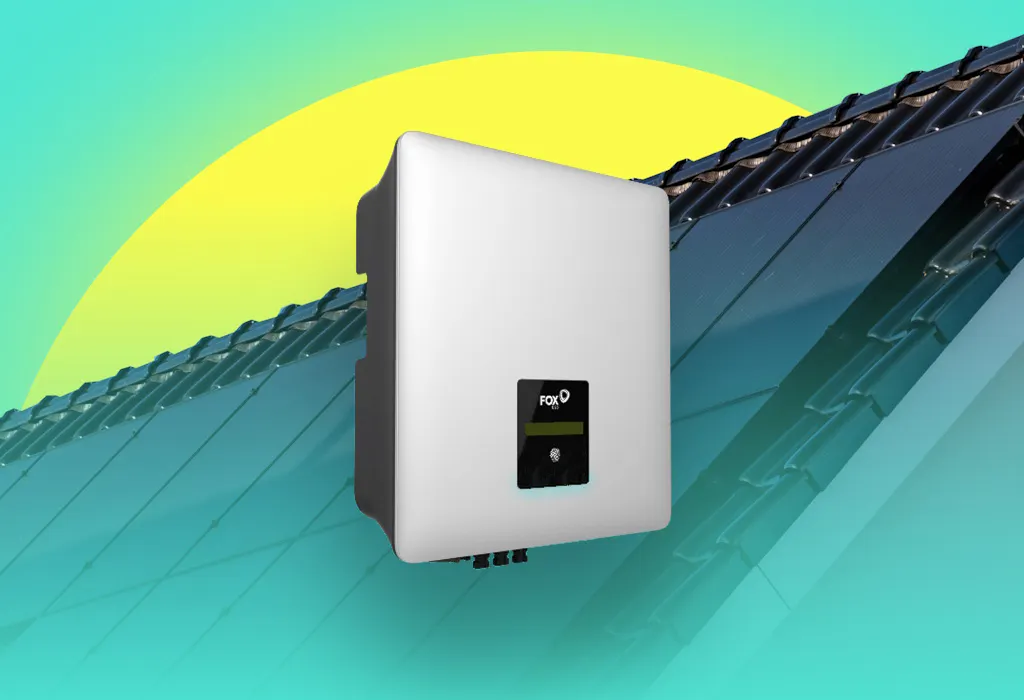
 Josh Jackman
 Josh Jackman
 Josh Jackman
Written byJosh Jackman
Josh has written about the rapid rise of home solar for the past seven years. His data-driven work has been featured in United Nations and World Health Organisation documents, as well as publications including The Eco Experts, Financial Times, The Independent, The Telegraph, The Times, and The Sun. Josh has also been interviewed as a renewables expert on BBC One’s Rip-Off Britain, ITV1’s Tonight show, and BBC Radio 4 and 5.