- Solar advice hub
- Maintenance
- Do solar panels need cleaning?
Do solar panels need cleaning?
Solar panels usually need a clean every two or three years in the UK. Here's what to look out for, and how you can clean them.


Why you can trust our content
We know that the solar industry is full of misinformation, but we only use reliable sources, including:
- Our experienced solar experts, installers and system designers
- Our own database of solar & battery system designs
- Authoritative bodies like MCS and the UK government



Calculate savings
What kind of home do you live in?


Calculate savings
What kind of home do you live in?
Solar panel cleaning: at a glance
To be at their best, solar panels need to be unobstructed by grime, and most of the time, rain can effectively wash your solar panels – but it's not a perfect solution.
You'll usually need to clean your panels every two or three years, to wipe away all the dust, dirt, and debris that naturally builds up. You can do it yourself or hire a professional.
In this guide, we'll explain how your panels get dirty, what kind of impact it has on your output, and how to go about cleaning them.
If you’re wondering how much you could save with a solar & battery system, enter a few details below and we’ll provide an estimate.
Find out how much you can save
What kind of home do you live in?
Do you need to clean solar panels in the UK?
You do occasionally need to clean your solar panels in the UK, to keep them functioning properly.
Every 12 months or so, you should visually inspect your panels for any significant buildup of dirt, debris, or bird poo.
Stay on the ground for this, as climbing on your roof can be dangerous. You can zoom in with a phone camera or binoculars to get a closer look.
If you can see a substantial amount of grime on your panels, you should clean them. You can hire a professional for this, or do it yourself. Either way, it's a relatively simple process, which we run through further down.
Most of the time, your system won't be dirty enough for you to take any action. It's usually only necessary to clean a set of panels every two or three years in the UK.
It's definitely worth it, though. Anything that blocks light from getting to your panels reduces the amount of electricity they can generate, which cuts your savings. Dirt can also cause hotspots, which may permanently damage your system.
Let enough grime build up, and you might as well have a tree right next to your roof – so it's important to stay on top of this.
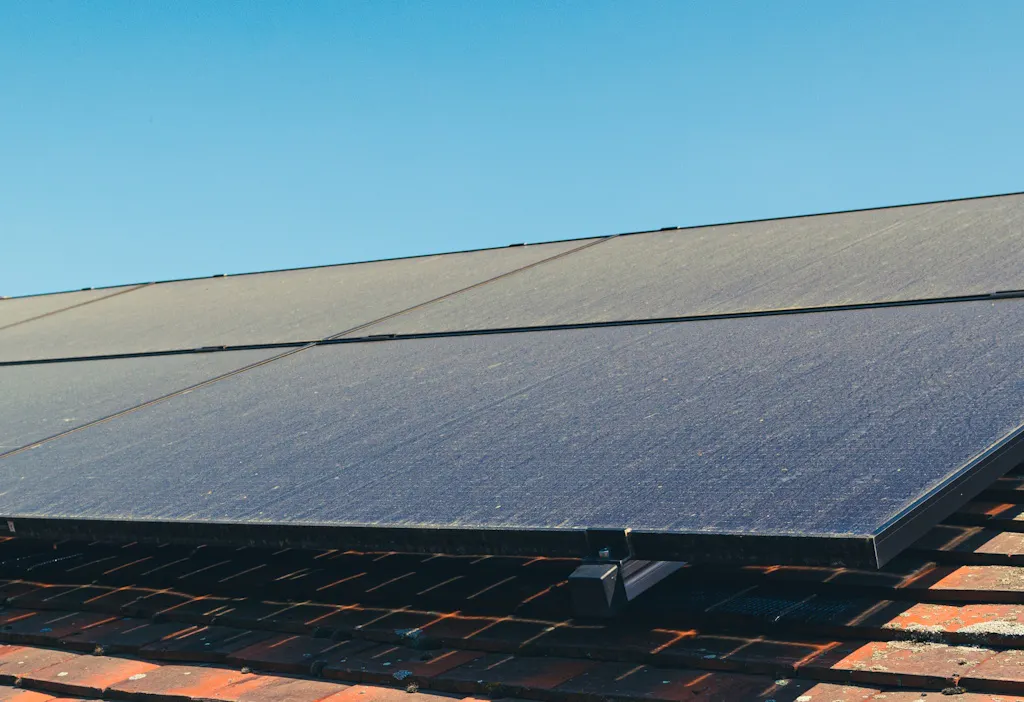
What substances can build up on solar panels?
There's a range of substances that can develop on your solar panels over time.
The most likely sources of dirt will depend largely on where you live and what's around you.
If your home is near a lot of trees, then pollen, tree sap, and leaves can stick to your system.
This is naturally more of an issue in spring and summer, when more pollen and leaves are floating around, but your system could also be affected by trees shedding their leaves in autumn.
If you live by a main road, you may see a layer of traffic film build up on your panels. This is a greasy combination of petrol residue, exhaust emissions, tyre particles, and road salt.
If you're near a mine, construction site, or farmland, you may get more than your fair share of dust and dirt gathering on your system.
And wherever you are, pigeon poo can build up on your system if one or two of them make a home under your array. You can prevent this from happening by pigeon proofing your solar panels from day one.
You can count on the UK's rainy weather to give your system a regular rinse, but this doesn't solve the problem entirely – especially because in summer, the heat will stick substances to your system more tightly, and there's minimal rain to wash them away.
The particular problem of lichen
Lichen can also occasionally develop on solar panels, and it can be a lot more stubborn than most other substances.
This hybrid organism, made up of fungi, algae, and bacteria, usually forms in the rain that gets caught in the frame at the bottom of a panel.
Algae develops first, since it just needs moisture and sunlight to grow, then fungi grows on it and potentially blooms across the surface, resulting in lichen becoming trapped in the tiny imperfections that every panel has on its surface.
The lichen will continue to spread, and do so faster if it's exposed to nitrogen and ammonia, which is in bird droppings, aphid excretions, and farmland emissions like cattle flatulence.
Once it's started developing, lichen can thrive in the UK's climate, with its high humidity and long stretches of wet weather.
It's most commonly found in coastal and rural areas, where strong winds can frequently whip salt, organic debris, and pollutants onto your roof – all of which can speed up lichen growth.
If you have a north-facing or low-angled array – or if some of your panels are shaded – your system could be especially vulnerable, as lichen enjoys cool temperatures.
Thankfully, a top-tier installer should use a smart system design to ensure your panels don't end up being shaded, or otherwise a target for lichen.
If lichen does grow on your system, your panels will require chemical cleaning. In this case, you should hire a professional cleaner who won't affect your solar panels' warranty.
How much does dirt affect solar panel output?
The effect dirt has on your solar panel output depends on how much and what kind of substances have taken up residence on your system.
There's also a lack of academic research into the impact of solar panel ‘soiling’ (that is, a buildup of dust and dirt) in the UK, though there have been many studies in other countries.
A 2025 analysis of around 20 studies conducted in nations including China, Italy, Mexico, Nigeria, and Turkey found that "dust buildup reduces PV efficiency by up to 64%".
The researchers explained that "dust blocks light, raises cell temperatures, and causes resistive losses, reducing output power".
But this can be counteracted by cleaning the panels, which reportedly restores "up to 95% efficiency."
These findings should be taken with a pinch of salt, since most of the locations involved are likely drier and dustier than the UK, but it's still a solid indication that cleaning is a crucial part of solar panel maintenance.
In 2023, a study by researchers in Tamil Nadu, in India, analysed the effect of seven types of soil, coal dust, and bird droppings on solar output.
They said: “Bird droppings were shown to have the greatest influence on PV panel efficiency because of their tendency to stick to the panel surface".
The least impactful substance was coal dust, which they said "is quickly blown away and does not stick to the surface.”
Does rainwater clean solar panels?
Solar panels are made with a hydrophobic coating, so they're waterproof from the get-go.
This means when it rains, water rolls off the panels, which are installed at an angle. On the way down, the raindrops take dust, dirt, and other detritus with them.
Your system will still produce electricity (as solar panels don’t need direct sunlight), while the downpour gives your panels a wash.
And the UK gets more rain than most – 1,220mm per year to be specific, making us the fifth-rainiest country in Europe.
Rainwater can rarely do it all on its own though. Some types of dirt are harder to get rid of than others, and if you leave it too long, the buildup on your panels can reach damaging levels.
The occasional solar panel clean is therefore still crucial, no matter how rainy your area is.
Verified expertIf you don’t want to clean your solar panels yourself, it’s not very expensive to ask a local window cleaner to do it. This keeps your system functioning at its best, and deals with the thin layer of moss and dirt that usually builds on solar panels in the UK.
Andrei Stavila
Technical Manager at Sunsave
Andrei has worked in residential solar installation for more than 17 years, and is a fully qualified electrical engineer.

How do you clean solar solar panels?
You can usually clean panels with just a brush and soapy water.
This approach is scientifically proven, with the 2025 analysis's authors saying: “Water washing or manual wiping is a straightforward and inexpensive method for cleaning PV panels and effectively rinsing dust from their surface.”
They added that "the use of brushes and rags is an effective approach".
If you decide to clean a solar array yourself, it’s important to follow your manufacturer's instructions, or you might void your panels' warranty.
DIY cleaning can be rewarding and cost-effective, but hiring professional services is also a viable alternative (more on this below).
If you’re set on taking the DIY route, here are the essential steps you should take. These instructions align with most warranties, but you should still check your solar panel manufacturer's guidelines before going ahead.
- Get a telescopic cleaning pole
- Use gentle cleaning products
- Wait for a cool, dry day
- Shut down your system
- Clean your panels
1. Get a telescopic cleaning pole
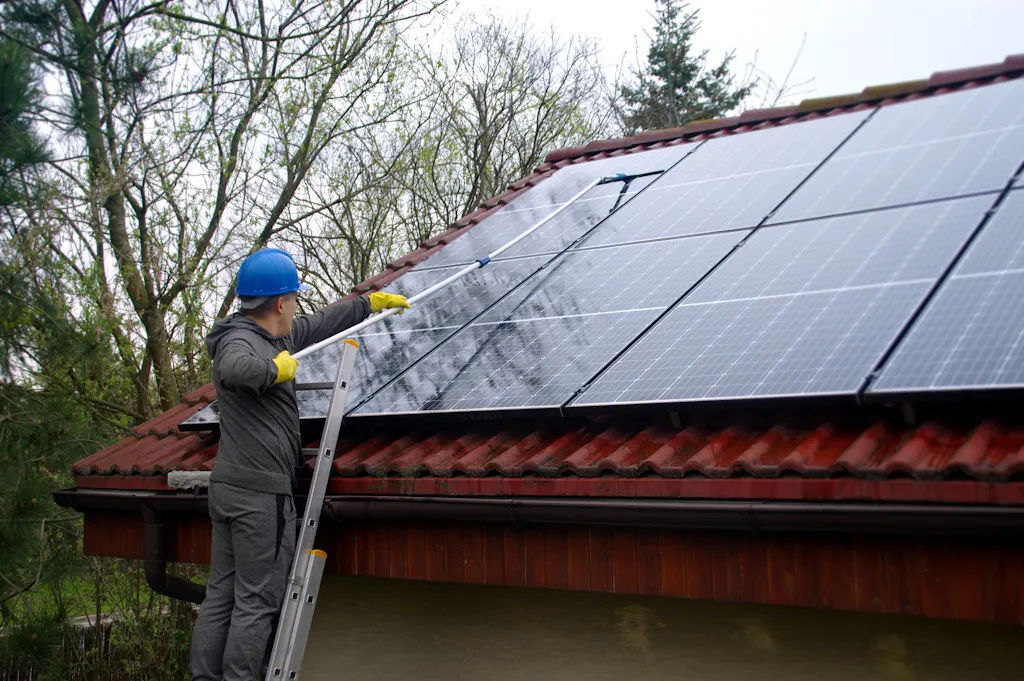
A telescopic cleaning pole is a long, extendable pole designed for washing hard-to-reach areas, making it perfect for solar panels. You can clean your system without endangering your safety by going up on the roof.
You can buy one from online retailers like Amazon or DIY shops. Prices typically range from £70 to £150, depending on the quality and features.
Get a water-fed pole that allows you to apply water and cleaning fluid directly to your panels, and make sure the brush at the end of the pole is soft.
Look for models with an integrated dispenser for soap or cleaning fluid, as this will make the cleaning process more efficient.
This should be in line with your solar panel manufacturer's guidance.
For example, Trina Solar says: “Use a dry or wet, soft and clean cloth, sponge, or soft bristled brush to wipe the photovoltaic module. Please make sure that the cleaning tools do not wear out glass, EPDM, silicon, aluminum alloys, or steel."
2. Use gentle cleaning products
When it comes to cleaning fluids, it's essential to use gentle products to avoid damaging the surface of your panels. Opt for mild soap or glass-cleaning fluid specifically designed for sensitive surfaces.
Conventional household glass cleaners can effectively remove any dirt, however make sure you avoid using alkaline or strong acidic solvents (such as hydrofluoric acid, alkali, or acetone), as these can harm your panels.
Always check the product labels to make sure they’re safe for use on solar panels, but most products in your home should be.
Trina Solar says: "If there is greasy dirt or other substances which are difficult to clean, conventional household glass cleaning agents can be used."
3. Wait for a cool, dry day
It's best to clean solar panels on a cool day or, if it has to be on a hot day, first thing in the morning or in the evening.
Cleaning the panels when they’re hot can increase thermal stress on the photovoltaic (PV) modules and potentially cause damage.
By avoiding the high midday heat, you reduce the risk of cracking and other thermal-induced issues, ensuring your panels remain in optimal condition.
Plus, cooler temperatures will also make the cleaning process more comfortable for you.
You should also avoid other extreme weather conditions, such as strong winds, pouring rain, or heavy snow.
4. Shut down your system
Make sure you turn off your system before cleaning your solar panels to keep you safe from potential electrocution and to avoid any electrical damage.
You can find the specific shutdown procedures in your solar panel system’s manual. But for most systems, you'll first need to go to your main switchboard and find the relevant isolator switch to cut off the power from your PV panels.
Next, you'll need to switch off the power from the inverter (and solar battery, if you have one) to your home or the grid.
It's vital that you make sure the solar array has been disconnected from all live components before you start cleaning.
5. Clean your panels
Once you have all the above in place, the actual cleaning process is straightforward.
From ground level, use your telescopic cleaning pole to wash, rinse and wipe the panels. Make safety your top priority and don't climb onto the roof without the right equipment and training.
If you live in an area with hard water, you'll need to make sure you thoroughly dry your panels with a squeegee or sponge. If not removed properly, hard water can leave mineral deposits and marks on the panels, and this will affect their output.
Trina Solar and other manufacturers do recommend using soft water, but that can be difficult to achieve if you live in a hard water area.
Once your system has fully dried, you can turn it on again and get back to generating your own electricity.
Hiring professionals to clean your solar panels
If you'd prefer not to go through the hassle of cleaning your solar panels yourself, hiring someone else is a convenient option.
Professional solar panel cleaning services in the UK are readily available and typically charge around £10 per panel.
These experts have the tools and experience to clean your panels efficiently and safely, saving you time and effort.
Summary
To ensure your solar panels keep producing as much electricity as possible, you should check them every 12 months.
Due to the UK's rainy weather, your panels will usually look pristine – but if they're dirty, you can clean them yourself using our simple series of steps. If you'd rather not, a professional can take care of it for a reasonable price.
This outlay is even more justifiable considering it'll probably only be necessary every two or three years, and should significantly increase your output.
And if you’re wondering how much you could save with a solar & battery system, enter a few details below and we’ll provide an estimate.
Find out how much you can save
What kind of home do you live in?
Solar panel cleaning: FAQs
Related articles
 Josh Jackman
 Josh Jackman
 Charlie Clissitt
 Melody Abeni
Written byJosh Jackman
Josh has written about the rapid rise of home solar for the past seven years. His data-driven work has been featured in United Nations and World Health Organisation documents, as well as publications including The Eco Experts, Financial Times, The Independent, The Telegraph, The Times, and The Sun. Josh has also been interviewed as a renewables expert on BBC One’s Rip-Off Britain, ITV1’s Tonight show, and BBC Radio 4 and 5.