- Solar advice hub
- Batteries
- How much does a solar battery cost in the UK?
How much does a solar battery cost in the UK?
Here's how much solar batteries cost, what affects the price, and whether they're worth the investment.


Why you can trust our content
We know that the solar industry is full of misinformation, but we only use reliable sources, including:
- Our experienced solar experts, installers and system designers
- Our own database of solar & battery system designs
- Authoritative bodies like MCS and the UK government



Calculate savings
What kind of home do you live in?


Calculate savings
What kind of home do you live in?
Solar battery costs: at a glance
A solar battery is one of the best ways to get the most out of your solar panel system – but before you commit, you’ll want to see how much it costs and saves you.
After all, you only want to buy an extra piece of solar gear for your home if it can help you cut your electricity bills even further.
Thankfully, it can – which is why around 94% of UK solar panel installations between June 2024 and May 2025 included a battery, according to data from Flexi-Orb and EPVS. It's now a crucial part of any solar setup.
In this guide, we’ll explain how much different sizes of solar battery cost, which factors affect the price, and whether a solar battery is worth the investment.
If you’re wondering how much a solar & battery system could save you, just answer a few quick questions below and we'll provide an estimate.
Find out how much you can save
What kind of home do you live in?
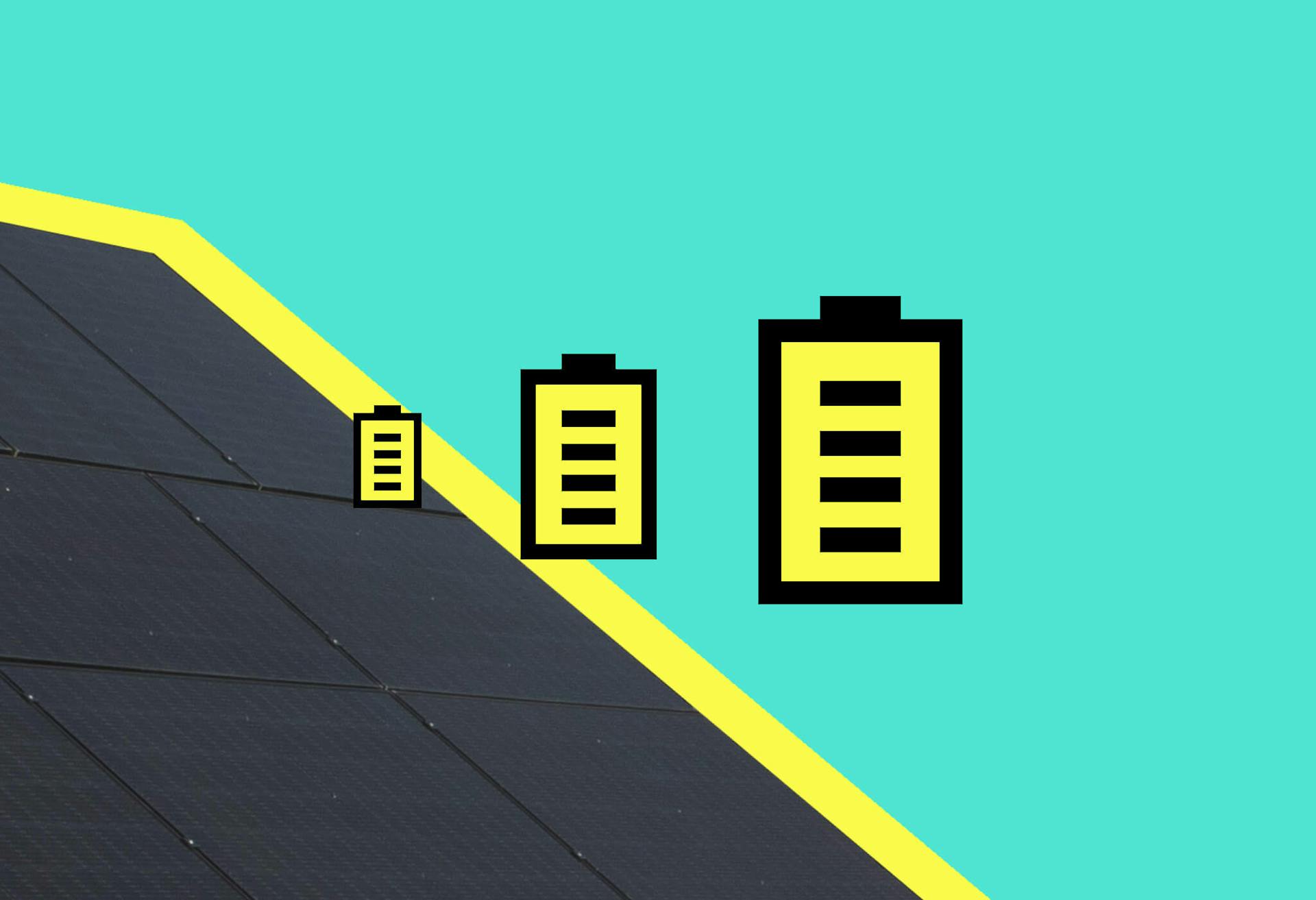
What’s the average cost of a solar battery?
Annual electricity usage (kWh) | Battery size (kWh) | Rough cost |
|---|---|---|
~1,800 | 5 | £3,000-4,000 |
~3,400 | 10 | £4,000-6,000 |
~5,500 | 15 | £5,000-7,000 |
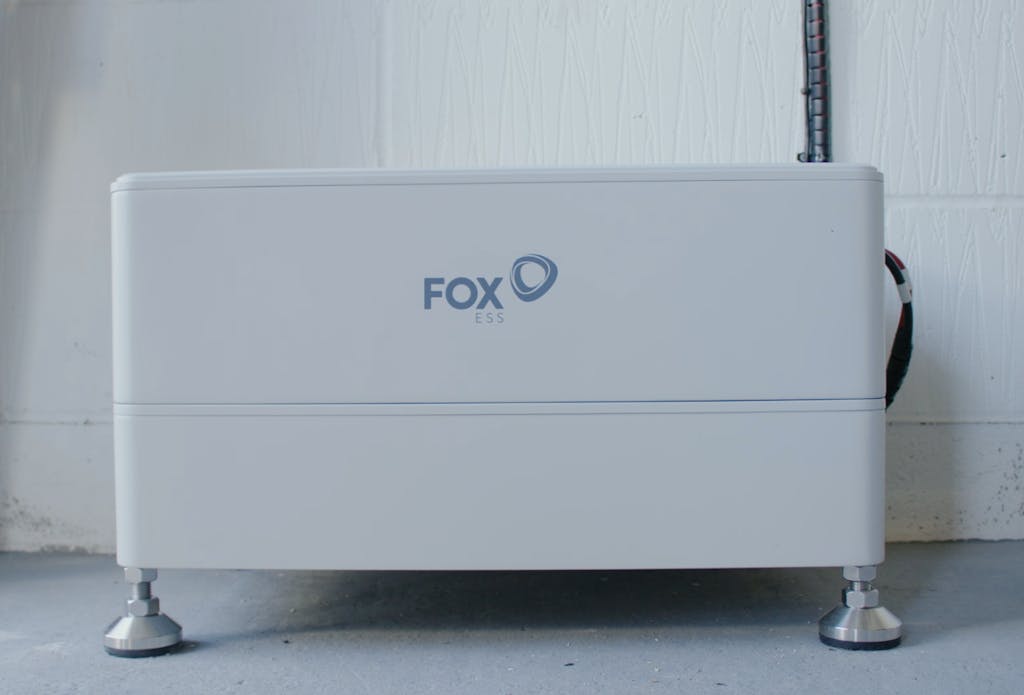
The rough cost of a 10kWh solar battery is £4,000-£6,000.
It generally makes sense to get a battery that matches your daily usage, and the average UK household consumes 3,400kWh of electricity per year – or 9.3kWh per day. A 10kWh battery is therefore usually suitable.
We've used the same approach for the 5kWh and 15kWh batteries. An annual total of 1,800kWh works out to 4.9kWh per day, while 5,500 per year equates to 15.1kWh per day, on average.
Do you have to pay VAT on solar batteries?
You don’t have to pay any VAT on solar batteries.
In February 2024, the government added standalone solar batteries to its list of energy-saving materials that qualify for a 0% VAT rate until the end of March 2027.
After that point, the government plans to raise this rate to 5% for all solar installations.
Previously, most households had to pay 20% VAT to purchase a solar battery on its own, though some homes with elderly residents or benefit recipients qualified for a 5% rate.
As well as solar panels and batteries, you also don’t have to pay VAT on renewable systems including air and ground source heat pumps, water turbines, micro combined heat and power units, and wind turbines.
Are there any grants available for solar batteries?
Grant | Who’s eligible? | When does it end? |
|---|---|---|
Warm Homes: Local Grant | Energy-inefficient households that are deprived, low-income, or receive a means-tested benefit | 31 March 2028 |
Warm Homes: Social Housing Fund | Any local authorities, providers, and charities that own social housing | 30 September 2028 |
Welsh Government Warm Homes Programme | Energy-inefficient households in Wales which receive a means-tested benefit or are low-income | April 2031 |
VAT discount | All households, no specific conditions | 31 March 2027 |
ECO4 | Electrically heated households in Britain with a low income, a resident who gets a qualifying benefit, or low energy efficiency | 31 December 2026 |
There are multiple grants and schemes that can help you get money off your solar battery – though since they're targeted at the most deprived and energy-inefficient households, they exclude most people.
Here are the main ways to get a solar battery grant:
Unfortunately, the Home Energy Scotland Grant and Loan scheme's solar provision ended in June 2024. The Scottish government initiative previously offered a £1,250 grant and £4,750 interest-free loan for solar batteries.
If you want to avoid the high upfront cost of solar panels, it’s worth finding out whether Sunsave Plus will work for you. To sign up for the UK's first solar subscription, click below, enter a few details, and we'll be in touch.
Find out how much you can save
What kind of home do you live in?
Solar battery grant: eligibility calculator
We've built a calculator that tells you if you’re likely to qualify for a solar panel grant, and which one would probably suit you best.
And if we think you may be eligible for the Warm Homes: Local Grant, Warm Homes: Social Housing Fund, Warm Homes Programme, or ECO4, this means you might be able to get a battery. If you get any other result, it’ll just be a grant for solar panels (without a battery).
And whatever outcome you get, you can still access the 0% VAT rate until March 2027.
What factors affect the cost of a solar battery?
There are four key factors that affect the cost of a solar battery.
You’ll usually pay a higher price for a more technologically advanced battery, and a bigger battery also costs more than a smaller model.
If you choose certain manufacturers or installers over others, you can also save money – or potentially pay more for a better result.
The key factors are:
- Battery size
- Battery quality
- The battery’s manufacturer and installer
- Whether you’ve got backup power
1. Battery size
The bigger the battery, the higher its price, as a rule.
For instance, you’ll almost always pay more to buy a 10kWh battery than a 5kWh version.
It’s therefore worth taking the time to assess your solar generation and electricity consumption, to make sure your battery fits your needs.
If you want to learn more, read our guide: what size solar battery do you need?
2. Battery quality
As with most products, the quality of your solar battery will go a long way to determining its price.
Make sure you check your battery’s depth of discharge (DoD), as this will tell you how much of its kWh size you’re able to use without degrading the battery in the long run. This may also be referred to as its ‘usable capacity’.
A battery with 100% DoD, meaning you’re able to use its entire capacity, will usually be worth more than a model with 80% DoD, all other things being equal.
The battery’s rate of discharge also affects its price. If it’s high, you’ll be able to use smart battery controls and the best export tariffs more effectively, which should help you to save more on your electricity bills, but will likely cost more upfront.
Consider a battery’s efficiency rate as well, as this shows how much electricity is retained during the transfer from your panels to your battery.
Lithium-ion batteries are usually around 96% efficient, so a higher rate will likely result in a steeper price. Look through a battery’s datasheet to find these statistics, or ask an installer.
It’s usually worth choosing a high-quality model, especially as it’s relatively affordable now, with lithium-ion battery costs having plummeted by 90% over the past 15 years, according to a 2024 report from the International Energy Agency.
For more information, read our guide to the different types of solar battery.
The falling cost of lithium-ion battery cells, 2014-2024
3. The battery’s manufacturer and installer
A battery’s price can be affected by the brand name it’s attached to, with some companies charging more to position themselves as prestigious, or because they’re genuinely more trusted or highly regarded than others.
The manufacturer’s policies may also affect the price of a battery. A longer warranty may make your purchase more expensive, for instance – though a shorter one may lead to higher overall costs in the long run.
And the way your installer prices their services will impact the cost too, depending on factors including your location, the complexity of the project, and how many engineers are required.
4. Whether you’ve got backup power
Some batteries can provide backup power when the grid goes down, which is known as home battery backup.
If the battery you choose comes with this function, you’ll need an electrician to set it up.
This work will add to your overall costs, though it'll vary depending on which of the three levels of backup you choose.
If you pick the Emergency Power Supply (EPS) level, you’ll need a new socket installed.
If you go for Uninterrupted Power Supply (UPS), it'll be more expensive, as an electrician will have to set up a second fuse board and wire it into the inverter. They’ll then connect your chosen circuits to the fuse board.
And if you're after full home backup, you'll have to get a backup box installed, which adds a new product cost.
This piece of hardware automatically switches over to using your battery within a few seconds of the grid failing, making it possible for you to run your entire home on battery power.
Fortunately, the UK’s relative lack of blackouts means this is only really necessary if you have frequent, damaging power cuts or medical equipment that must always be on.
The average home goes through 0.4 outages per year, and loses electricity for about 36 minutes in total, according to the latest Ofgem report.
For more information, read our guide to home battery backup.
What’s the cheapest type of solar battery?
The cheapest type of solar battery that’s widely available is the lead-acid battery.
These batteries, which you can see in most cars, typically last three to seven years – or less, if you don’t keep up with their numerous maintenance needs.
Lithium-ion batteries are usually more expensive but have a higher average lifespan, at 10-12 years, and very few maintenance needs.
It’s worth choosing a high-quality lithium-ion battery if you want to make the most of your investment in a solar panel system to save the most money and carbon emissions.
Ultimately, it’s no good generating enough electricity to save hundreds of pounds per year if your battery isn’t able to hold onto the energy effectively – and if you need to replace it every few years.
With a more upmarket model, you can use smart battery controls to make the most of your smart export tariff and save the most money possible each year.
If you would like to see the savings you could get from a solar & battery system, answer a few quick questions below and we’ll provide an estimate.
Find out how much you can save
What kind of home do you live in?
Solar battery maintenance costs
Lithium-ion solar batteries need replacing every 10-12 years, but don’t need much maintenance during their useful life, as long as you follow the manufacturer’s instructions.
This may include limiting the maximum number of daily cycles, and not running them down below their stated depth of discharge. Ignoring either of these requirements will degrade your battery faster, meaning you’ll have to replace it sooner.
So if you’d like to help your battery’s health and potentially extend its lifespan, you could get an engineer to come round once per year to tell you how well you’re taking care of your battery.
This will cost around £100, with the actual price depending largely on your location.
Batteries don’t usually break down irretrievably, but with a lifespan of 10-12 years, they’re not a particularly long-term investment anyway – unlike solar panels, which last around 30-40 years.
That’s why Sunsave Plus is such an excellent choice: we'll provide you with a free out-of-warranty replacement battery.
This is included in the Sunsave Guarantee, which also provides a free out-of-warranty replacement inverter and downtime protection – meaning you can get reimbursed if your panels underperform for an extended period of time.
And your system will be insured by Aviva against damage, fire, and theft.
Are solar batteries worth the cost?
Solar batteries are absolutely worth the cost.
They allow you to use more of the electricity your panels produce – which cuts your bills – plus they allow you to access some of the best export tariffs and virtual power plants, and make the most of time-of-use tariffs.
Here are the main advantages:
- You can save much more on your electricity bills with a battery
- You can gain access to the best export tariffs on the market
- You can take full advantage of time-of-use tariffs
- You can add to your earnings by signing up to a virtual power plant
If you’re wondering how much a solar & battery system could save you, just answer a few quick questions below and we’ll provide you with an estimate.
Find out how much you can save
What kind of home do you live in?
Solar battery costs: FAQs



Related articles
 Josh Jackman
 Josh Jackman
 Josh Jackman
 Josh Jackman
Written byJosh Jackman
Josh has written about the rapid rise of home solar for the past seven years. His data-driven work has been featured in United Nations and World Health Organisation documents, as well as publications including The Eco Experts, Financial Times, The Independent, The Telegraph, The Times, and The Sun. Josh has also been interviewed as a renewables expert on BBC One’s Rip-Off Britain, ITV1’s Tonight show, and BBC Radio 4 and 5.