- Solar advice hub
- System-size
- 6kW solar panel systems: the expert guide
6kW solar panel systems: the expert guide
Here's what a 6kW solar panel system is, how many appliances it can power, and how much it usually costs.


Why you can trust our content
We know that the solar industry is full of misinformation, but we only use reliable sources, including:
- Our experienced solar experts, installers and system designers
- Our own database of solar & battery system designs
- Authoritative bodies like MCS and the UK government



Calculate savings
What kind of home do you live in?


Calculate savings
What kind of home do you live in?
At a glance
When you’re looking to buy a solar panel system, it's important to get the right size for your home’s needs.
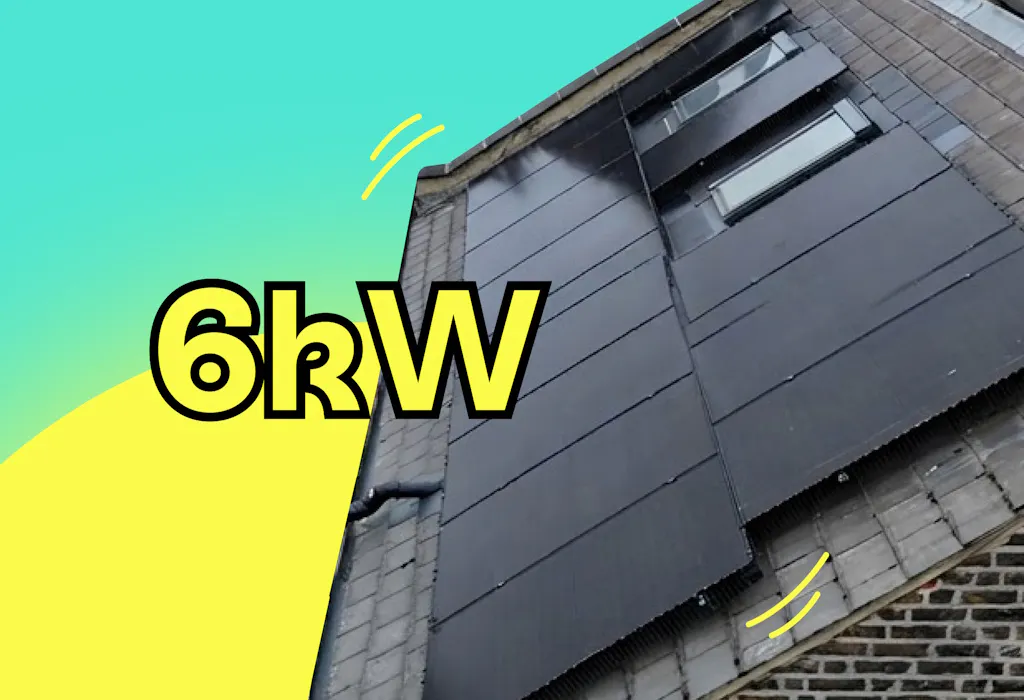
A 6kW solar panel system is often the correct size for a four-bedroom household, but it depends on your current and future electricity consumption, as well as your available roof space.
In this guide, we’ll run through what a 6kW solar panel system is, how much it costs, and how many appliances it can run.
If you’re wondering how much you could save with a solar & battery system, enter a few details below and we’ll provide an estimate.
Find out how much you can save
What kind of home do you live in?
What is a 6kW solar panel system?
A 6kW (kilowatt) solar panel system has a peak output rating of six kilowatts, meaning it would produce 6,000kWh (kilowatt-hours) of electricity per year in standard test conditions.
This is larger than the average size of a residential solar panel system in the UK, which was 4.9kW in 2025, according to the Microgeneration Certification Scheme (MCS).
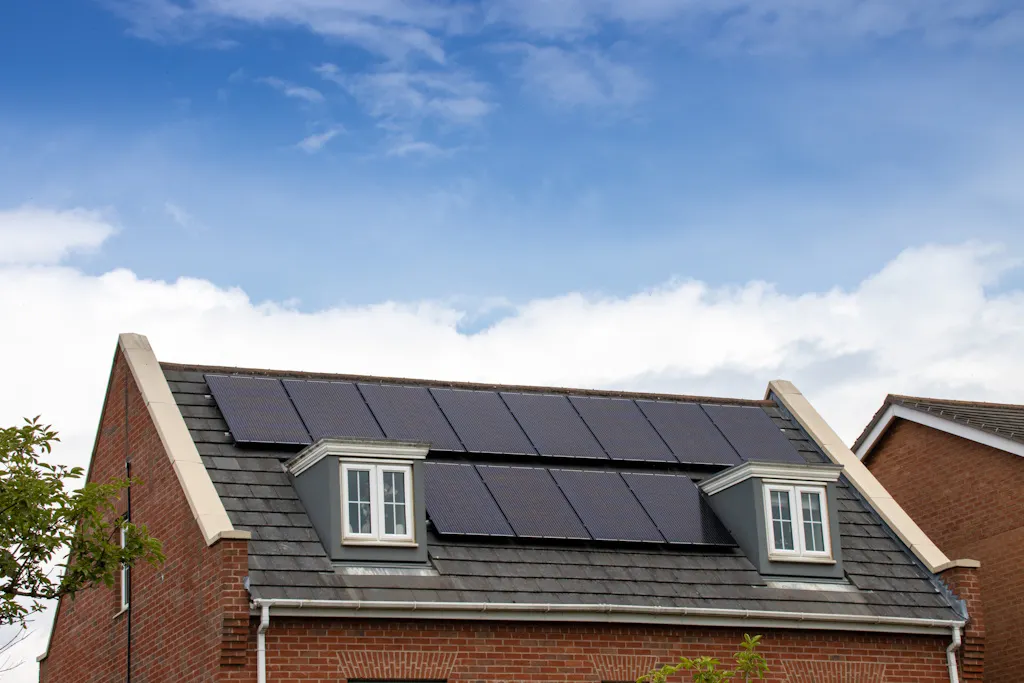
You can create a 6kW system if you use solar panels with peak output ratings that add up to 6,000 watts (W) – for example, 15 panels with 400W ratings.
This doesn’t necessarily mean your system will generate 6,000kWh. It could produce more or less, depending on factors including your location, roof angle and direction, and weather.
You may also see a 6kW system called a 6kWp (kilowatt peak) system. In this situation, they have the same meaning.
How many solar panels are in a 6kW system?
The number of solar panels you'll have in a 6kW system depends on the peak power rating of the panels.
This is determined by how many watt-hours a panel produces in standard test conditions, which involves a cell temperature of 25°C and solar irradiance of 1,000W per m², and is how every manufacturer's panels are assessed.
If you buy 400W panels, they'll each produce 400 watt-hours – and if you get 15 of these panels, you'll have a 6kW system that generates 6,000kWh per year in these conditions.
The higher your panels' ratings, the more electricity your panels will generate, everything else being equal – and the more money you'll save as a result.
The table below shows how many panels (of different output ratings) you’d need to create a system that's at least 6kW.
Panel size (W) | Number of panels | System size (kW) |
|---|---|---|
400 | 15 | 6 |
430 | 14 | 6.02 |
450 | 14 | 6.3 |
480 | 13 | 6.24 |
500 | 12 | 6 |
As you can see, it's possible to get a 6kW system with fewer panels, if you get a model with a higher output rating.
A good installer will be able to maximise your roof space and provide you with long-lasting, powerful solar panels that can generate the most electricity possible.
How much does a 6kW solar panel system cost?
A 6kW solar panel system costs roughly £9,732 to buy and install, according to the most recent government data.
The mean cost per kW for 4-10kW systems is £1,622 at the moment.
If you got a 10kWh battery installed with this system, it'd cost about £4,000, for a total price of £13,732. We explain battery sizing for a 6kW system further down.
The price you'll pay can vary though, depending on the installer you choose, where you live, and the type of roof you have.
To learn more, read our full guide to solar panel costs.
And if you’re wondering how much you could save with a solar & battery system, enter a few details below and we’ll provide an estimate.
Find out how much you can save
What kind of home do you live in?
How much energy will a 6kW solar panel system produce?
Location | Solar irradiance (kWh/kW) | Average annual output of a 6kW system (kWh) |
|---|---|---|
Dundee | 938 | 5,626 |
Liverpool | 965 | 5,790 |
Cambridge | 1,077 | 6,464 |
Swansea | 1,115 | 6,688 |
Ipswich | 1,163 | 6,978 |
Penzance | 1,192 | 7,151 |
A 6kW solar panel system will produce around 5,400kWh per year in average UK irradiance.
This is based on Dunsop Bridge, the geographic centrepoint of Britain, which gets around 900kWh per kW of irradiance.
This equates to roughly 90% of your system’s peak power output – but as is clear from the table above, these figures vary substantially across the country.
The same system's output can even be different in the same area, since there are so many variables apart from location, including the angle and direction of your roof, how much shading there is on the system, and how clean it is throughout the year.
For a data-driven estimate of how much solar electricity your home could produce with a 6kW rooftop system, talk to a top solar panel installer.
What can a 6kW solar panel system run?
A 6kW solar panel system can comfortably run the average four-bedroom household, on a typical day.
In typical UK solar irradiance, it can generate 5,400kWh of electricity per year, which is much more than the 3,400kWh used by the average household.
This adds up to 14.8kWh per day, on average.
With this much electricity, you can power the following devices for the stated amount of time, according to Centre for Sustainable Energy data – and still have some left over.
Device | Time | kWh usage |
|---|---|---|
Washing machine | 1 hour | 2.1 |
Tumble dryer | 1 hour | 2.5 |
Electric shower | 15 minutes | 2.25 |
Kettle | 1 minute | 0.05 |
Oven | 45 minutes | 1.58 |
Toaster | 4 minutes | 0.07 |
Microwave | 5 minutes | 0.08 |
Vacuum cleaner | 10 minutes | 0.15 |
TV | 4 hours | 0.24 |
Games console | 4 hours | 0.24 |
2 Laptops | 8 hours each | 1.60 |
Heating blanket | 4 hours | 0.60 |
8 LED light bulbs | 16 hours | 1.73 |
Total: 13.19 |
What size inverter do you need for a 6kW system?
Installers tend to pick an inverter with 80% to 90% of your solar array's capacity, so if you're getting a 6kW solar panel system, your inverter will probably be between 4.8kW and 5.4kW.
You won't have to perform those calculations yourself, though. A good installer will handle it all for you, and get the right inverter for your household.
This matters, since inverters turn the direct current (DC) electricity generated by your panels into alternating current (AC) power that you can use in your home and sell to the grid.
Its size dictates how much electricity it can feed to your home at any one time, which determines how many devices you can run on solar electricity alone.
Your inverter's size is also the deciding factor when it comes to working out whether you'll need a G98 or G99 certificate (more on this below).
What size battery does a 6kW solar panel system need?
Instead of sizing your battery according to your solar panel system, you should match it to your home's electricity consumption.
A 9-10kWh battery makes sense for the average UK household, which uses 3,400kWh of electricity per year – or around 9.3kWh per day.
This is because your battery is no longer just a place to store excess solar electricity for later; it's also a way to access new offerings like time-of-use tariffs.
On any day when your solar panels don't charge your battery completely, you can use one of these tariffs to fill the remaining space with cheap grid electricity.
So even when the sun isn't shining, you can keep your bills low.
A good installer will assess your household's usage and discuss your needs before they recommend a battery size.
But a good rule of thumb is that the more energy-intensive appliances you have, the larger your battery should be.
For example, a portable air conditioning unit adds around 3.4kWh per day, while a heat pump typically adds 8.8kWh.
To learn more, check out our guide to solar battery sizing.
How much space do you need for a 6kW solar panel system?
You'll need 41.73 square metres (m²) of roof space for the average 6kW solar panel system.
We've accounted for the average height and width of a solar panel, which is roughly two square metres, as well as the extra space that's required.
A good installer will typically ensure there’s a 40cm gap between the panels and the sides of your roof, and a 3cm space between each panel, to match standards created by bodies like Flexi-Orb and MCS.
You'll need a little more space if you have a chimney, vent pipe, or skylight (also known as a Velux window) – but not much more.
If you have one of each, you’ll usually need another 0.81m², for a total of 42.54m².
For more information, check out our full guide, Is my roof suitable for solar panels?
Do you need planning permission for a 6kW solar panel system?
You don’t normally need planning permission to install solar panels on a domestic property, and that includes 6kW systems.
Residential rooftop solar installations are almost always protected by permitted development rights, which let homeowners make medium-sized improvements without planning permission.
You’ll generally only have to apply for permission if you live in a flat, listed building, or conservation area – or if you want to get ground-mounted solar panels.
Do you need DNO permission for a 6kW solar panel system?
Your installer will need to send a G99 application to your region’s Distribution Network Operator (DNO) if your inverter’s maximum capacity is over 3.68kW on a single-phase system.
If your inverter is any smaller than this, they can finish the installation, then send a G98 application to your DNO within 28 days. This is a notification, not a request for permission, and cannot be rejected if filled in properly.
Getting a 6kW installation means your inverter will almost certainly be over the G99 limit, though your installer may recommend a smaller model if your output is especially low.
If you do need it, a G99 application should be a simple formality that ensures the DNO knows about your system, and can use that information to run its grid properly.
After your G99 form is accepted – as the majority are – you should be able to use your inverter at its full capacity. Your installer can make this change remotely.
Is a 6kW solar panel system worth it?
Whether a 6kW solar panel system is worth it depends on multiple factors, such as your electricity usage, budget, and location, plus your roof's angle, direction, and available space.
But if your roof has the space for a 6kW system and no more, it’s almost certainly worth getting it.
A 6kW system can help you reduce your energy bills by hundreds of pounds per year – and if you get a battery, you could save even more.
You could also take advantage of new tariffs made for solar and battery owners, join a virtual power plant, and benefit from the best export tariffs.
To learn more, read our guide, Are solar panels worth it?
And if you’re wondering how much you could save with a solar & battery system, enter a few details below and we’ll provide an estimate.
Find out how much you can save
What kind of home do you live in?
FAQs


Related articles
 Josh Jackman
 Josh Jackman
 Josh Jackman
 Josh Jackman
Written byJosh Jackman
Josh has written about the rapid rise of home solar for the past seven years. His data-driven work has been featured in United Nations and World Health Organisation documents, as well as publications including The Eco Experts, Financial Times, The Independent, The Telegraph, The Times, and The Sun. Josh has also been interviewed as a renewables expert on BBC One’s Rip-Off Britain, ITV1’s Tonight show, and BBC Radio 4 and 5.