- Solar advice hub
- Planning-permission
- G98 solar applications: the expert guide
G98 solar applications: the expert guide
Solar installers submit a G98 application after they fit a system with an inverter that's under 3.68kW. Here's everything you need to know.


Why you can trust our content
We know that the solar industry is full of misinformation, but we only use reliable sources, including:
- Our experienced solar experts, installers and system designers
- Our own database of solar & battery system designs
- Authoritative bodies like MCS and the UK government



Calculate savings
What kind of home do you live in?


Calculate savings
What kind of home do you live in?
At a glance
The number of technical and bureaucratic terms you’ll have to deal with as a solar home is ridiculous – but fortunately, we’re here to demystify them.
A G98 application is a form that your installer will fill in – with little to no assistance from you – after they’ve fitted you with a system that’s on the smaller side. You can start generating electricity without it, but you can’t export to the grid.
In this guide, we’ll explain what a G98 application contains, when and why they’re necessary, and how long it should take.
If you want to find out how much you could save with a solar & battery system, enter a few details below and we'll provide an estimate.
Find out how much you can save
What kind of home do you live in?
What is a G98 application?
A G98 application is a form installers submit after they’ve fitted a solar panel system with an inverter that has a maximum capacity under 3.68 kilowatts (kW).
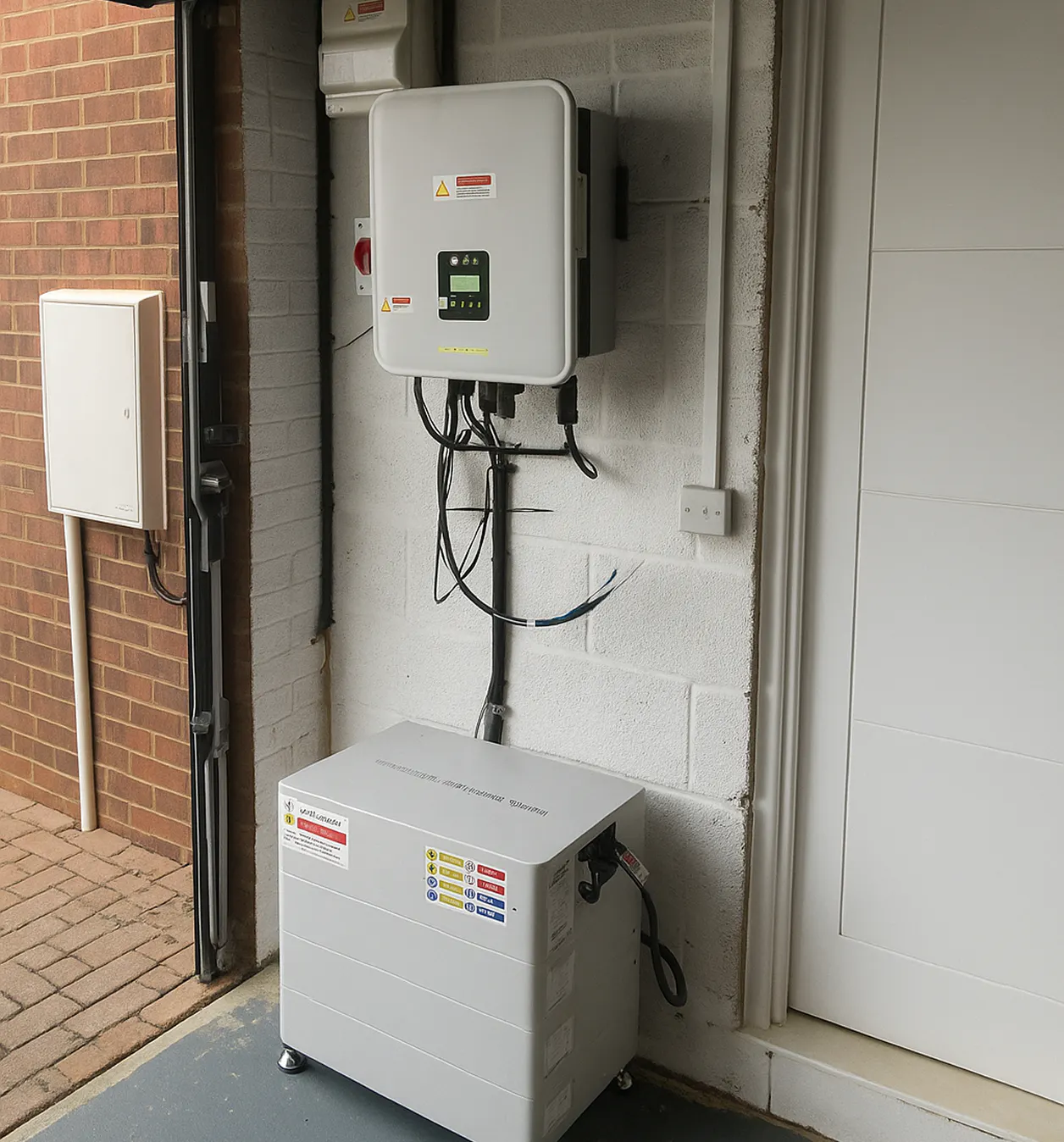
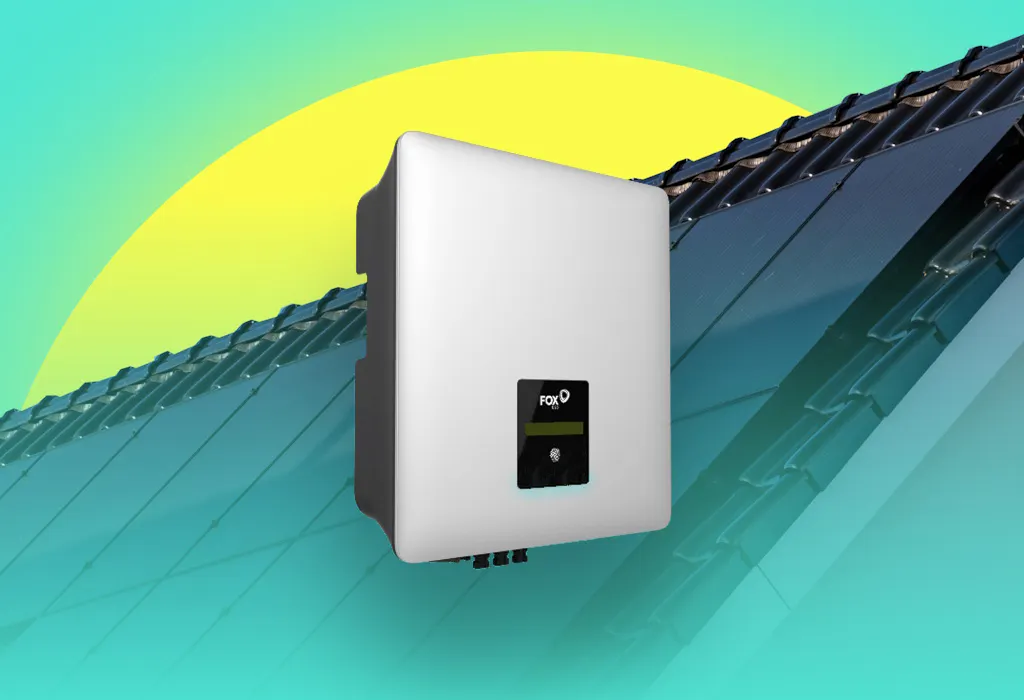
All installations need a solar inverter, which is a briefcase-sized box that’s the brains of your system: it converts the direct current (DC) electricity generated by your panels into alternating current (AC) that you can use at home and sell to the grid.
Your installer must send the G98 to your Distribution Network Operator (DNO) – the body that runs the hardware supplying your region with electricity – within 28 days of setting up the system.
They can do it afterwards because DNOs don’t need to know about small systems in advance – and when it’s been waived through, you’ll be free to sell electricity to the grid.
The threshold is technically 3.68kW per phase, meaning that homes with three-phase electricity can have a 11.04kW inverter with a G98 – but three-phase residential setups are extremely rare in the UK.
When an inverter is over 3.68kW per phase, meaning its output can exceed 3.68kW at any given time, installers have to submit a G99 application instead.
They must limit the inverter’s capacity to 3.68kW, and can only remove this restriction if the DNO gives the green light.
G98s and G99s allow DNOs to keep up with how much electricity is being sent to the grid by a rising number of solar households, so they can keep supply and demand balanced and avoid power cuts. They replaced the G83 and G59, respectively, in April 2019.
They also apply to any grid-connected micro-generation system, not just solar panels. This can include small-scale wind turbines, hydro, anaerobic digestion, micro combined heat and power, and standalone batteries.
Why is a G98 application important?
Your installer must notify the local DNO of your solar panel system before you’re allowed to export electricity to the grid.
This is a crucial step, since export income is one of the main ways to benefit financially from your system. You can earn £675 per year by signing up to the current best export tariff.
This figure is based on a home using 3,400kWh of electricity per year (which is the UK average) with solar irradiance of 900kWh/kWp, a 4.9kWp solar PV system, and a 10kWh battery.
Only after your DNO has received your system’s G98 will it create your ‘export MPAN’ – a 13-digit identification number that lets an export tariff provider link your meter readings to your account. Without this, you won’t be able to sign up for any export tariffs.
Fortunately, this isn’t your responsibility. When you sign up to an export tariff, its provider will ask your DNO for your export MPAN, and the DNO will send it over, usually within one to four weeks.
Why does your DNO need to know about your system?
There are multiple reasons why your DNO should be aware of every solar installation in its area, and they all relate to the safe and efficient operation of the grid.
Firstly, it ensures grid stability and safety. Every single residential solar installation can cause voltage fluctuations, simply by supplying an extra amount of electricity to the grid – so every system needs to be registered. This allows the DNO to take them into account.
Your DNO will also be able to stay on top of load balancing, because it’ll have an accurate picture of how much electricity is likely to enter the grid at any given time.
Solar panel systems export a substantial and varied amount of energy, so it’s crucial that DNOs are aware of all of them, as an imbalance in supply and demand can cause a power cut.
This is especially important in summer, when exports spike.
It also helps with infrastructure planning. DNOs will gradually build up their region’s electricity network as required – and the more solar panels are installed, the more hardware will be needed to cope with the extra electricity they generate.
What is the G98 application process?
Any good solar installer will take care of the application process for you.
If they decide in the designing stage that the inverter should be smaller than 3.68kW, they’ll clear it with you, install the system, then send a G98 application to your DNO.
This is a set of three forms that must include the household’s location and contact details, the installer’s accreditations, and the system’s technical details – for example, its size, its manufacturers, and the fact that it’s a solar installation.
Your installer must also attach a single-line diagram to their submission.
Sending in a G98 application is free for the installer, and most of them won’t charge you, as it’s a relatively routine process that “will only take around 10-15 minutes to complete”, according to the National Grid.
G99s, on the other hand, are complex five-part forms that may lead your installer to ask for an administrative fee – and it’s usually worth it.
Your installer must submit a G98 within 28 days of the commissioning date – that is, the day the installation was finished. Until they notify your DNO, your system won’t comply with regulations, causing a few different issues.
You may have problems getting home insurance (or claiming on it) and selling your property, and you won’t be able to get an export MPAN – meaning you can’t sell electricity to the grid via an export tariff.
Your system could also cause problems for your local grid, and the DNO can ask you to take it down – though it’s more likely that you or your installer will be forced to submit a G98.
Can a G98 application ever be rejected?
A properly filled-in G98 application can’t be rejected, as it’s a ‘notification of connection’ rather than a ‘request to connect’.
If your installer submits a G98, that means your inverter’s under 3.68kW, and won’t pose any substantial technical issues for your DNO.
It’s already compliant – so unless your installer has fundamentally misunderstood the regulations, the G98 will be a formality.
G99 applications can be rejected outright, but this is still pretty rare. Even if your system isn’t accepted at first, your DNO will usually tell you what you can do to get it approved.
Summary
G98 applications are an obligation for any solar installer who fits a system with an inverter under 3.68kW.
They allow DNOs to properly manage the grid, ensuring that hardware works as it should and power cuts are avoided.
Your installer should take care of your G98 or G99 for you, so that your system is compliant and you can start exporting electricity to the grid – which can earn you hundreds of pounds per year.
If you want to find out how much you could save with a solar & battery system, enter a few details below and we'll provide an estimate.
Find out how much you can save
What kind of home do you live in?
G98 application: FAQs



Related articles
 Josh Jackman
 Josh Jackman
 Josh Jackman
Written byJosh Jackman
Josh has written about the rapid rise of home solar for the past seven years. His data-driven work has been featured in United Nations and World Health Organisation documents, as well as publications including The Eco Experts, Financial Times, The Independent, The Telegraph, The Times, and The Sun. Josh has also been interviewed as a renewables expert on BBC One’s Rip-Off Britain, ITV1’s Tonight show, and BBC Radio 4 and 5.