- Solar advice hub
- Cities-and-regions
- Solar panels in Swansea: are they worth it?
Solar panels in Swansea: are they worth it?
Here are the best solar installers in Swansea based on our research, alongside the best available grants and local costs.


Why you can trust our content
We know that the solar industry is full of misinformation, but we only use reliable sources, including:
- Our experienced solar experts, installers and system designers
- Our own database of solar & battery system designs
- Authoritative bodies like MCS and the UK government



Calculate savings
What kind of home do you live in?


Calculate savings
What kind of home do you live in?
Solar panels in Swansea: at a glance
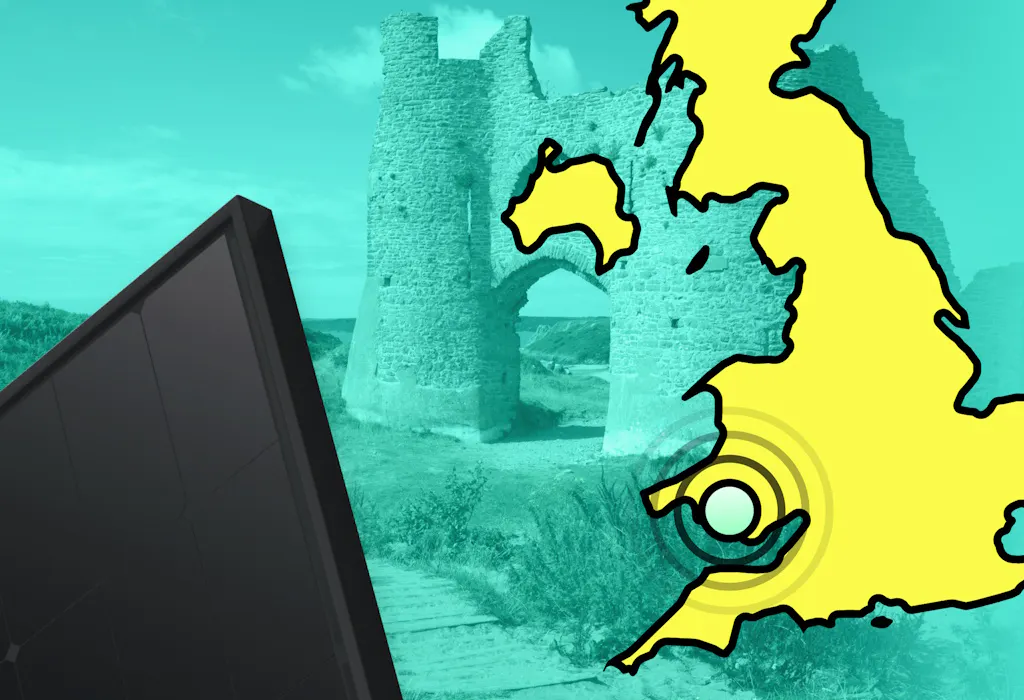
If you’re lucky enough to live among Swansea's beautiful woodlands, glorious sandy beaches, and stunning limestone cliffs, and you’re looking to cut your electricity bills, solar panels could be the best choice.
From Middle Head to Penlle'r Castell, Swansea receives more sunlight than most parts of the UK, which gives its solar homes a huge advantage.
In this guide, we’ll go through how much solar panels cost in Swansea, how the county’s weather could affect your savings, and which grants could help you reduce the upfront cost.
We install in Swansea, so if you’re wondering how much you could save with a solar & battery system, enter a few details below and we’ll provide an estimate.
Find out how much you can save
What kind of home do you live in?
What are the best installers in Swansea?
Name | Headquarters | Founded | Customer score | Solar & battery package? |
|---|---|---|---|---|
Sunsave | London | 2021 | 94% | Yes |
Green Energy Solar | Cardiff | 2022 | 98% | No |
Evolve Home Energy Solutions | Cwmbran | 2015 | 96% | No |
We’ve created several tests that rigorously assess more than 4,700 solar installers across the UK, and these companies have performed the best of any that install in Swansea – whether or not they have their headquarters there.
All of these three installers have been certified by the Microgeneration Certification Scheme (MCS) or Flexi-Orb, accredited by HIES or RECC, approved by TrustMark, registered with NAPIT or NICEIC, and have earned a top rating on a reputable review site.
The very best installers are also Which? Trusted Traders and offer a solar & battery package option, though Sunsave is the only top firm that ticks those boxes and installs in Swansea.
To see the top firms in the UK, check out our national guide to the best solar panel installers.
1. Sunsave
Our mission is to save every household meaningful money by putting power in their hands, which is why we offer Solar & Battery Plus.
This package allows you to start saving on your energy bills straight away, with no upfront cost, and spread the cost out with monthly payments over a term length of your choice.
You’ll receive best-in-class kit and access to the best export tariffs, and get the Solar & Battery Guarantee, which comes with 24/7 monitoring, maintenance, free replacement parts, and downtime credit.
Your system will also be insured by Aviva against damage, fire, and theft.
Our customers are huge fans of what we do – and to show their appreciation, they’ve given us more than 380 five-star ratings on Trustpilot, while praising our helpful, knowledgeable approach.
Excellent service and advice from start to finish. The entire install is perfect and the workmanship is excellent. I love that the install is outweighed by the savings, making the panels pretty much free with a guarantee that no other company can come close to.
Richard
Trustpilot review (October 2026)

2. Green Energy Solar
2022 wasn't particularly long ago, but Joel Channing and John Bloomfield have used the intervening years to grow a thriving team of around 30 members.
The pair, who have backgrounds in operations and sales respectively, have combined forces to great effect.
They've now overseen more than 500 installations, and cover everywhere in southern Wales from Newport to Carmarthen, plus Hereford and Gloucestershire in England.
The team was recognised for its work at the 2026 Wales Energy Efficiency Awards, where it was highly commended in two categories – including Regional Solar PV Installer.
You'll get solar panels made by top manufacturers such as AIKO, LONGi, and JinkoSolar, a six-year workmanship warranty, post-installation maintenance services, and "24/7 monitoring guaranteed."
Speaking about his company, Bloomfield said: "Working in renewables isn't just about earning a wage.
"We actively want to play our part in decarbonisation, and it's really nice to drive around your local area and see what's being generated in the place where you live, and know you played a significant role in that journey."
A huge thank you to Green Energy for installing our solar panels! The entire process was seamless from start to finish, and the team was incredibly helpful throughout. We’re absolutely delighted with the final result – thank you all so much!
Vita
Google review (September 2026)

3. Evolve Home Energy Solutions
Gary Randle and Paul Simpson have run this firm for more than a decade, and they've managed to expand impressively while still maintaining a top-tier customer rating.
From its base in Cwmbran, Evolve Home Energy Solutions now installs as far north as Worcestershire, as far west as Swansea, and as far south as Somerset.
Randle, who was an installer for 14 years before Evolve started in 2015, joined forces with Simpson, whose business development skills had been honed across 17 years in the energy efficiency industry.
Soon after launching, Randle said running the firm meant "collaborating with a colleague over the years and good friend" in Simpson.
He added: "With our combined experience, this will make a formidable partnership and supply the service the consumer deserves."
From the hundreds of glowing five-star reviews they've received over the years, it seems like the plan has worked.
The company also proudly states that its team of more than 100 has "over 450 years [of] combined experience", which is a massive amount of time – even if it only works out to a few years per person.
Joe and Josh spent over six hours working in temperatures over 27°. Each team cleaned up and left my property immaculate. I wholeheartedly recommend this company and their staff.
Hannelore
Trustpilot review (July 2026)
How much do solar panels cost in Swansea?
Annual electricity usage | Kilowatt-hours (kWh) * | System size (kWp) | Number of panels (450W) | Estimated cost ** | Estimated cost with a 10kWh battery † |
|---|---|---|---|---|---|
Low | 2,000 | 3.15 | 7 | £5,271 | £9,271 |
UK average | 3,400 | 4.95 | 11 | £8,283 | £12,283 |
High | 5,000 | 6.75 | 15 | £11,295 | £15,295 |
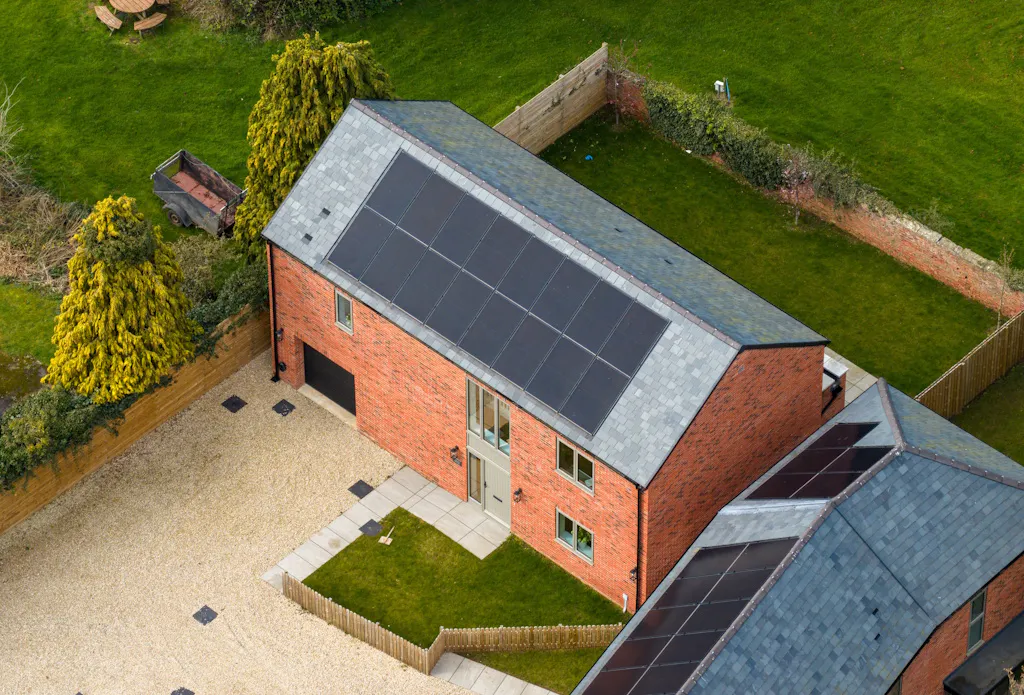
A typical solar & battery system costs £12,283 in Swansea, on average.
This system includes 11 solar panels, each of which comes with a 450-watt peak power rating. Overall, this gives you a 4.95kWp system.
We've factored in the rough cost of installing a 10kWh solar battery, because it can massively boost your returns.
A battery allows you to use more solar electricity at home – known as self-consumption – which means you can buy less electricity from the grid.
You can also earn money by signing up to one of the best export tariffs and time-of-use import tariffs, and by signing up to any of the increasingly profitable virtual power plants sweeping the country.
Around 94% of new solar panel installations in the UK include a battery, according to data from Flexi-Orb and the EPVS.
There are multiple reasons why you could end up paying a different amount for your solar panel system, such as its size, the job’s complexity, and which installer you choose.
To find out everything else you need to know, check out our guide to solar panel costs.
We install in Swansea, so if you’re wondering how much you could save with a solar & battery system, enter a few details below and we’ll provide an estimate.
Find out how much you can save
What kind of home do you live in?
Are there any grants for solar panels in Swansea?
There are no locally funded grants for solar panels in Swansea.
However, you can still access the same UK and Welsh Government grants that you can get in most parts of the country.
You can currently apply for Warm Homes Nest, Green Homes Wales, and ECO4, but in terms of local assistance, there are no solar grants at the moment.
In recent years, Swansea Council has understandably focused more on providing green tech to communities outside of the city, through the Rural Renewable Energy Grant and Rural Anchor Funding scheme.
National grants
There are a few UK and Welsh Government grants available to Swansea households – and if you may qualify, it's worth taking a closer look.
Solar panels can cut your electricity bills by hundreds of pounds every year, lower your emissions, and increase your property’s value, but the upfront cost tends to be high. Grants can reduce or remove this fee completely.
To see which schemes you could be eligible for, use our grant eligibility checker.
Warm Homes Nest scheme
Since this scheme started in 2011, the Welsh Government has spent over £257 million providing free measures like solar panels, insulation, and heat pumps.
The initiative, which targets low-income households and deprived areas, has allowed more than 66,000 homes to get free improvements, plus advice and assistance with their energy bills.
You can get a free solar panel system if you own or privately rent your home, have an Energy Performance Certificate (EPC) rating of E, F, or G, and either receive a means-tested benefit or live in a low-income household.
You could also be eligible with an EPC rating of D, if someone in your home has a chronic health condition.
Green Homes Wales
This Welsh Government initiative gives households interest-free loans of between £1,000 and £25,000 to fund energy-saving measures such as solar panels.
The scheme, which is run by the government-owned Development Bank of Wales, started in April 2025, and was renewed for the 2026/27 financial year after a successful first year.
Your loan will be unsecured, so you won’t need any collateral like a home. Your application will be accepted or rejected based entirely on your credit history.
If you do get a loan, you could choose a repayment term of up to 10 years – or even longer for bigger projects.
And for the first six months of your loan, you won’t have to pay anything back.
The property you’re applying for must be your primary residence, in Wales, that you own. It can’t be a listed building or a new build that hasn’t been lived in, and you can’t apply as a private landlord.
Energy Company Obligation (ECO4)
ECO4 has long been the government’s main scheme for reducing residential emissions. If you live in a low-income or vulnerable household with someone who gets a qualifying benefit, you may be able to secure some free measures.
Unfortunately, the scheme is set to end in December 2026.
Until then, the government will keep compelling large energy suppliers to carry out energy-efficient upgrades in deprived homes across Britain, at no cost to residents.
ECO4 can supply you with a free solar panel system, as it has done for more than 66,000 households – but only if your home is heated with electricity, as 7.9% of households in Wales are.
To learn more, check out our full guide to the ECO4 scheme.
How many homes in Swansea have solar panels?
8,713 homes in Swansea have had solar panel systems installed, according to the latest government data.
This means 7.8% of Swansea's 111,000 households have switched to solar – which is much higher than the UK average of 6%.
To learn more about the popularity of solar panels in different areas, check out our guide to how many homes have solar panels in the UK.
Is Swansea sunny enough for solar panels?
Swansea is certainly sunny enough for solar panels. It actually receives more sunlight than most of the UK, enjoying 1,251 kilowatt-hours per square metre (kWh/m²) per year – 13% more than the national average.
This figure will vary depending on where in Swansea you live, but it’s a very encouraging indicator.
In the solar industry, amounts of sunlight are measured with ‘solar irradiance,’ which tracks the sun’s average intensity in a certain place.
It’s recorded in kilowatt-hours per square metre – meaning how much energy makes it from the sun, through 93 million miles of space, to a specific square metre on Earth.
As you may expect, the more intense the sunlight that hits your panels, the higher the kWh/m², and the more solar electricity your system will generate – which means higher savings for your household.
Typical solar panel output in Swansea
System size (kWp) | No. of 450W panels | Roof direction | Annual output (kWh) |
|---|---|---|---|
4.95 | 11 | East | 3,953 |
4.95 | 11 | South | 5,020 |
4.95 | 11 | West | 3,984 |
These estimates are all based on a home with solar panels in the centre of Swansea.
We've used a 4.95kWp system because it should generate more than enough electricity to match the average UK household's electricity consumption, which is 3,400kWh per year, and because it was the average system size in 2025, according to the MCS.
Whenever your solar panels produce more electricity than you can use or store in your battery, you can sell this excess energy to the grid via one of the best SEG rates.
While almost all UK systems do this during summer, households in Swansea should benefit from this extra income stream more frequently.
Please note: you won’t necessarily generate as much solar electricity with your system, since your home will have its own unique characteristics – but this should give you a good idea of what’s possible in Swansea.
How many solar panels do I need in Swansea?
There's no set number of solar panels for a home in any area, including Swansea, but it's usually a good idea to get as many as you can fit on your roof.
Solar panels are cheap compared to big, fixed installation costs like scaffolding and labour, and every additional panel increases your output – and therefore boosts your savings.
However, it's still worth thinking about how many panels you'd need to produce as much electricity as you consume.
The average Swansea home uses 2,957kWh per year, based on our analysis of the latest government data – which is 13% lower than the UK average of 3,400kWh.
If you want a system that'll generate at least this much electricity in typical Swansea irradiance and on a south-facing roof, you’ll need seven panels, each with a 450W peak power rating.
An east- or west-facing system would require nine of these panels.
To learn more, read our guide to how many solar panels you need.
Connecting solar panels to the grid in Swansea
To get your solar panels connected to the grid, your installer will have to contact your Distribution Network Operator (DNO), which in Swansea is National Grid Electricity Distribution (NGED).
Like all DNOs, NGED runs the hardware that provides part of the UK with electricity, so it has to know how much energy is flowing in and out of the grid.
If your inverter’s capacity is 3.68kW or less, your installer can simply notify your DNO after they've connected your system to the grid, with a G98 application.
As long as they're filled in correctly, G98s are just a formality, which is why these installations are commonly called 'connect and notify'.
If you have a larger system, your inverter's capacity may be over 3.68kW. Your installer would then ask your DNO for permission to use the inverter's maximum capacity, via a G99 application.
Only when this submission has been approved – which most are – can you sell all of your excess electricity to the grid, and maximise your earnings from the system.
Exporting your electricity is one of the largest financial benefits of going solar, as it can earn a typical home £675 per year on the current best tariff combination.
Planning permission for solar panels in Swansea
Most households in Swansea don't need planning permission to get solar panels, which is also the case across the UK.
This is thanks to permitted development rights, which allow homeowners to make reasonable changes to their property without having to ask for planning permission.
You're even allowed to get solar panels installed in a conservation area without permission, in the majority of cases.
In some conservation areas however, the local authority applies an Article 4 Direction (A4D) on building works, which can limit or remove its residents’ permitted development rights.
There are currently 31 active conservation areas in Swansea, according to the council, found in places like Penrice, Morriston, and Mumbles.
And there are nine A4Ds in the county, from the Maritime Quarter in the east to Rhossili in the west.
An A4D won't necessarily stop you from making changes to your home, but it may mean you have to get planning permission. If this is required, you'll have to explain that your solar panels won't lessen the area's special character.
Is it worth getting solar panels in Swansea?
It’s definitely worth getting solar panels in Swansea – even more so than it is in most of the UK.
Swansea receives high levels of solar irradiance, especially compared to the national average, which means its residents can save hundreds of pounds per year by going solar.
There’s a reason why 7.8% of Swansea's households have already made the switch – and that percentage will probably rise in the coming years, as energy bills stay high, and heat pumps and electric vehicles become even more popular across the country.
If you’d like to switch to solar but you’re put off by the upfront cost, consider Solar & Battery Plus, our all-in-one residential solar and battery package that’s tailored to your home and comes with no upfront cost.
You can also get the 20-year Solar & Battery Guarantee, which includes 24/7 monitoring, maintenance, a free battery upgrade, a free inverter replacement if necessary, and downtime credit.
We install all over Swansea, so if you’re wondering how much you could save with a solar & battery system, enter a few details below and we’ll provide an estimate.
Find out how much you can save
What kind of home do you live in?
Solar panels in Swansea: FAQs




Related articles
 Josh Jackman
 Josh Jackman
 Josh Jackman
 Josh Jackman
Written byJosh Jackman
Josh has written about the rapid rise of home solar for the past seven years. His data-driven work has been featured in United Nations and World Health Organisation documents, as well as publications including The Eco Experts, Financial Times, The Independent, The Telegraph, The Times, and The Sun. Josh has also been interviewed as a renewables expert on BBC One’s Rip-Off Britain, ITV1’s Tonight show, and BBC Radio 4 and 5.