- Solar advice hub
- Sunsave-plus
- Should you get a solar subscription?
Should you get a solar subscription?
Thinking of switching to solar but feeling daunted by the upfront cost? A solar subscription could be right for you.


Why you can trust our content
We know that the solar industry is full of misinformation, but we only use reliable sources, including:
- Our experienced solar experts, installers and system designers
- Our own database of solar & battery system designs
- Authoritative bodies like MCS and the UK government



Calculate savings
What kind of home do you live in?


Calculate savings
What kind of home do you live in?
Solar panel subscriptions: at a glance
With high energy bills and an ongoing climate crisis, the appeal of solar is stronger than ever in the UK – but the high upfront cost is still a barrier for many.
Most people would like to generate their own electricity and be more independent from the grid, but with the expensive price tag on solar & battery systems, it’s easier said than done.
This is where a solar subscription comes in. Households in countries like Germany, the US, and Norway have been able to access the power of solar without needing to worry about the upfront cost – and now UK households can benefit too.
In this guide, we’ll run through exactly what a solar subscription is, how it works, the main benefits, and whether your home would be suitable.
And to find out how much you could save with a solar subscription, pop your details below and we’ll provide an estimate.
Find out how much you can save
What kind of home do you live in?
What is a solar subscription?
A solar subscription allows you to get a best-in-class solar & battery system that’s tailored to your home and installed by accredited professionals, all with no upfront cost.
Instead, you’ll make fixed monthly payments for 20 years, which gives you an excellent level of protection against energy bill inflation.
Each Sunsave Plus system is protected by the 20-year Sunsave Guarantee, which includes 24/7 monitoring, maintenance, and free replacement parts.
We don’t require a roof lease, meaning you’ll legally own your system from day one. More detail on all of this below.
What makes Sunsave Plus unique?
There are three core aspects of Sunsave Plus that make it unique, as well as fundamentally different to a typical solar panel loan: affordability, the 20-year Sunsave Guarantee, and flexibility.
Let’s dive into the details.
1. Affordability
We spread our subscription across 20 years, which means the total amount is divided into 240 monthly payments. This is significantly longer than a typical solar loan, and makes it easier to afford.
It also allows you to save more than you spend.
You’ll buy less electricity from the grid, and when you combine these savings with the income you’ll get from selling excess electricity to the grid, it can exceed your monthly payment to Sunsave – which means more money in your pocket.
This isn’t the traditional way to go solar, where you pay upfront and wait years to break even. Many of our customers make immediate net savings.
And even if you don’t see net savings in the first year, it’s possible that you’ll start to see them after. Electricity bills rose by 5.5% per year on average between 2000 and 2020, and, whilst nobody can predict the future, it’s possible that this historical trend will continue.
The monthly payments also remain absolutely fixed throughout the length of your contract, which provides you with protection against energy bill inflation.
And if it doesn’t make financial sense for you, we won’t recommend Sunsave Plus.
You can read more about how much our customers are saving on our reviews page.

2. The Sunsave Guarantee
It’s very common for solar installers in the UK not to provide any aftercare, with a two-year workmanship guarantee held up as the industry standard – but a solar & battery system is a long-term investment that requires care and attention.
That’s why every Sunsave Plus system is backed by the 20-year Sunsave Guarantee, which is designed to provide complete peace of mind that your system will work at its best for the full subscription term.
The Sunsave Guarantee includes:
 30-year performance warranty on the solar panels
- Free battery upgrade – we’ll upgrade your battery as soon as it drops below 70% of its original capacity, which typically happens after 10-12 years
- A free inverter replacement if required
- 24/7 monitoring of the solar & battery system, including alerting you if something isn’t working
- Troubleshooting of any issues
- Management of any warranty claims
- Insurance – your system will be insured by Aviva against damage, fire, and theft
- Downtime protection – we’ll compensate you for any extended period of time that your system isn’t working as it should
55% of people in the UK who don’t want or are unsure about getting solar panels told a 2021 government survey that maintenance concerns were a key reason for their position.
40% said a guarantee scheme would allay these concerns – so we created the Sunsave Guarantee.
We’ve also created a resilient company structure to ensure that you can always rely on the Sunsave Guarantee, because the reserves to pay for maintenance will be protected.
To learn more, read our guide explaining how you'll be protected by the Sunsave Guarantee for your whole subscription term.
3. Flexibility
We’re aware that your circumstances may change, so we’ve built our subscription with flexibility in mind.
So if you ever decide to pay off part or all of your remaining credit amount, you can do this at any time without incurring any penalties.
For full settlements, you'd just pay the outstanding credit amount (i.e. not any interest or monitoring & maintenance fees you would have incurred had your subscription continued). Once you’re all paid up, you'll no longer be covered by the Sunsave Guarantee.
For partial settlements, any repayment you make is deducted from the outstanding credit amount, so you'll accrue interest on a smaller balance and pay less overall. You can choose to keep the same term and reduce your monthly payment, or keep the same monthly payment and shorten your term. In either scenario, you’ll still be covered by the Sunsave Guarantee.
In fact, you can pay off up to 98% of your outstanding credit amount and stay protected. Providing you’re paying at least £1 per month towards your credit amount (excluding your monitoring and maintenance fee), the Sunsave Guarantee remains fully in place.
To learn more, check out our full guide to early repayments with Sunsave Plus.
And if you move house during your repayment period, you’ve got three options: you can pass on your subscription to the new owners, include the system in the house’s price and end your subscription early, or take the system with you – though taking it with you will be very expensive.
There are no hidden charges or clauses, meaning you’re free to sell your home whenever you want.
For more information, read our guide to moving home with a Sunsave Plus subscription.
And to find out how much you could save with Sunsave Plus, enter a few details below and we’ll provide an estimate.
Find out how much you can save
What kind of home do you live in?
4. Sunsave Plus doesn’t require a roof lease
With our solar subscription, there's no roof lease involved.
You’ll legally own your system from day one, you won’t need consent from us to make changes to your property, and you’ll be free to sign up for the best export tariffs on the market – or any tariff you want, come to that.
We watch the market and always make sure our customers are on the top tariffs, but you don’t have to go with our recommendations – and all the export income you make will be yours to keep.
Sunsave Plus also has no restrictions on home moves. You’ll be able to either pay off your subscription in full, or pass it on to the new homeowner, subject to status.
Also known as rent-a-roof schemes, roof leases allow a homeowner to get solar panels installed on their roof for free – with the catch that they don’t actually own the panels.
The household can use the electricity the panels produce, but the panels are still owned by the company, typically for 25 years. This may sound attractive, but in practice it can cause enormous issues for you.
You may have to get consent to make any significant changes to your property, such as an extension, new roof, or loft conversion – and in some cases, the company can simply refuse.
Even if you gain consent, some leases require you to compensate the company for missed export payments or lost electricity generation, and if the building work reduces the amount of electricity your panels generate, you may face penalties.
Also, it can make it harder to move home. Solar roof leases have a bad reputation, which makes finding a willing buyer even more difficult.
Some people today are still suffering because of rent-a-roof contracts that they signed in the 2010s.
Our subscription also isn't a solar panel lease, which is different to a roof lease, and comes with other drawbacks.
To learn more, read our guide to why Sunsave Plus doesn’t require a roof lease.
What if you can afford the upfront cost of solar?
Sunsave Plus is also a great option for people who can afford the upfront cost of solar, as it allows you to use or invest the money elsewhere.
For example, you could put that cash in a high-interest savings account, spend it on a holiday or home improvement, keep it for emergencies – or all of the above.
The break-even point for solar is typically about five to 10 years, with a sample of over 150 solar & battery systems installed by Sunsave across England and Wales in 2024 putting the average at just over eight years.
Money Saving Expert’s estimate is similar, with the website saying: “Hefty upfront costs mean it could take 10 years to break even.”
Along with the ability to invest and spend thousands of pounds that would – in a standard installation – go straight to your installer, you’ll also get the Sunsave Guarantee, which comes with 20 years of maintenance coverage.
In contrast, most solar panel maintenance packages with an upfront purchase consist of just a workmanship warranty, and even the best of them rarely exceed 10 years.
This is especially important when you consider that solar batteries usually need replacing after 10-12 years. With Sunsave Plus, you’ll get a free battery upgrade – but if you pay upfront, you’ll be left with the full cost of £3,000-£7,000, at current prices.
We’ll also provide you with a free replacement inverter, if necessary. Half of inverters fail by year 15, according to a 2023 study by Bern University of Applied Sciences, which would leave you having to pay another £1,400 or so.
So even if you pay for your system upfront, you’ll still face additional costs in the coming years.
For more information, read our guide to why you may want to choose Sunsave Plus even if you can afford the upfront cost.
Are solar subscriptions popular around the world?
Solar subscriptions have taken off in many countries across the world.
Sunrun is now the US’s largest installer of residential solar panels, with more than 1.1 million customers in 22 states, plus Washington DC and Puerto Rico.
These customers have 8.4GW of solar panels on their rooftops, which is more than the UK’s entire domestic solar capacity.
And in 2025, the company installed 48% of all new solar battery capacity in the country.
German firm Enpal enables households to go solar with no upfront cost, and instead lease their panels from the company for fixed monthly payments over 20 years.
The Berlin-based business now has more than 115,000 residential customers in Germany and Italy, has installed more than 1GW of capacity, and enjoyed revenues of nearly £1 billion in 2025.
Norwegian installer Otovo has more than 69,000 customers on its books , including at least 6,000 on its subscription service.
Solar homes in 13 countries across Europe can access the subscription, from Portugal to Poland – though not in the UK.
South African company Wetility also provides a subscription, in which homeowners lease a solar & battery system with no upfront cost, in return for monthly payments.
The company, which is based in northern Johannesburg, has raised at least 1.4 billion rand (£60 million) since being founded in 2019.
To learn more, read our full guide to solar subscriptions around the world.

What do our customers have to say?
We’ve got lots of happy customers making great savings with their systems.
They’ve given us a 4.8-star rating on Trustpilot from more than 300 reviews that praise us for our service, subscription, and support.


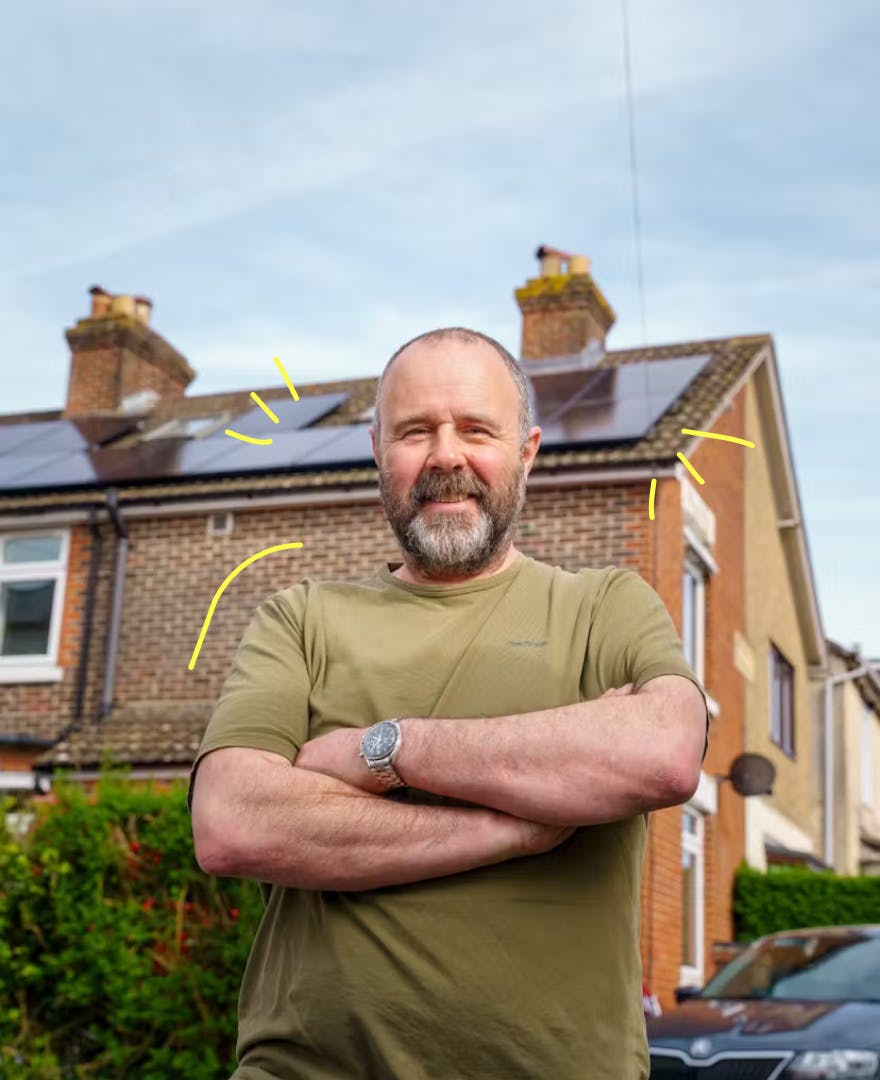
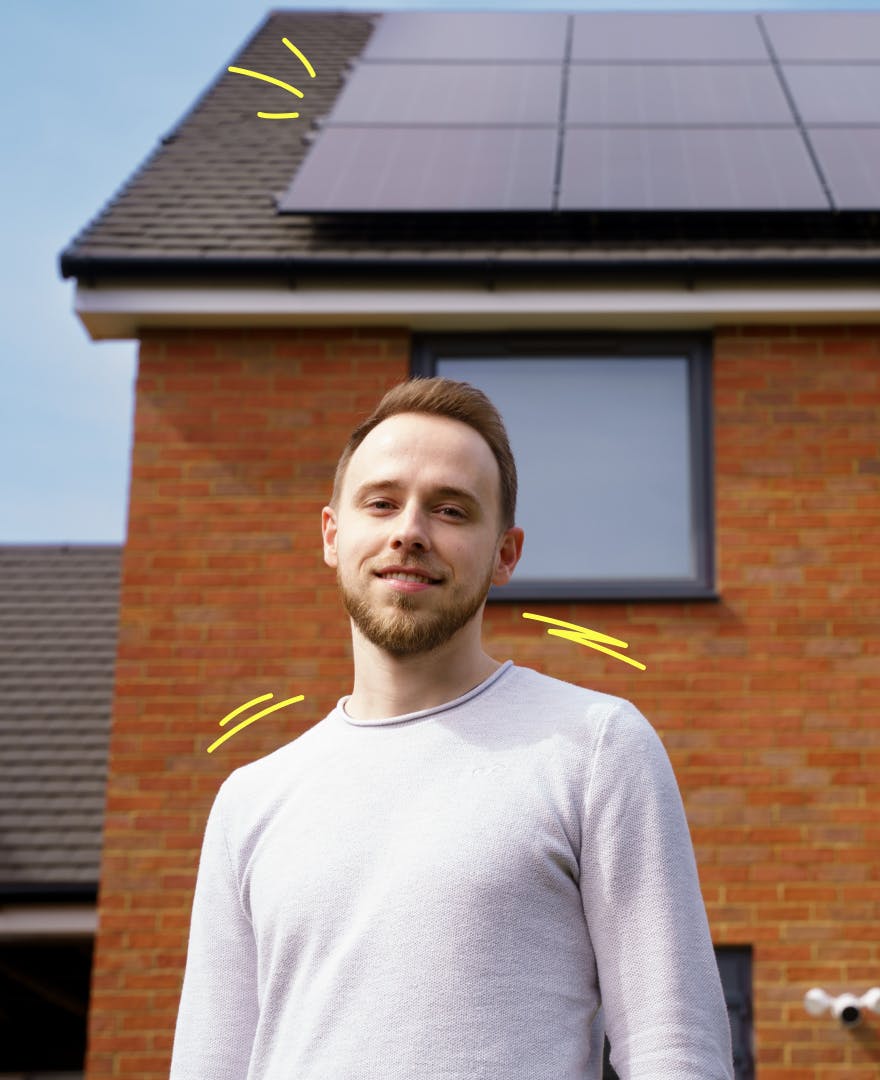

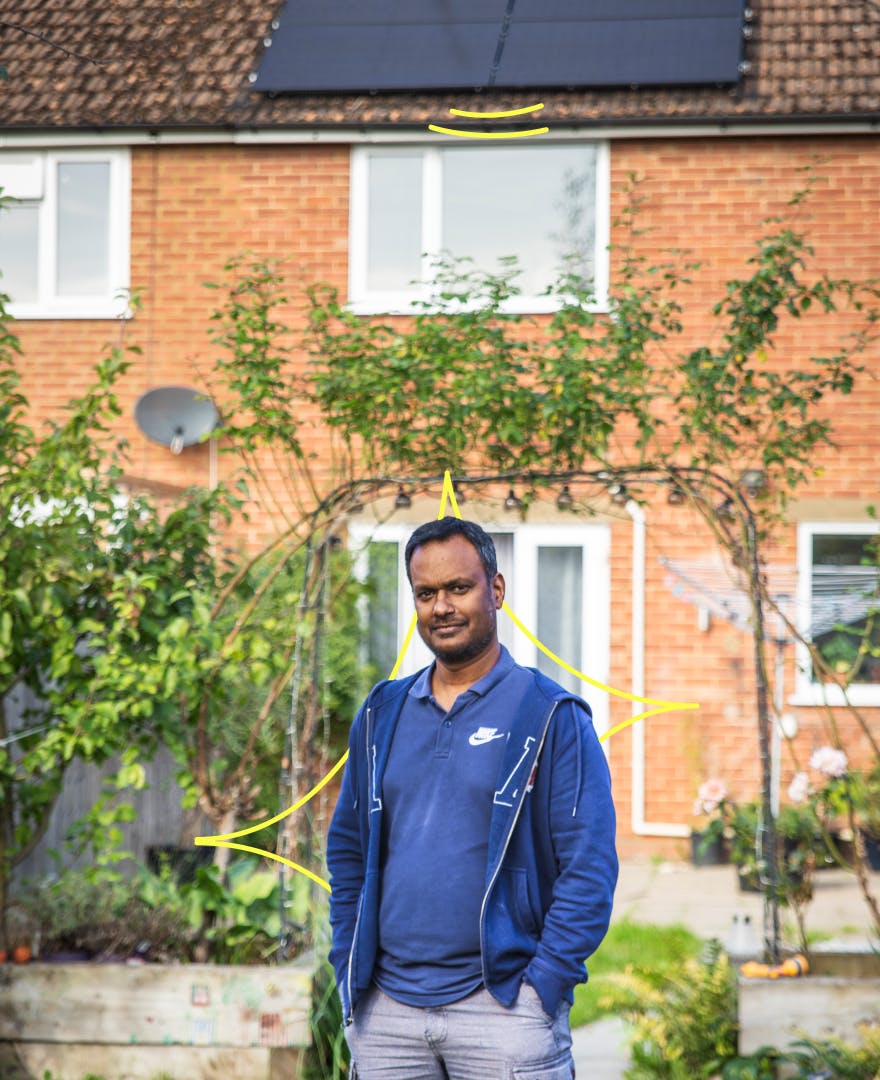
Without Sunsave Plus, we’d have had no chance of switching to solar.
Themis & Freya
London, January 2024
The figures just added up. We were going to make a net saving every month ... it seemed like a no-brainer, really.
Jody
London, November 2024
I’ve already recommended Sunsave to a number of my neighbours who have expressed some interest. Sunsave have just been very, very good, and very helpful.
Richard
Hampshire, April 2024
We’re saving about £400 each year, which is great. My main goal through Sunsave Plus was to cancel out my current energy bill, but now the system is actually paying for itself.
Tim
Guildford, June 2024
I know over the next 20 years, the system will be working as it should and any repairs or anything will be covered.
Samir
Sidcup, October 2024
I got my system three months ago. Since then I have already moved to Octopus and saved £400.
Ajith
Buckinghamshire, October 2023


Is a solar subscription worth it?
Switching to solar is a powerful way to save money and reduce your carbon footprint, and there’s no reason people should be excluded due to high upfront costs.
Many countries around the world have benefited from solar subscriptions, and now households in the UK have the opportunity to follow suit.
Sunsave Plus is an excellent way to avoid the high upfront cost of solar, start saving immediately, and benefit from long-term comprehensive maintenance support.
It’s flexible, it doesn’t require a roof lease, and it may be worth it even if you can afford to pay the upfront price.
To find out how much you could save with Sunsave Plus, provide a few details below and we’ll provide an estimate.
Find out how much you can save
What kind of home do you live in?
FAQs


Related articles
 Charlie Clissitt
 Charlie Clissitt
 Charlie Clissitt
 Charlie Clissitt
Written byJosh Jackman
Josh has written about the rapid rise of home solar for the past seven years. His data-driven work has been featured in United Nations and World Health Organisation documents, as well as publications including The Eco Experts, Financial Times, The Independent, The Telegraph, The Times, and The Sun. Josh has also been interviewed as a renewables expert on BBC One’s Rip-Off Britain, ITV1’s Tonight show, and BBC Radio 4 and 5.