- Solar advice hub
- Cities-and-regions
- Solar panel grants in Wales: explained
Solar panel grants in Wales: explained
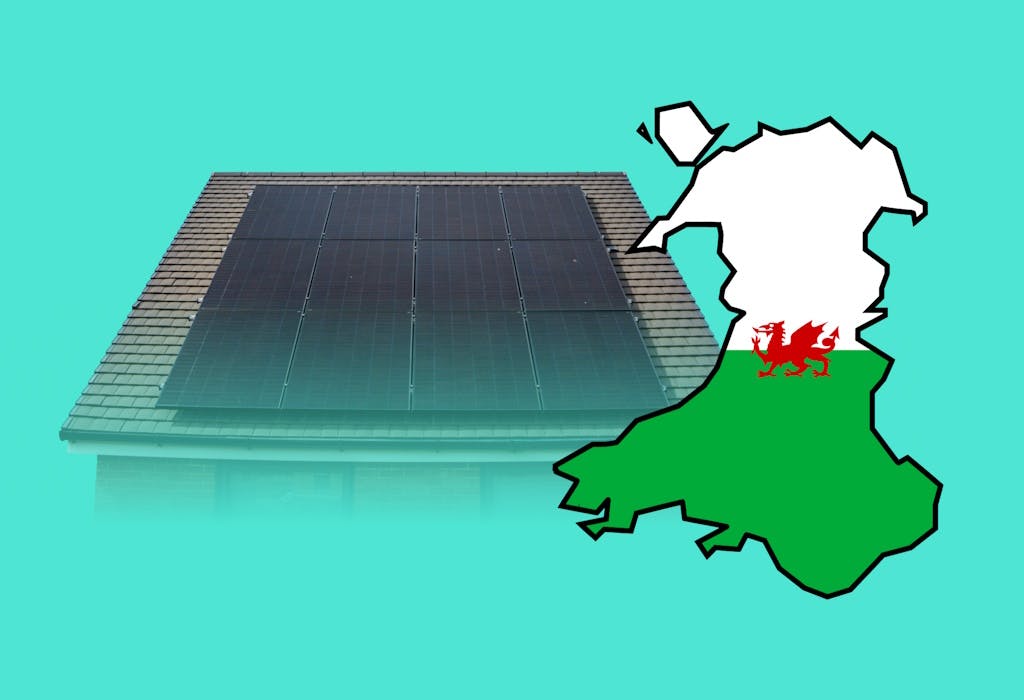
Thinking of going solar in Wales? Here are all the grants you could get, along with what you should do if you don't qualify for any of them.


Why you can trust our content
We know that the solar industry is full of misinformation, but we only use reliable sources, including:
- Our experienced solar experts, installers and system designers
- Our own database of solar & battery system designs
- Authoritative bodies like MCS and the UK government



Calculate savings
What kind of home do you live in?


Calculate savings
What kind of home do you live in?
Welsh solar grants: at a glance
Switching to solar can significantly cut your energy bills, but it usually comes with a high upfront cost – which is why it always makes sense to consider every grant available to you.
However, the solar grants currently available to homes in Wales are low on funding, targeted exclusively at deprived households, or short on details.
In this guide, we’ll look at all the grants you could access, explain their different eligibility criteria, and run through their application processes.
If you’re wondering how much you could save with a solar & battery system, enter a few details below and we’ll provide an estimate.
Find out how much you can save
What kind of home do you live in?
The four solar grants in Wales
| Grant | What it includes | Who’s eligible? | Funding available | When it ends |
|---|---|---|---|---|
| Warm Homes Nest | Solar & battery systems, insulation, and heating systems | Low-income and vulnerable households | Grants that cover up to 100% of the cost | April 2031 |
| Green Homes Wales | Solar & battery systems, solar thermal, insulation, and heating systems | Homeowners in Wales | Interest-free loans up to £25,000 | March 2027 |
| ECO4 | Solar & battery systems, boiler upgrades, insulation, and heating systems | Low-income and vulnerable households | Grants that cover up to 100% of the cost | December 2026 |
| Warm Homes Plan | Solar & battery systems, insulation, and heat pumps | TBD | Grants that cover 100% of the cost or low-interest loans | TBD |
Information correct as February 2026. We constantly monitor the status of all Welsh solar grants and update the table regularly.
Households in Wales can potentially access solar grants including the Warm Homes Nest scheme, Green Homes Wales, ECO4, and Warm Homes Plan.
However, most of these schemes were designed to help the most underprivileged homes, and therefore won’t be available to the majority of people.
We’re only focusing on government-funded grants and loans, rather than schemes like the Smart Export Guarantee, or policies like the 0% VAT on solar panels.
1. Warm Homes Nest scheme
Grants that cover up to 100% of the cost
The Welsh government launched this scheme in 2011, and has since spent more than £251 million providing households with free home improvements including solar panels, insulation, and heating systems including air source heat pumps.
That’s around £19 million per year, and the government isn’t slowing down. It dedicated £39.3 million to the scheme in 2023-24, up from £26.9 million the year before.
The initiative, which focuses on low-income homes and deprived places, has helped more than 66,000 families to reduce their energy bills with free improvements, advice, and help paying their expenses.
Impact of the Nest scheme
In the 2023-24 period alone, the Warm Homes Nest scheme provided improvements to 4,816 households.
19.2% of these measures were solar & battery systems, and 3.4% were just solar panels, meaning that solar installations made up 22.6% of all improvements (check out the chart below for more details).
The average home will save £595 per year because of this help, according to the government’s modelling.
The initiative also gave free, bespoke energy-saving advice to 12,809 homes, and identified 155 households that were eligible for new or additional benefits.
This resulted in recipients gaining £4,233 per year, on average.
How many people get solar through the Nest scheme?
In the 2023-24 period, central heating systems were the most popular improvement, but solar & battery installations were comfortably second, making up around one-fifth of all measures.
Nest eligibility requirements
To qualify for the Warm Homes Nest scheme, you must own or privately rent your home, have a low Energy Performance Certificate (EPC) rating, and receive a means-tested benefit or live in a low-income household.
Your EPC rating must usually be E or lower, though it can be D if someone in your household has one of the following chronic health conditions:
- Respiratory disease (e.g. respiratory infection, bronchoconstriction in asthma, or chronic obstructive pulmonary disease)
- Circulatory disease (e.g. cardiovascular disease, stroke, or heart attack)
- Mental health condition (e.g. depression, anxiety, psychosis, or bipolar disorder)
- Intellectual or development disorder
- Dementia
If no-one in your household has any of these conditions and you have an EPC rating of D, you’ll be put on a reserve list.
To be eligible through the benefits track, you must receive one of the following:
- Council Tax Reduction related to income
- Housing Benefit
- Income-based Jobseeker’s Allowance
- Income-related Employment and Support Allowance
- Income Support
- Pension Credit
- Universal Credit
- Child Tax Credit and an individual income below £18,660 per year
- Working Tax Credit and an individual income below £18,660 per year
If you don’t get any of these benefits, you can still qualify if your household income is lower than 60% of the median UK average, not including disability-related benefits.
The limit depends on who lives in your home. For example, the threshold for a single adult is £14,080, whereas a couple with two children over the age of 14 would qualify with a household income under £34,885.
Nest application process
You can start the Warm Homes Nest scheme application process by calling 0808 808 2244 between Monday and Friday from 9am to 6pm, or by emailing advicewales@est.org.uk.
Either way, you’ll be put through to a representative who’ll help you work out if you’re eligible, tell you how to upload the necessary documents, and explain which improvements you could receive.
You can also apply on someone else’s behalf, though they’ll need to give their consent for you to proceed.
If you qualify, the representative will agree a time with you for an assessor to visit and decide which improvements would most benefit your home.
If you don’t think you’re eligible – or you don’t know – you can still call to get advice on improving your home’s energy efficiency, which grants and benefits you may qualify for, and which energy tariffs you should be on.
You may not be eligible for any grants in Wales, but Sunsave Plus allows you to go solar with no upfront cost. If you’d like to know how much you could save, enter a few details below and we’ll provide an estimate.
Find out how much you can save
What kind of home do you live in?
2. Green Homes Wales
Interest-free loans up to £25,000
This government scheme provides households with interest-free loans of £1,000 to £25,000 to pay for energy-saving installations.
These improvements include heat pumps, storage heaters, biomass boilers, various forms of insulation, and smart heating controls – as well as four types of solar installations.
You could get a solar & battery system, solar panels on their own, a solar thermal system, or panels with a solar diverter.
The initiative, which is run by the government-owned Development Bank of Wales, officially launched in April 2025, and has been renewed for the 2026/27 financial year.
Staff at the bank can also help you access available grant funding, which could reduce your overall loan.
Any grants you receive can’t exceed your loan amount, though – so if you take out a £5,000 loan, that’ll be your grant limit.
Your loan will be unsecured, meaning you won’t need any collateral like a home to take it out. Instead, you’ll be accepted or rejected based on your credit history.
If your application is successful, you’ll usually get a repayment term of up to 10 years, though this can be extended for larger projects.
Then for the first six months of your loan, you won’t have to pay any of it back. You’ll have a repayment holiday while your new home improvements bed in.
Impact of Green Homes Wales
Green Homes Wales started life as a pilot scheme between October 2024 and March 2025.
It went extremely well, with 3,600 households registering their interest and 394 following through with applications.
The scheme’s success led to it receiving a £4.2 million budget for 2025/26, and it ended up becoming oversubscribed before the end of the financial year.
So in January 2026, Housing Secretary Jayne Bryant announced that the government would increase its Green Homes Wales funding to £5 million for the 2026/27 period.
However, this is still a relatively low amount. The average solar & battery system costs £12,000 , so Green Homes Wales could currently fund loans for roughly 417 installations.
This is demonstrated by the fact that as of February 2026, the scheme’s website says that “new applications to Green Homes Wales are currently closed following high levels of demand.”
You can still fill in an application, but it won’t be considered until the next financial year begins in April 2026.
Green Homes Wales eligibility requirements
The scheme requires that you own your home, that it’s in Wales, and that it’s your primary residence.
The property can’t be a listed building – or a new build that hasn’t been previously lived in – and you can’t apply as a private landlord.
Otherwise though, the eligibility criteria aren’t very restrictive. You don’t have to receive any benefits; you just have to pass credit checks and undergo an affordability assessment to qualify.
Green Homes Wales application process
You can apply online using this form, which only asks a few quick questions.
You’ll need to provide your name and contact details, as well as your home’s type, age, and whether it’s listed or in a conservation area.
The form will also ask for your property’s EPC rating, which you can find here – but if your home doesn’t currently have one, you can still apply.
3. ECO4
Up to 100% of the cost covered
The UK government launched the £4 billion Energy Company Obligation in January 2013 to reduce fuel poverty and carbon emissions in Britain, and its fourth phase began in July 2022.
The scheme is set to end completely in December 2026, as the government replaces it with initiatives including the Warm Homes Plan (more on that below).
Over its 13-year run, ECO has compelled energy suppliers with over 150,000 customers to install more than 4.4 million energy-efficient home improvements for little to no cost.
Eligible homeowners, private renters, or social housing tenants (with permission) can receive heating controls, insulation, boiler upgrades, solar panels, central heating systems, electric storage heaters, or district heating connections.
Unfortunately, a solar panel installation is only permitted when the home uses an electric storage heater, air source heat pump, or other electric heating system.
If you’re not eligible for ECO4, another part of the scheme – the Local Authority and Supplier Flex (LA Flex) – allows councils to assist deprived households that wouldn’t otherwise meet the criteria.
To learn more, check out our guide to getting solar panels with ECO4.
Impact of ECO4 in Wales
Since ECO began in 2013, the scheme is responsible for delivering 289,681 measures to households in Wales.
This represents 7% of all ECO measures – though considering that Wales’ population of 3.2 million makes up 4.7% of Britain’s 67.4 million , Welsh homes have disproportionately benefited from the initiative.
In all, 10.1% of homes in Wales have received an ECO improvement, above the Britain-wide average of 9.2%.
Welsh households have also obtained 17% of measures installed through LA Flex – more than any other part of Britain.
Overall, 16,319 homes in Wales have gone solar through the ECO scheme, which is 5.6% of all measures carried out in the country.
This is far higher than the British average of 1.3%, perhaps because Wales receives more daylight than most places on this island.
Eligibility requirements
To be eligible for ECO4, you firstly must apply before 2027, as the scheme closes to new applicants on 31 December 2026.
You also have to be a homeowner, a social housing tenant whose home has a low EPC rating, or a private renter who has their landlord's permission.
The scheme is targeted at underprivileged households, and therefore only accepts applicants who get any of these means-tested benefits:
- Child Benefit (with an annual income below specific thresholds, depending on who lives with you and how old they are)
- Housing Benefit
- Income-based Jobseekers Allowance
- Income-related Employment & Support Allowance
- Income Support
- Pension Credit
- Universal Credit
If you’re not claiming any of these benefits, you could still qualify for ECO’s LA Flex programme.
Households with an annual income below £31,000 may be eligible, along with anyone who’s medically vulnerable or has health conditions that are exacerbated by a cold home.
If you’re in fuel debt or have disconnected your home from a prepayment meter, LA Flex could also help you – just contact your local authority to find out.
Unfortunately though, you can only qualify for a solar installation if your home uses an electric heating system (including an air source heat pump) as its primary heat source.
Application process
If you think you may be eligible, contact your council or any of the suppliers in the ECO4 scheme. You don’t have to be a customer, so you can choose whichever one you like.
You’ll be given an application to fill in, and if you fulfil the criteria detailed above, a professional assessor will visit your home and make recommendations.
If you accept these conclusions and the measures they’ve selected for you, your chosen supplier will install them for free.
You’ll only need to pay anything if you ask your supplier to make additional improvements.
4. Warm Homes Plan
Grants that cover 100% of the cost or low-interest loans
The government’s Warm Homes Plan has an ambitious target of upgrading five million homes by 2030, with measures including solar panels, batteries, insulation, and heat pumps.
In England, this will involve offering grants to low-income and fuel-poor homes, and low-interest or zero-interest loans to other households.
The £15 billion scheme is still short on details, having only been announced in January 2026 – and the picture is even less clear for Wales.
All the UK government said in its document explaining the scheme is that there’s “£1.5 billion [in] other funding for Warm Homes Plan Programmes and Devolved Administrations.”
For now, it’s unclear how much of this sum will go to Wales, Scotland, or Northern Ireland, and how governments in each nation will spend it.
With Green Homes Wales already offering zero-interest loans, and Warm Homes Nest providing grants that cover the entire cost of energy-saving improvements, it doesn’t seem like the Warm Homes Plan will offer anything new.
But another initiative that’ll lower the upfront cost of going solar and help deprived households is always a good thing.
Local grants in Wales
It’s always worth investigating to see whether your council provides any funding for solar installations, as you’ll sometimes find generous local schemes.
Until ECO4 ends in December 2026, this will likely include LA Flex funding, which councils are allowed to spend on improving the energy efficiency ratings of homes in their area.
They usually operate according to the eligibility criteria explained above, but if they can justify it, they can also change these requirements to include more households.
If you search online for your council’s schemes, you should find out about its ECO4 LA Flex programme, as well as information on all of these grants mentioned on this page.
Next steps
If you’re considering switching to solar, it’s definitely worth finding out if you’re eligible for any of these schemes.
However, they all have limitations. The eligibility criteria for ECO4 and Warm Homes Nest are restrictive, Green Homes Wales doesn’t have much funding, and it’s not yet clear what the Warm Homes Plan will mean for households in Wales.
If none of them work out for you, Sunsave Plus allows you to go solar with no upfront cost and instead make fixed monthly payments.
Every Sunsave Plus subscription is also backed by the Sunsave Guarantee, which includes 24/7 monitoring, maintenance, free replacement parts, downtime cover, and insurance.
To find out how much you could save, enter a few details below and we’ll provide an estimate.
Find out how much you can save
What kind of home do you live in?
FAQs

Related articles
 Josh Jackman
 Joanna Hunter
 Josh Jackman
 Josh Jackman
Written byJosh Jackman
Josh has written about the rapid rise of home solar for the past seven years. His data-driven work has been featured in United Nations and World Health Organisation documents, as well as publications including The Eco Experts, Financial Times, The Independent, The Telegraph, The Times, and The Sun. Josh has also been interviewed as a renewables expert on BBC One’s Rip-Off Britain, ITV1’s Tonight show, and BBC Radio 4 and 5.