- Solar advice hub
- Batteries
- Plug-in batteries: are they worth it?
Plug-in batteries: are they worth it?
Plug-in batteries aren't safe to self-install, and are much less effective than traditional batteries. Here's how they work, what they cost, and how much you could save.


Why you can trust our content
We know that the solar industry is full of misinformation, but we only use reliable sources, including:
- Our experienced solar experts, installers and system designers
- Our own database of solar & battery system designs
- Authoritative bodies like MCS and the UK government



Calculate savings
What kind of home do you live in?


Calculate savings
What kind of home do you live in?
At a glance
The idea of installing a plug-in battery yourself, then instantly saving on your energy bills is enticing – but unfortunately, it’s not that simple.
The safety risks attached to plug-in batteries are numerous, and won’t disappear even if the UK’s regulations change. If you're able to, it’s better to get a traditional battery that’s professionally sized and installed, designed to maximise your savings without endangering your home.
In this guide, we’ll explain how plug-in batteries work, what kind of savings they could bring you, and why they can be hazardous for UK households.
We don’t install plug-in batteries, but if you’d like to see the savings you could get from a traditional battery, just head here.
What is a plug-in battery?
A plug-in battery is a device that can import electricity from the grid, store it, then power your home when called upon – and all you have to do is plug it into a standard three-pin socket.
Unfortunately, current UK regulations require you to have a battery professionally installed (more on this below).
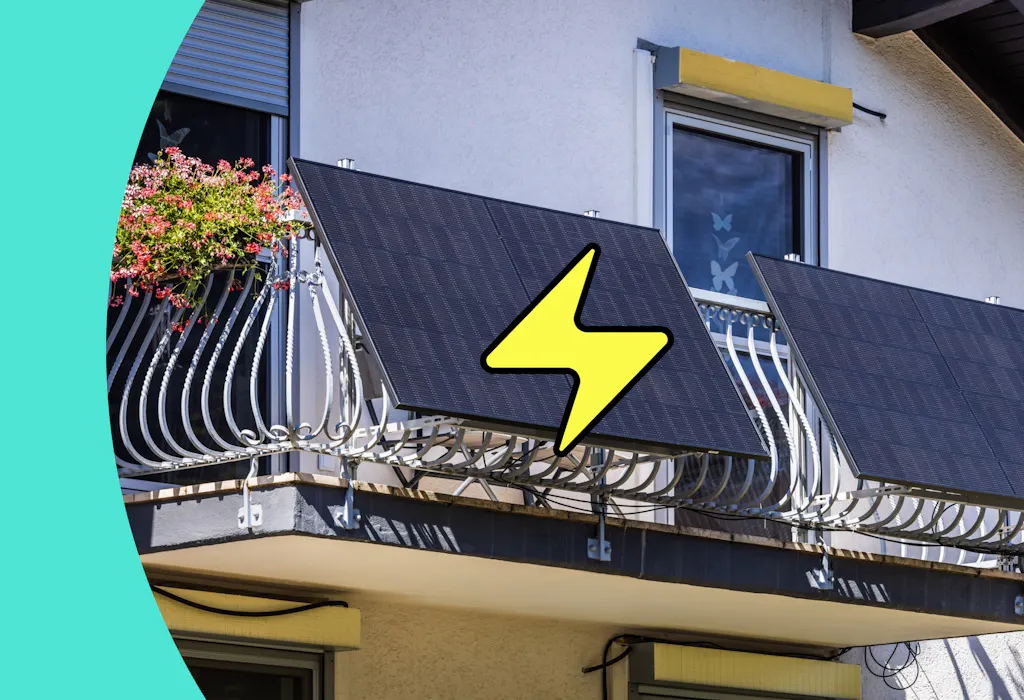
However, the government is currently working to change the rules around plug-in solar panels so that homes can use renewable technology to cut their energy bills“, and plug-in batteries may well follow in the coming years.
A plug-in battery isn’t the same as a portable power bank, despite some companies in the industry using the terms interchangeably.
You can charge portable power banks and take them away with you, for instance when you’re going on a camping trip.
These models can’t power your home, just individual devices, so they’re safe to use under current guidelines.
How does it work?
Once they’re plugged into a standard three-pin socket, these devices can charge from the grid, then discharge to the home when needed – all through the same socket.
You can use this technology to take advantage of time-of-use (TOU) tariffs.
These tariffs come with off-peak periods that allow households to charge their battery up with cheap electricity every night, then use it to power most (or all) of their usage during peak periods – potentially saving hundreds of pounds per year (more on this below).
TOU tariffs have been around since 1978 as Economy 7 rates, but there’s a whole new generation targeted at homes with renewable tech like EVs, heat pumps, and standalone batteries. See our guide to the best battery tariffs for the latest information.
You should be able to easily schedule your battery to charge up during the off-peak period through an app made by your system’s manufacturer.
This app will control your inverter, a vital machine that comes with your battery. It oversees your battery’s charging and discharging processes, and controls the speed of both steps.
Plug-in batteries also tend to have sockets in their side, so you can use them to directly charge devices like your phone in the event of a power cut.
Are plug-in batteries legal in the UK?
Plug-in batteries are legal in the UK, but current wiring regulations (BS 7671) state that any device which can feed electricity into your home must be installed on a dedicated circuit.
For the vast majority of households, this will mean hiring a professional electrician, which naturally adds to the cost of the system. Ignoring these regulations is potentially unsafe (more on this later).
Windfall Energy, a UK company that’s designed a residential plug-in battery, ultimately wants its product to be “installed as simply as setting up a new laptop”, but it’s following the current guidelines for now.
The firm said it’s managed to simplify the process so that an electrician should only charge “around £100” for the work.
This situation may not change for the foreseeable future, either.
The UK government clearly wants to encourage solar & battery system adoption, as shown recently by its drive to change the regulations surrounding plug-in solar panels – but batteries were left out of this process.
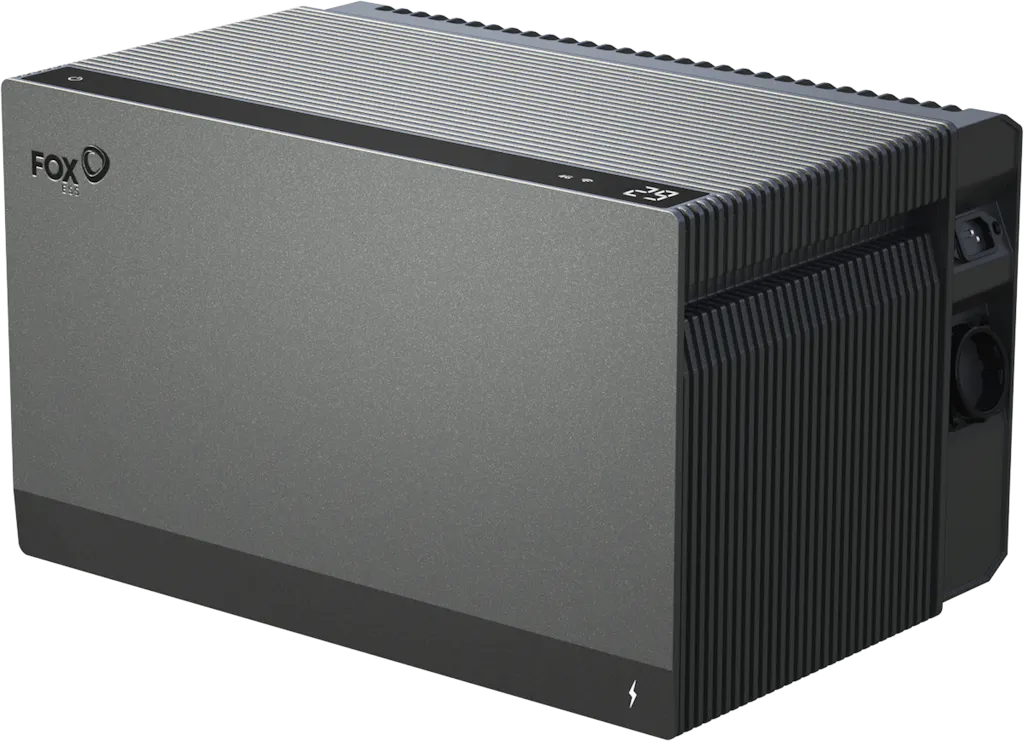
Battery manufacturer Fox ESS has said “clear and formalised guidance for plug-in battery systems remains limited.”
The company, which has also launched a plug-in battery called MiniQube, added: “Until regulatory frameworks are fully defined, the MiniQube should be installed in accordance with existing UK electrical and grid compliance standards.”
Plug-in battery safety concerns
There are a number of significant issues surrounding the idea of households plugging in batteries without professional assistance or a dedicated circuit.
Even if the regulations change soon, the UK’s domestic circuits and sockets may not be set up for plug-in batteries to operate safely.
1. Overloading the circuit
Unfortunately, it’s not safe to plug a battery into just any socket in your home.
If you do, the battery could feed electricity into your system without your circuit breakers knowing, because UK plug sockets aren’t designed for bidirectional electricity – that is, power going to and from the plugged-in device.
This phenomenon, known as ‘load masking’, happens because circuit breakers can only account for the electricity travelling from the fuse board.
When the battery is also supplying energy to your home, this can cause more power to flow through your wiring that it’s designed to handle – and for an extended period of time.
Your circuit breakers won’t spring into action and trip the circuit because as far as they know, they’re dealing with an appropriate amount of electricity.
This can potentially cause hotspots and a fire.
What about Germany?
Plug-in batteries are all the rage in Germany, where retailers like Aldi and Amazon are selling around half a million devices per year.
However, it’s safer to use plug-in batteries there, mostly because they – like most of the world – use radial circuits instead of ring circuits, which are common in the UK.
Ring circuits form a closed loop that starts and ends with your fuse board, unlike radial circuits, which begin at your fuse board and finish at the last socket.
This radial setup makes it significantly easier for an electrician to test and identify faults, which – as mentioned above – is the main safety issue with plug-in batteries.
But much like with driving on the left, there are no signs the UK will change its approach to the one used by the majority of countries.
Germany also has legislation that ensures households can only plug batteries into a dedicated socket that’s connected to a professionally installed, properly protected circuit with an industrial-grade commando plug.
2. Installing multiple modules
All the safety concerns associated with plug-in batteries are made more pressing by the fact that households can buy multiple battery modules – then connect them all to one circuit.
Just like other battery manufacturers, some plug-in companies encourage customers to stack devices, so they can easily create more storage.
Without a dedicated circuit installed by an electrician, this would risk massively overwhelming your home’s network, making a fault or a fire even more likely.
3. General fire risk
There’s also a risk that your battery itself will set on fire.
Current regulations (PAS 63100:2024) cover the traditional batteries that the great majority of homes get installed with their solar panels – but not plug-in versions.
They state that batteries must be set up in a well-ventilated area, separate from living spaces (usually outside or in a garage), and monitored for faults.
These guidelines don’t apply to plug-in batteries, so a whole new set of regulations would have to be created, so electricians know how to safely install your device.
These rules would likely include a requirement to install a fire alarm next to your battery, since this is already the case for standard batteries that are set up inside a home.
Who are plug-in batteries best suited for?
Plug-in batteries would be suitable for lots of households, should they ever become safe to install.
The main group to benefit would be people living in flats, who’ve been locked out of battery benefits for years.
Many residents of flats are renters, who often struggle to get permission from their landlord to install a standard home battery, and even if they do, batteries should still ideally go outside or in a garage – which are usually off-limits.
Even people who own a ground-floor flat generally don’t own the external wall – so they wouldn’t be able to put a battery there.
You can install a traditional battery in a flat as long as it’s fitted alongside a fire alarm, but not in a living space, meaning a loft is the only way forward – and UK flats don’t typically come with lofts.
In contrast, plug-in batteries don’t have to be installed outside or in a garage, and don’t require permission from a landlord.
How much do plug-in batteries cost?
Plug-in batteries cost around £500-£1,000 for a 2kWh-2.5kWh model. This makes them cheaper than standard home batteries, but they’re also significantly smaller.
Fox ESS’s 2.11kWh MiniQube is expected to sell for £500, while Windfall Energy’s 2.5kWh battery will reportedly be priced at £1,000.
In contrast, traditional batteries come with a £3,000-£7,000 price tag, depending on their size. You’ll get a much larger model though, which could help you save substantially more.
How much can you save with a plug-in battery?
Since plug-in batteries are new to the UK, and it’s currently against regulations to install one yourself, it’s not clear how much money these devices will save households.
Windfall Energy estimates that its 2.5kWh plug-in battery could save homes “up to £250 per year”, but this product isn’t set to be available until autumn 2026 – and there’s a waitlist.
The 2.11kWh Mini Qube and 2kWh Octopus Nook could likely save you similar amounts, depending on your usage and import tariff – but they’re still substantially undersized for most homes.
Your battery capacity should roughly match your daily electricity usage, and even Windfall’s 2.5kWh battery would only equate to about 913kWh per year.
That’s tiny compared to the average home’s consumption of 3,400kWh, meaning it’s only really capable of delivering meaningful savings for extremely low-usage households.
The average UK home should get a 9-10kWh battery to match its daily usage, and get a good return on investment.
For more information, read our guide to what size solar battery you need.
Plug-in batteries vs traditional batteries
It’s well worth looking into getting a traditional battery if you live in a suitable property, which usually means a house.
They can cut your energy bills without posing the same troubling safety risks as plug-in batteries, which can easily overload circuits and cause fires.
Even if the regulations change, UK homes will still need a massive overhaul, and the state of circuitry in most households will make plug-in batteries an ongoing safety concern.
Traditional models are a well-established technology, with decades of development, testing, and safe home usage behind them.
They’re more expensive, but crucially don’t pose the same safety risk as plug-in batteries – and they can secure you higher savings.
We generally recommend a 9-10kWh battery for the typical UK home with average electricity consumption, and plug-in batteries are around 2.5kWh at most.
Plus, if you want to use home battery backup when the grid goes down for an extended period, a small plug-in device won’t be sufficient unless your needs are extremely modest.
With a large traditional model, you can also combine a battery with solar panels to secure even better savings.
We don’t install plug-in batteries, but if you’d like to see the savings you could get from a traditional battery, just head here.
FAQs

Related articles
 Josh Jackman
 Josh Jackman
 Josh Jackman
 Josh Jackman
Written byJosh Jackman
Josh has written about the rapid rise of home solar for the past seven years. His data-driven work has been featured in United Nations and World Health Organisation documents, as well as publications including The Eco Experts, Financial Times, The Independent, The Telegraph, The Times, and The Sun. Josh has also been interviewed as a renewables expert on BBC One’s Rip-Off Britain, ITV1’s Tonight show, and BBC Radio 4 and 5.