- Solar advice hub
- Batteries
- Home battery backup for power cuts: is it worth it?
Home battery backup for power cuts: is it worth it?
Here's how home battery backup works, the different levels of electricity supply it offers, and whether it's worth it for your home – with or without solar panels.


Why you can trust our content
We know that the solar industry is full of misinformation, but we only use reliable sources, including:
- Our experienced solar experts, installers and system designers
- Our own database of solar & battery system designs
- Authoritative bodies like MCS and the UK government



Calculate savings
What kind of home do you live in?


Calculate savings
What kind of home do you live in?
Home battery backup: at a glance
Getting a solar & battery system is a great way to reduce your bills, lessen the effect of any energy price rises – and keep the lights on during power cuts.
An increasing number of batteries can be turned into backup systems, and though this extra expense isn’t worth it for most homes, it’s a lifesaver for some.
In this guide, we’ll run through the three levels of home battery backup, how it affects the size of battery you should get, and whether it’s right for your home.
At Sunsave, we offer different levels of home battery backup. If you’re wondering how much you could save with a solar & battery system, enter a few details below and we’ll provide an estimate.
Find out how much you can save
What kind of home do you live in?
What is home battery backup?
Home battery backup is a battery function that works to keep electricity flowing in your home during a power cut.
Solar panel systems automatically disconnect from the grid when it goes down, to ensure the panels don’t send electricity through power lines and electrocute the engineers who are working on them.
If you get home battery backup, however, your battery will be able to provide your household with electricity during blackouts.
Just buy one of the batteries that are suitable for home battery backup, then ask your installer – or a different electrician, after the installation – to set up one of the three levels of backup (more on this below).
While it’s commonly paired with solar & battery systems, you can also just get a standalone battery with home battery backup functionality.
This usually doesn’t make sense though, either financially – since you won’t be able to use an export tariff to offset the cost of the battery – or practically, as you can’t charge your battery during a power cut without solar panels.
The three types of home battery backup
You can decide between three levels of home battery backup. Your choice will allow you to either use a single socket, one or more circuits, or your entire home as normal.
It’s crucial that you tell your solar installer if you want home battery backup, and what you’d like it to power.
This way, they can accurately size your battery, inverter, and cables, which will be safer and more convenient for you (more on this below).
As you might expect, the price rises with each of the three levels, with the most extensive option – full home backup – being the most expensive.
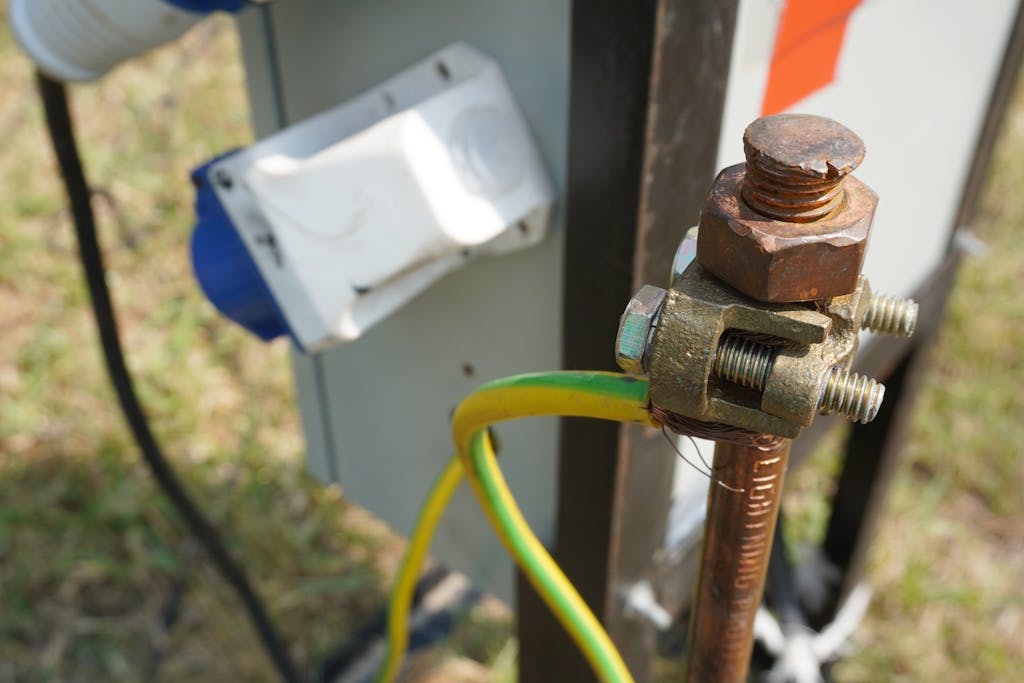
Whichever type you choose, you’ll need an earth rod (also known as an ‘earth spike’). A good installer will make sure it’s possible to safely fit one at your home before moving ahead with the rest of the process.
All UK homes have an earthing system, so that if one of your devices has a fault, electrical current will flow safely into the ground instead of electrocuting someone.
However, most households’ earthing capabilities will fail in a power cut, so you’ll almost certainly need an earth rod installed with your home battery backup.
We’ll go into more depth on earth rods and whether your home’s suitable for one below.

1. Emergency Power Supply
If you get the Emergency Power Supply (EPS) level, you’ll have a new socket installed that you can plug a device into during a power cut.
This will allow you to charge your phone, run your fridge, or keep your wifi on – for example – while you wait for the electricity to come back on.
To make this happen, your installer will fit a second fuse board that’s wired into both the inverter and the new socket.
Both the new fuse board and socket can go inside or outside – as long as they’re weather-resistant – but must be located within five metres of your battery and inverter.
Once this system is set up, the fuse board will only turn on when it senses a power cut. All you’ll need to do when the lights go down is choose a device and plug it in.
This is the cheapest level of home battery backup, as it only allows you to power one device at a time.
However, you can always upgrade it to an Uninterrupted Power Supply at a later stage, so you could start at EPS and see how it goes.
2. Uninterrupted Power Supply
If you get Uninterrupted Power Supply (UPS), also known as Critical Circuits backup, you won’t experience any loss of power when an outage happens.
The switchover to battery power will happen automatically, without you having to plug anything in, making it perfect for devices that cannot go off for any period of time – like vital medical equipment.
Again, a professional will start by setting up a second fuse board and wiring it into the inverter. They’ll then connect your chosen circuits to the fuse board.
These circuits will stay on constantly, whether there’s a power cut or not.
UPS is more expensive than EPS, but if you have one or more devices that need to always be on, it could be the best solution for you.
3. Full home backup
Some manufacturers can sell you an additional piece of hardware called a backup box, which makes it possible for you to run your entire household on battery power.
A qualified professional can set up this machine so that your home automatically switches over to using your battery within a few seconds of the grid failing.
The installer will position this box near your home’s connection to the grid, which is usually located under the stairs, by the front door, or in a meter box outside.
Backup boxes are waterproof, so if your mains connection is outside, that’s no problem.
And when the box detects a power cut, it’ll spring into action, and you’ll be able to continue as normal for as long as your battery lasts.
At Sunsave, we offer different levels of home battery backup. If you’re wondering how much you could save with a solar & battery system installed by us, enter a few details below and we’ll provide an estimate.
Find out how much you can save
What kind of home do you live in?
Resizing your battery for home backup
For any level of home battery backup, you’ll need to set aside some of your battery’s capacity so it’s available to use in the event of a power cut.
A good installer will assess your needs, talk you through the options, and come to an agreement with you about how much electricity you’d like to have on hand at any given time.
They’ll then set a minimum charge level, which will stop the battery from discharging beyond a certain point. This will stop you from accidentally using too much electricity and leaving yourself short in a power cut.
Because part of your battery will act as a backup supply, you’ll need to get a larger battery than you would otherwise, to ensure your daily needs are met too.
Almost all the financial benefits of having a battery will come from day-to-day usage – and if it’s smaller than it should be, your solar savings will be too.
The right installer will increase the size of your battery according to your requirements, but as a rule of thumb, they’ll probably go up by:
- 20% for EPS
- 30% for UPS
- 40% for full home backup
Your inverter and cables will also need to be replaced with larger versions to accommodate home battery backup – and your installer should take care of this too.
Verified expertEven if you have a battery that can provide whole-home backup, it’s unlikely to fully shield you from the negative effects of a powercut. For instance, if your local substation has gone down, you probably won’t be able to access the internet - regardless of your setup.
Andrei Stavila
Technical Manager at Sunsave
Andrei has worked in residential solar installation for more than 17 years, and is a fully qualified electrical engineer.

Is your home suitable for home battery backup?
Many homes are suitable for home battery backup, but whether yours is will depend on a couple of factors.
Firstly, you’ll need to have an earth rod installed.
If you have a standard back garden, that should be sufficient, but if it’s covered with concrete or a patio – as is often the case with homes in cities – that could be trickier.
You’ll have to help your installer find a spot near your property where they can remove a slab and drive an earth rod into the ground.
And if you want your installer to set up full home backup, you’ll need somewhere to put a battery that’s around 40% larger than it would usually be, with a backup box nearby.
If you don’t have enough space for these devices, full home backup won’t be possible.
Is home battery backup worth it in the UK?
Home battery backup isn’t generally necessary in the UK, because the typical home is barely affected by power cuts, if at all.
The average household experiences 0.4 outages per year, and loses electricity for around 36 minutes in total, according to the latest Ofgem report.
These numbers are falling, too. The average home goes through 38% fewer power cuts now than it did in 2009/10, while the amount of time that households spend without electricity has dropped by 43%.
And even when they do happen, you may not notice them, as power cuts are generally scheduled to occur at off-peak times.
For many people, home battery backup is an unnecessary expense that essentially saves you from being in the dark for a few hours every decade, if that.
However, these statistics are just averages. For households with crucial medical equipment that has to stay on, or ones that regularly experience power cuts (e.g. in very remote areas), home battery backup can be a lifesaver.
Many solar companies will try to upsell you with scary images of your home being plunged into darkness. You now have the data to make an informed decision.
Can all batteries provide home backup?
Many domestic batteries now come with home battery backup functionality.
This wasn’t the case even recently – but as the cost of this feature and batteries in general continue to fall, an increasing number of manufacturers have started to include it.
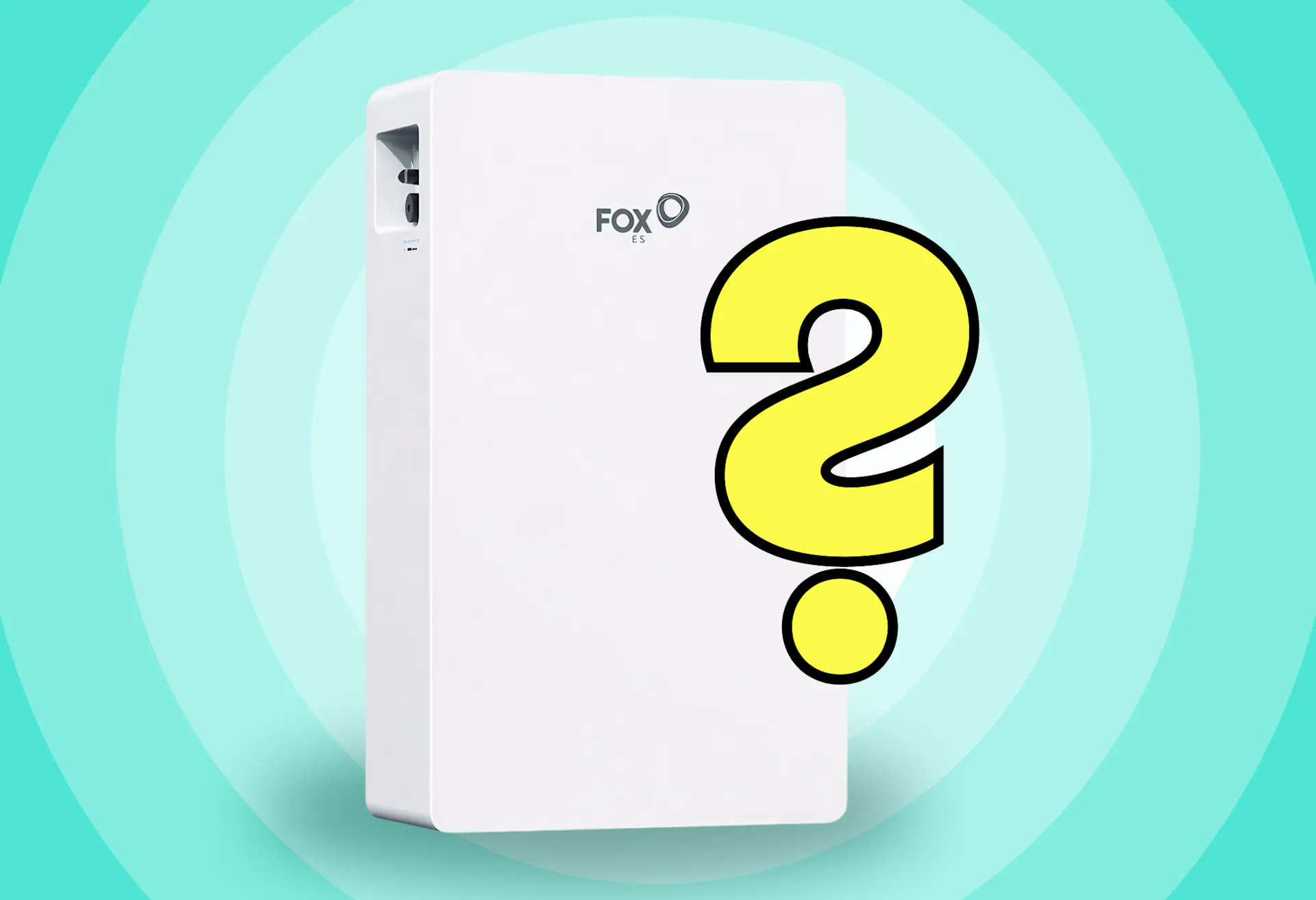
You can currently buy models with home battery backup from reputable brands such as Fox ESS and Tesla.
And that number is likely to keep rising in the coming years.
Summary
Home battery backup isn’t worth it for the majority of homes in the UK.
Unless power cuts are a frequent, damaging event in your life, or you have vital medical equipment like a dialysis machine, it’s not necessary.
The average household will have to deal with two power cuts every five years. If you want to pay a bit extra to avoid these moments, you should consider getting home battery backup.
But if you rarely lose power, you can save some money by avoiding it.
At Sunsave, we offer various levels of home battery backup. If you’re wondering how much you could save with a solar & battery system, enter a few details below and we’ll provide an estimate.
Find out how much you can save
What kind of home do you live in?
Home battery backup: FAQs

Related articles
 Josh Jackman
 Josh Jackman
 Josh JackmanJosh Jackman
Written byJosh Jackman
Josh has written about the rapid rise of home solar for the past seven years. His data-driven work has been featured in United Nations and World Health Organisation documents, as well as publications including The Eco Experts, Financial Times, The Independent, The Telegraph, The Times, and The Sun. Josh has also been interviewed as a renewables expert on BBC One’s Rip-Off Britain, ITV1’s Tonight show, and BBC Radio 4 and 5.