- Solar advice hub
- Batteries
- Can you add a battery to an existing solar panel system?
Can you add a battery to an existing solar panel system?
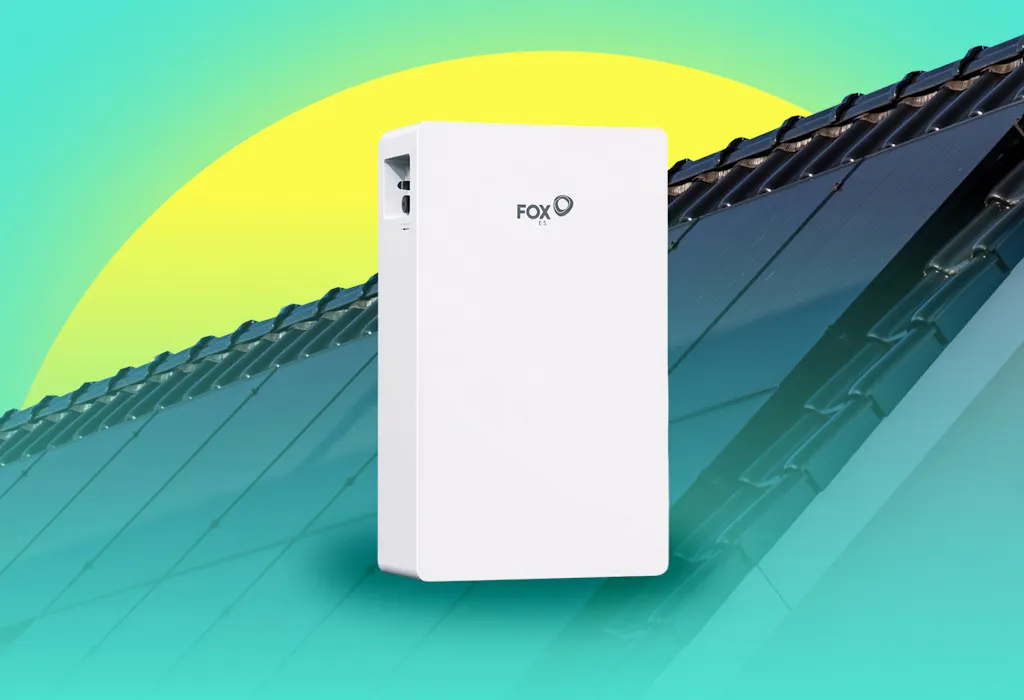
There are a couple of ways to retrofit a battery to solar panels, but the easiest is usually AC-coupled. Here's what you need to know.


Why you can trust our content
We know that the solar industry is full of misinformation, but we only use reliable sources, including:
- Our experienced solar experts, installers and system designers
- Our own database of solar & battery system designs
- Authoritative bodies like MCS and the UK government



Calculate savings
What kind of home do you live in?


Calculate savings
What kind of home do you live in?
At a glance
If you’re already saving money by generating your own solar electricity, it can be tempting to leave your system alone – but adding a battery is usually doable and profitable.
There are a couple of ways to connect a battery to an existing system, and both of them allow you to cut how much electricity you buy from the grid, increase your export income, and sign up for the best import tariffs around.
In this guide, we’ll run through how an installer can retrofit a battery in your home, why it’s usually a step worth taking, how this affects Feed-in Tariff payments, and what size you should get.
If you’re wondering how much you could save with a solar & battery system, enter a few details below and we’ll provide an estimate.
Find out how much you can save
What kind of home do you live in?
Can you retrofit a battery to solar panels?
You can definitely retrofit a battery to solar panels.
If your system is particularly old, the inverter may need to be upgraded to a new model, but this is manageable and will usually help boost your savings.
There are a couple of different ways to add a battery to an existing solar installation, which we’ll cover in detail below.
More than 940,000 UK households switched to solar in the 2010s, but batteries only really became a standard part of solar installations around 2020.
That means there may well be nearly a million solar homes across the country that don’t have a battery.
They used to be seen as expensive and unnecessary, but nowadays the benefits massively outweigh the drawbacks.
With a battery, you can use more of the electricity your panels generate, gain access to better export tariffs, sign up for a virtual power plant, and benefit from time-of-use (TOU) import tariffs (more on this further down).
How does retrofitting a battery work?
You have two main routes towards retrofitting a home battery: AC-coupled and DC-coupled.
Both of these options allow the battery to be charged by both the grid and your solar panels; they just go about it in different ways.
Don’t worry, though: you shouldn’t have to work out which approach is better for your household, since a good installer will do it for you.
AC-coupled retrofit
This is the most common way to add a battery to your solar panel system, and with good reason.
In the 2010s, UK systems were almost exclusively installed with a standard string inverter, which connects straight to your solar panels. Since panels produce Direct Current (DC) electricity, this is the DC side of the system.
A string inverter can convert DC electricity into Alternating Current (AC) power – but they can’t connect to a battery. This makes DC-coupling – where an installer links your battery directly to your solar panels – completely unfeasible.
The alternative is connecting a battery straight to your home, which uses AC electricity – so it’s called AC-coupling.
In this setup, your solar panels will send DC power through your inverter, which will pass it on to your home as AC electricity. It’ll then flow through your fuse board to everything that needs power, including your battery.
Effectively, the battery will act as just another energy-intensive appliance – except of course that it’s storing the great majority of the electricity it receives, rather than using it.
Your solar inverter can continue unaffected, and your battery’s inverter – which deals with charging and discharging to your home and the grid – is happy to function as if your solar panels don’t exist.
However, if the two inverters combined have a maximum capacity over 3.68kW, your installer will need to send a G99 application to your Distribution Network Operator (DNO) – that is, the body that runs the hardware supplying your region with electricity.
Without a G99, your export capacity will be limited to 3.68kW, which will affect how much money you can earn from selling electricity to the grid.
For more information, check out our guide to AC-coupled batteries.
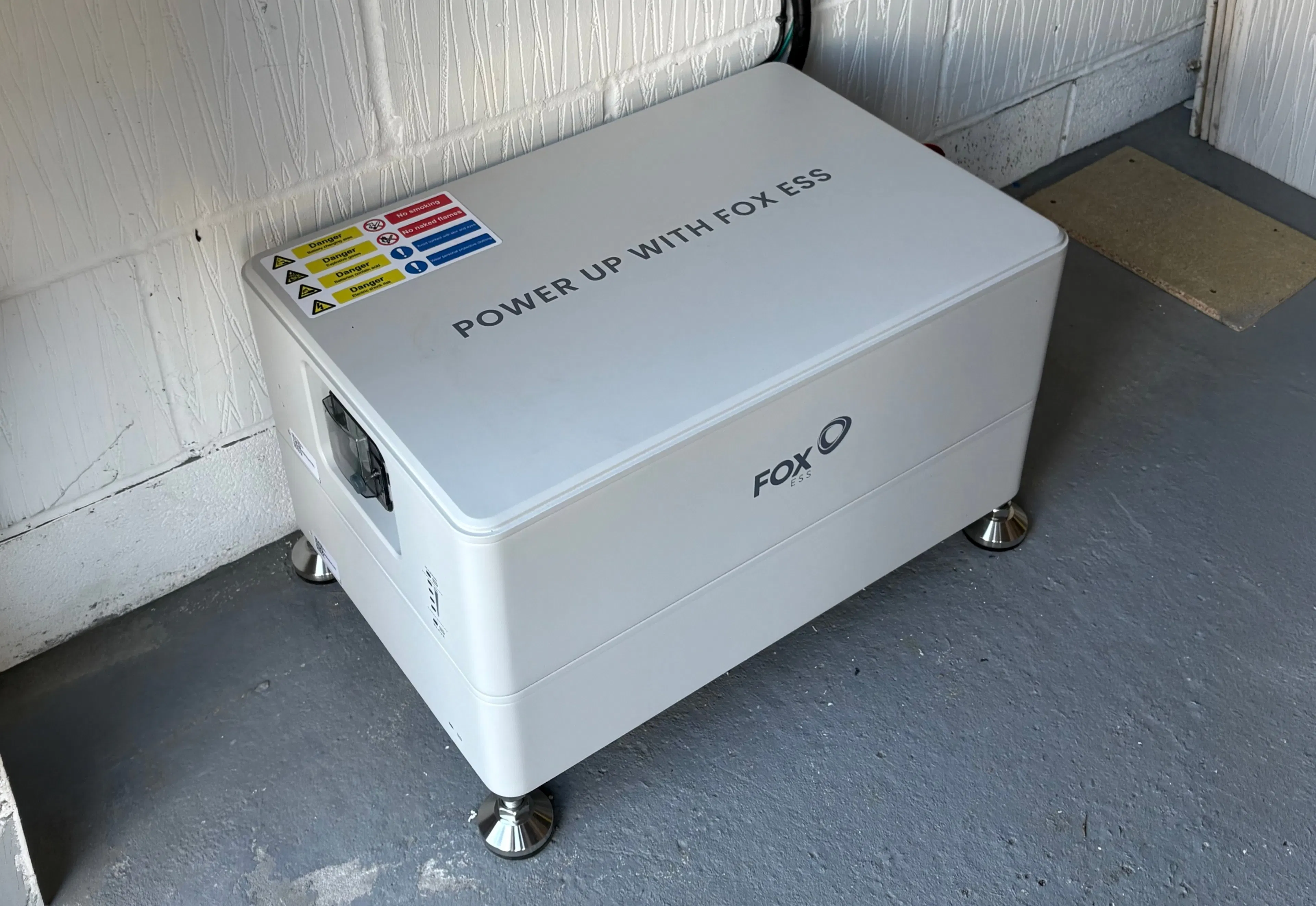
DC-coupled retrofit
This method is far less common because it requires you to replace your standard string inverter – which makes it more expensive.
You’d need a hybrid inverter, which generally costs about £1,000-£2,000, plus labour.
This upgrade only really makes sense if your inverter is around 10-15 years old, as you’d be replacing it soon anyway. 34% of inverters fail by the end of year 15, according to a Bern University of Applied Sciences study from 2023.
Your new inverter needs to be a hybrid model, so it can deal with both your panels and your battery.
DC electricity will flow straight from your panels to the battery, with no need for a conversion.
This makes it more efficient, meaning the system will hold on to slightly more solar electricity than an AC-coupled battery would.
And if you replace your old inverter with one of the same size, your installer won’t have to apply for permission again.
For example, if your old inverter is under 3.68kW, and your new one is too, your system won’t require a new G98 certificate.
If you’re wondering how much you could save with a solar & battery system, enter a few details below and we’ll provide an estimate.
Find out how much you can save
What kind of home do you live in?
Why it’s worth adding a battery to your system
Batteries are now seen as a key part of a solar installation, as they add so much value to a system.
That explains why 94% of new solar panel installations in the UK include a battery, according to data from EPVS and Flexi-Orb.
Here are the main ways in which they can boost your solar savings and earnings.
1. Increased self-consumption
Solar batteries allow you to use more of the electricity your panels generate, as you can store excess energy instead of automatically exporting it to the grid.
This will mean you earn less export income, which you either receive via your SEG tariff or – if you got a solar panel system before March 2019 – your Feed-in Tariff (FiT) export payments.
In the vast majority of cases though, this reduction will be outweighed by your savings, as you won’t have to buy nearly as much electricity from the grid.
2. Better export tariffs
When you do export your excess electricity, you’ll have access to a broader range of attractive tariffs.
These include two of the very best – Intelligent Octopus Flux and Octopus Flux – which both require customers to own a battery.
You won’t be able to access these better tariffs if you’re getting your export income through the FiT – but we’ve worked out that most solar homes should switch from FiT export to an SEG tariff anyway.
To see the current top export tariffs, read our guide to the best SEG rates.
3. More benefit from TOU tariffs
Every day, you’ll be able to import cheap, off-peak electricity on a TOU tariff, store it in your battery, and use it to power part (or all) of your home’s daily consumption.
Without a battery, the only way to take advantage of a TOU tariff is to set all your energy-intensive appliances to run during off-peak hours.
For the rest of the day, you’ll be left on the peak rate, which will eat into your savings.
With a battery, you can schedule it to charge up to full during the off-peak period, then relax, safe in the knowledge that a huge chunk of your usage is powered by cheap electricity.
For more information, read our full guide to time-of-use tariffs.
4. Access to virtual power plants
You’ll be able to join a virtual power plant (VPP), which is a group of small renewable generators, batteries, and/or smart devices that’s controlled by a company for maximum profit.
The firm running the VPP can sell this electricity to help balance the national grid – that is, ensure supply remains almost exactly the same as demand, which maintains the frequency at around 50 hertz.
The company can charge and discharge your battery (and hundreds or even thousands of others) to the grid, like any traditional power plant. This allows households to benefit from energy trading in a way that’d be impossible by themselves.
Most of the pioneering households that made the early switch to solar did so without a battery, and now risk missing out on new opportunities like VPPs.
To learn more, check out our guide to virtual power plants.
5. Protection from power cuts
If you get a battery with the right capabilities, you can ask your installer or another electrician to set you up with one of three levels of backup.
In a power cut, this will allow you to run one, several, or all of your devices with electricity from your battery.
This is rarely necessary though, since the average UK home goes through just 0.4 outages per year, and loses electricity for about 36 minutes overall, according to Ofgem.
You’ll also have to leave around 20-40% of your battery unused at all times, to ensure you have some power when the grid goes down. This will reduce your savings and export income, unless you get a larger battery – which costs more.
For further information, read our guide to home battery backup.
Will adding a battery affect your FiT payments?
If you got your solar panels installed before March 2019, you’ll almost certainly be receiving FiT payments.
This will include generation and export earnings, unless you’ve switched your export tariff to an SEG rate.
Adding a battery will not stop you getting money from the FiT, as long as your installer sets up the system properly.
Ofgem guidelines say that when you get a battery retrofit, “there must be no risk that support is claimed for, and issued upon, electricity that was not generated by the accredited generating station or installation.”
Essentially, your installer must ensure that your generation meter only tracks electricity produced by your panels, and never includes grid electricity that your battery imports and exports.
If you get an AC-coupled battery, it’ll be downstream from the generation meter, which avoids this risk entirely.
However, if you replace your inverter and get a DC-coupled battery, your installer will need to provide you with a bidirectional meter, which can measure imported and exported electricity.
A good installer will identify this requirement, include it in their initial design, and provide your FiT supplier with all the relevant information.
This includes an updated diagram of the system, details of your battery, and the specifics of your bidirectional meter, if necessary.
Your system will naturally export less to the grid with a battery, as more of your solar electricity will go to powering your home, so you’ll receive smaller FiT export payments.
What size battery do you need?
The average household should add a 9-10kWh battery to an existing solar panel system.
It’s usually a good approach to match your battery size to your daily electricity consumption, and the average UK home uses 3,400kWh per year – or 9.3kWh per day.
Your best first step is to find out how much electricity you use per year, then divide that total by 365.
The only reason not to take this approach is if your usage is about to change – maybe because you’re buying or selling an electric car, or welcoming a new member of your household.
To learn more, read our full guide to working out what size solar battery you need.
Summary
A battery makes an excellent addition to a solar panel system, as it can save and earn you significantly more money.
You can use more of the electricity your panels generate, gain access to the best export tariffs, benefit much more significantly from TOU tariffs, and join a VPP.
And if you suffer from frequent power cuts or have medical equipment that needs to always be on, the right battery can provide you with backup power when the grid goes down.
A competent installer will ensure you get the right size and setup for your home.
If you’re wondering how much you could save with a solar & battery system, enter a few details below and we’ll provide an estimate.
FAQs

Related articles
 Josh Jackman
 Josh Jackman
 Josh Jackman
 Josh Jackman
Written byJosh Jackman
Josh has written about the rapid rise of home solar for the past seven years. His data-driven work has been featured in United Nations and World Health Organisation documents, as well as publications including The Eco Experts, Financial Times, The Independent, The Telegraph, The Times, and The Sun. Josh has also been interviewed as a renewables expert on BBC One’s Rip-Off Britain, ITV1’s Tonight show, and BBC Radio 4 and 5.