Why are energy prices going up?
The energy price cap rose by 4% in October 2026, and is expected to rise again in January. Here's why, as well as what you can do about it.


Why you can trust our content
We know that the solar industry is full of misinformation, but we only use reliable sources, including:
- Our experienced solar experts, installers and system designers
- Our own database of solar & battery system designs
- Authoritative bodies like MCS and the UK government




Calculate savings
What kind of home do you live in?


Calculate savings
What kind of home do you live in?
Energy price forecasts: at a glance
Energy prices have risen massively over the past few years, and are expected to stay high until the late 2030s.
The energy crisis has caused distress and hardship all over the country, with millions thrust into fuel poverty and countless households having to make painful cuts to get by.
Ofgem has raised the energy price cap by 4% for the three-month period starting in October 2026, which is largely caused by the Iran conflict and Europe's summer heatwave.
Prices are set to keep rising, with industry experts predicting a more significant increase in the January 2027 price cap, which will be announced in November.
In this guide, we’ll explain why the cost of electricity is going up, and why prices are set to continue rising in the long term.
And if you’re wondering how much you could save on your energy bills with a solar & battery system, enter a few details below and we’ll provide an estimate.
Find out how much you can save
What kind of home do you live in?
What’s happening to UK energy prices?
UK energy bills rose by 4% on 1 October 2026, to £1,723 per year for a typical household paying by direct debit, which is £60 more than the July cap of £1,663.
There hasn't been a higher price cap since October 2023, and when adjusted for inflation, it's 7% higher than it was during the same period in 2025.
Industry experts expect energy bills to rise dramatically in January 2027 – and continue to increase in the long term (more on this below).
The energy price cap is the maximum amount that can be charged for each unit of gas and electricity used on a standard or default tariff by a dual-fuel household which pays with direct debit.
Ofgem uses the cap to set a maximum amount that homes can pay for each unit of gas and electricity – so there’s no limit on your total bill. If you use more energy, you pay more.
It’s like if you set a 50p cap on the price of each apple: you couldn’t be charged more than 50p per apple, but if you bought 100 apples, you’d still pay up to £50.
The new £1,723 figure comes from Ofgem's assessment that over a year, the "medium" home uses 2,500 kilowatt-hours (kWh) of electricity and 9,500kWh of gas.
These are known as the Typical Domestic Consumption Values (TDCVs). Ofgem alters these numbers roughly every three years, with the latest set coming out in July 2026.
Based on the previous TDCVs (which were higher), the October 2026 price cap would've been £1,935.
The energy crisis of 2022/23 saw costs reach unprecedented heights, and its after-effects are still visible. Households are paying 58% more than they were for energy at the same time in 2021.
That's £630 more per year for the average household, for the same service, and energy costs seem unlikely to return to their pre-2022 level soon – if ever.
Energy price cap changes, Jan 2024-Oct 2026
New electricity and gas unit rates
Price cap per kWh, Jul-Sep 2026 | Price cap per kWh, Oct-Dec 2026 | Change | |
|---|---|---|---|
Electricity unit rate | 26.11p | 26.32p | 0.8% |
Electricity standing charge | 57.19p | 54.83p | -4.13% |
Gas unit rate | 7.33p | 7.97p | 8.73% |
Gas standing charge | 29.04p | 29.68p | 2.2% |
The October price cap increase is mainly down to the wholesale price of gas staying high, due to the Iran war.
The government has cut energy costs by arranging for the ECO scheme to close at the end of 2026, by shifting 75% of Renewables Obligation scheme funding to general taxation, and by eliminating VAT on electricity – but global events mean prices are still rising overall.
The main change is the unit rate of gas, which went up by a hefty 8.7% to 7.97p per kWh – its highest point since June 2023, when the previous energy crisis was in full swing.
The gas standing charge has also risen, by 2.2% to 29.68p per day.
Ofgem has increased electricity's unit rate as well, though only by 0.8%, to 26.32p per kWh, while the electricity standing charge actually fell by 4.1%, to 54.83p per day.
The electricity unit rate has been high for years, as you can see in the following chart.
Electricity unit rate on the price cap, Jan 2024-Oct 2026
Why has the price cap increased in October 2026?
The main driver behind the price cap going up in October 2026 was the rising cost of wholesale gas.
This is largely due to the Iran war and the resulting geopolitical instability in the region, which have led to a significant drop in gas production.
Ofgem's Neil Kenward said: "High international gas prices are continuing to drive energy costs in the UK."
To make it worse, record-breaking summers in Britain and Europe have reduced energy stocks over the past few months, while wind generation has been relatively low.
And despite the government reducing the VAT rate on electricity to 0%, the price cap still rose.
It looks set to keep increasing, too. The £15 billion Warm Homes Plan will likely be funded via energy bills, and network costs will go up as the UK keeps expanding the grid to meet increasing electricity demand.
Octopus Energy’s Rachel Fletcher told MPs in October 2025 that as a result, household energy bills would likely rise by 20% over the next four years – even if wholesale prices fall.
And Centrica chief executive Chris O’Shea said in February 2026 that electricity will be more expensive in 2030 than it was after Russia invaded Ukraine, which worsened the pre-existing energy crisis.
Wholesale costs
Wholesale energy prices have gone up by 11% in the past three months, mainly due to the Iran war.
As a result, wholesale costs now make up 47% of the total price cap, up from 44% in July 2026.
Ofgem has said: "The continued conflict and geopolitical instability in the Middle East has been the primary driver for wholesale market movements over the last three months".
Other factors include supply disruption in Norway, strong demand from Asia, and an especially hot summer that meant more energy was used to cool homes. This has led to reduced gas stocks across Europe.
The Strait of Hormuz has remained mostly closed since March (more on this below).
This has led Ofgem to raise its maximum unit rate for gas by 8.7% – and because gas continues to have a large impact on the price of electricity in the UK, that cost has stayed high.

But hasn't the VAT rate come down?
Yes: on 21 July 2026, the UK government announced it would cut the VAT rate on household electricity bills from 5% to 0%, from 1 October 2026 to 31 March 2027.
This reduction is worth around £45 per year for the average household in Britain.
Gas bills still come with a VAT rate of 5%, though.
This is part of the reason why the electricity unit rate has only risen by 0.8%, while the gas unit rate has spiked by 8.7%.
Households that don't use gas will therefore see a much smaller bill increase, though that only includes 16% of British homes.
This relatively small VAT reduction is also only temporary, as it's set to end in March 2027, after six months in effect.
Just like the government ending the ECO scheme and shifting policy costs from energy bills to general taxation in April 2026, it's a short-term fix that won't stop bills rising in the medium or long term.
Cornwall Insight's Craig Lowrey has described the current situation as "a perpetual cycle of global shocks, high bills and short-term fixes".
How has the Iran conflict affected the price cap?
The US and Israel’s conflict with Iran, which started all the way back in February 2026, has triggered large increases in the cost of gas and oil.
The price of oil hit a four-year high on 30 April 2026, reaching $126 (£94) per barrel before falling the next day. And within three weeks of the start of the war, the cost of European natural gas had nearly doubled.
This is largely because about 20% of the world’s gas and oil trade passes through a waterway between Oman and Iran called the Strait of Hormuz.
In 2025, 20 million barrels passed through the strait per day, but Iran has mostly kept it closed since early March.
It reopened for a few weeks after the parties signed a memorandum of understanding in June, but fighting resumed in July, leaving the strait more or less shut again.
Iran and Oman agreed on a temporary route in August, to be used only by approved ships that pay a toll, but it hasn't yet come into effect – and on 28 September, Trump rejected Iran's proposal to fully reopen the strait.
This caused a spike in the price of oil, with Brent crude rising above $107 (£81) per barrel.
Ships still cross the strait, but at a massively reduced rate. There were 132 trips through the waterway from 21 to 27 September, compared to roughly 130 per day before the war started.
The world’s supply of gas and oil has rapidly shrunk since the war began, which has naturally increased prices.
European gas prices hit a new peak on 9 September, at more than €80 (£69) per MWh – their highest point since January 2023.
The price has dropped since then, but is still more than double the pre-war level of around €30-€31.
The cost of electricity has risen too, because gas power plants are one of the most popular ways to produce electricity globally. Gas also sets the price of electricity about 60% of the time in the UK.
International markets always affect the price of fossil fuels like oil and gas, regardless of whether it's produced in the UK or imported from abroad.
As the UK government said on 6 March 2026: "We are price-takers, not price-makers."
UK households are having to deal with energy price spikes as a result, but costs could yet spiral even higher.
The EU's Energy Commissioner has said gas storage levels are "exceptionally low" across the continent, with stores currently containing around 70%, on average.
In March, the European Commission relaxed its 90% refill target – in place since Russia's full-scale invasion of Ukraine in 2022 – to 75%-80%, to discourage panic buying. These lower gas levels could keep prices high this winter.
Will energy bills rise again in January?
The energy price cap seems set to rise significantly in January 2027.
Cornwall Insight has forecasted a 16% rise, while EDF's latest prediction is a 20.5% increase.
It looks likely to be the largest single price cap hike since at least April 2023, when the last energy crisis was in full swing.
Even Cornwall Insight's prediction, which is lower than EDF's, has the electricity unit rate at 30.28p per kWh and the gas unit rate at 9.76p per kWh. Neither of them have been that high since – again – the April 2023 price cap.
Why might energy bills increase in the long term?
Cornwall Insight has forecasted that energy prices will remain high until the late 2030s, with a relatively small decline in costs in the late 2020s, followed by a significant price rise in the next decade.
Energy bills are likely to increase for a number of reasons:
- Increased demand for electricity
- More electricity exports
- LNG imports
- Grid upgrades
- Rising costs of grid balancing
- Ageing gas and nuclear facilities
- Delays to nuclear plants
- Inflation
Here’s some more detail on each of these factors.
1. Increased demand for electricity
To meet our legally binding target of net-zero emissions by 2050, the UK will have to replace much of its gas, oil, and petrol usage with electricity.
As the popularity of electric vehicles and heat pumps surges, our electricity consumption in 2050 could rise to more than double its 2023 level, according to the Climate Change Committee.
And that’s without taking into account the massively increased demand for electricity from data centres.
Power networks are currently dealing with as much as 100 gigawatts’ (GW) worth of requests from data centres eager to connect to the grid, out of a total of 125GW.
Ofgem has accepted that “data centres account for a significant share of growth in the demand queue” and said the number of requests “exceeds even the most ambitious forecasts for future demand.”
We’ll also have to increasingly get our electricity from renewable sources like solar, wind, and hydropower.
This shift will lower energy prices eventually, but not for a few decades at least. Much of the cost of building up our renewable capacity – not to mention expanding the electricity grid – will be placed on customers.
Gas will inevitably be required throughout this rapid process of electrification, as we rush to create the storage needed to keep providing us with electricity during periods with low amounts of wind and sun.
So it’s not ideal that gas prices are predicted to stay high until 2050, according to the UK government.
2. More electricity exports
Over the next decade or two, UK companies will export more of their electricity to Europe, particularly as France’s government-owned nuclear capacity continues to decline.
The country’s nuclear power plants now have an average age of 40.5 years, having been initially designed to run for 30.
France’s national safety authority has permitted its older reactors to run for at least 50 years, they’re already showing their age.
Its 57 nuclear reactors produced 373TWh in 2025, which represented a third consecutive year of growth – but this was less than the plants produced in any year from 2000 to 2019.
EDF’s production levels are declining, and this reduction in the amount of available electricity across Europe will cause prices to rise.
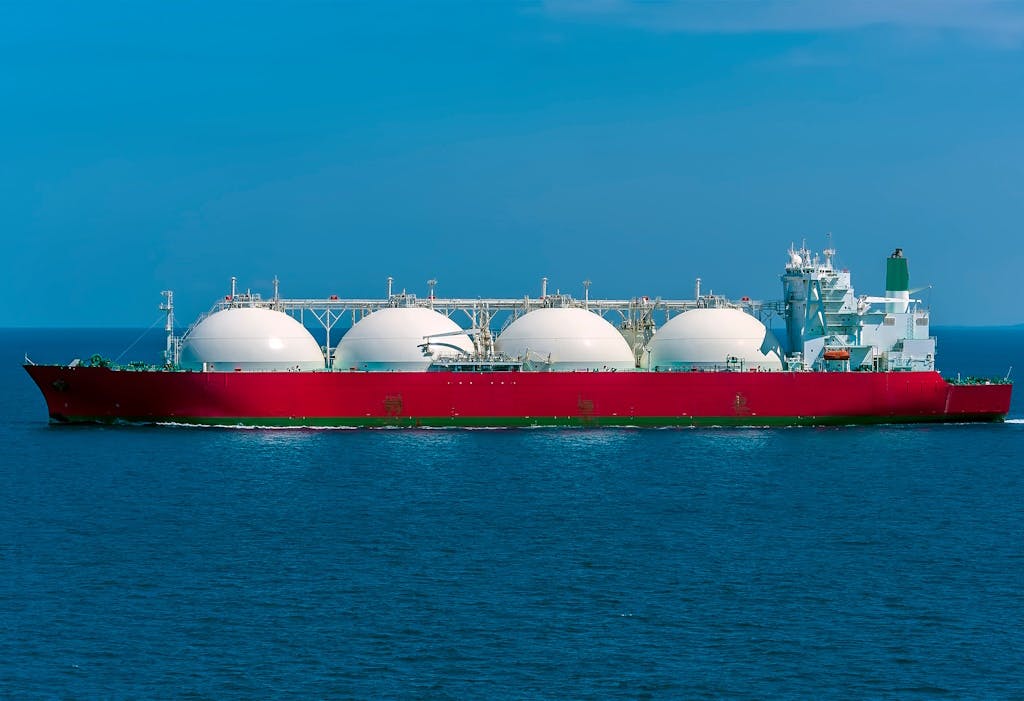
3. LNG imports
The UK imports a significant amount of LNG to power its electricity generation – though this figure is rapidly decreasing.
We imported a combined 248,000GWh of LNG across 2024 and 2025, which was 49% less than we did across 2022 and 2023.
Between 2024 and 2025, LNG made up 27% of our total gas imports, down from 44% across 2022 and 2023.
And yet, considering gas generated 26.8% of the electricity used in the UK in 2025, LNG still fulfils a large portion of our needs – which leaves us vulnerable.
88% of our LNG imports in 2025 came from the US, Algeria, and Qatar. Geopolitical turbulence in any of these countries could significantly reduce our supply of gas, with little to no warning – which is exactly what's happened.
QatarEnergy suspended LNG deliveries after the Iran war began, and recently extended this policy until at least the end of November 2026.
Any fall in our supply levels leads to a rise in household energy bills.
If the drop is sudden, as it often is when international relations break down, this could leave little time to find new sources, resulting in higher price increases for customers.
For more information on our current energy sources, read our guide to where the UK gets its gas from.
4. Grid upgrades
In July 2025, Ofgem authorised energy companies to spend £24 billion on improving the country's various power grids by 2031.
£15 billion will go towards maintaining our gas transmission and distribution networks, while another £8.9 billion will fund the expansion of Britain’s high-voltage electricity network.
This project’s new power lines and substations will be made to handle an increase in electricity capacity of up to 126GW by 2030 – all from renewable sources. In 2024, our capacity was 71.7GW.
There's another £1.3 billion in reserve, if needed, as the country embarks on the biggest expansion of the electricity grid since the 1960s.
And this funding is only the first part of a programme to boost the electricity network's capacity, which will end up costing an estimated £80 billion by 2030.
This investment will be paid for by energy customers, as is usually the way, raising the average home's annual bill by around £104 by 2031.
EDF has warned of "an expected increase to other network costs from Q2-27, resulting in an overall increase to our forecasts from Q2-27 onwards" – meaning prices could rise in April 2027.
5. Rising costs of grid balancing
Balancing the electricity grid involves controlling supply so that it stays almost exactly level with demand.
The publicly owned National Energy System Operator (NESO) – which runs Britain’s electricity transmission system – uses this mechanism to prevent blackouts.
But in recent times, the cost of balancing has gone up significantly.
It’s set to peak at around £8 billion in 2030, according to NESO – though the operator has said this figure could be halved if projects to prepare and expand the network are brought forward.
This potential £8 billion price tag is largely due to the rising cost of electricity.
Wholesale electricity is more expensive than it used to be, and when NESO needs to pay for suppliers to provide energy at short notice, it costs more.
Another factor is the increasingly volatile nature of the electricity mix, with the surge in renewable capacity giving rise to more periods when supply falls dramatically – for example, when the wind drops unexpectedly.
Every time this happens, NESO must pay suppliers costly amounts to provide extra electricity.
And sometimes when supply levels surge, for instance during a gale, NESO is forced to pay companies to limit or turn off their power plants entirely, again to avoid blackouts.
With a sufficient number of high-voltage connections and a large amount of nearby storage capacity, this electricity could be used and stored – but this isn’t always the case.
The emergence of virtual power plants will help make grid balancing processes cheaper and more effective, but mass adoption is necessary before they have a major impact.
6. Ageing gas and nuclear facilities
The UK will need to rely on gas and nuclear energy for a while, to fill the gaps in our supply as we build up our renewable and storage capacity.
However, many of the country’s gas and nuclear power plants are deteriorating and will see their productive capacity decline before being shut down in the near future.
Half of the UK's 32 gas plants will reach the end of their typical 30-year lifespan by 2030, by which point all the country's nuclear reactors will be at least 40 years old.
Hinkley Point C has the only two reactors set to start operating by 2030, and though its 3.26-gigawatt capacity is large, it won't make up for all the nuclear reactors set to be decommissioned by that point.
The UK could then end up building new gas plants, which will leave customers paying more, as the process would likely cost billions of pounds.
On the other hand, if the government decides not to build new gas plants, the UK’s supply of electricity may not be able to keep up with its growing demand. This would also raise prices.
7. Delays to nuclear plants
Sizewell C, a nuclear plant first proposed in 2012, is now set to open in 2039, while Hinkley Point C's commission date has been pushed back to 2030.
When combined with all the nuclear and gas plants set to close by 2030, this has created a situation in which grid supply costs will stay high until the end of the decade and probably beyond, according to Cornwall Insight.
This will largely be driven by backup energy companies who guarantee to fill in any gaps (or reduce any dangerous peaks) in the supply, as part of the Capacity Market, a NESO mechanism that pays providers to jump in at a moment’s notice.
To take part, potential providers must bid for government contracts in twice-annual auctions that apply to periods around four years in the future – and the rate has jumped significantly.
It was priced at £15.97 per kilowatt (kW) for 2023/24, which nearly doubled to £30.59 per kW for 2025/26 – before more than doubling for 2026/27 to £63 per kW.
This will again have an unwanted impact on energy bills.
8. Inflation
From 2000 to 2025, the price of electricity went up by 6.2% per year, on average, according to the Office for National Statistics (ONS).
Inflation was the main reason for this rise, rather than any variations in wholesale prices. So even if wholesale prices fall, the cost of energy will still probably go up.
When the Iran conflict ends, we’ll likely return to seeing around 5.5% of annual inflation growth, on average.
How to protect yourself against energy bill increases
There are a few ways to protect yourself against energy bill increases.
You should focus on cutting the amount of energy you use, securing low fixed prices if possible, and producing energy with renewable technology like solar panels.
- Switch to solar
- Insulate your property
- Fix your energy bills
- Use smart energy apps
1. Switch to solar
You can cut the amount of electricity you import from the grid by generating your own electricity instead - with solar panels.
You can also sell your excess solar electricity to the grid, for additional savings.
On average, you could save 94% on your electricity bills with a solar & battery system.
This is based on projected first-year savings from a sample of over 600 systems installed by Sunsave across the UK in 2025.
The average system is 5kWp, with 44% of solar electricity used at home and 56% exported to the grid. Actual savings with solar will vary depending on several factors, including your property and system.
And if you’re planning on getting a heat pump or electric vehicle any time soon, getting solar panels can save you even more money.
The high upfront cost is a barrier to many households – but fortunately, Sunsave Plus allows you to enjoy all the benefits of solar with no upfront cost, and to instead pay a fixed monthly fee.
With Sunsave Plus, you’ll receive best-in-class kit in one easy package that comes with a 20-year Sunsave Guarantee. Your system will be insured by Aviva against damage, fire, and theft, and you’ll receive 24/7 monitoring, as well as maintenance support.
You’ll also be reimbursed for extended downtime periods, and you’ll get a free battery upgrade, and a replacement inverter (if required).
That means your installation will work seamlessly, look excellent, and help you save on your energy bills from day one.
Find out how much you can save
What kind of home do you live in?
2. Insulate your property
It’s always a good idea to insulate your home as effectively as possible, to cut the amount of energy required to fulfil your heating needs.
You can insulate your walls, loft, and roof, as well as ensuring every window is fitted with double glazing.
Making all these improvements can potentially save you hundreds of pounds per year – but the rate of return isn’t usually as good as it is with solar panels.
3. Fix your energy bills
You can fix your energy bills for the next year or two, which protects you against price rises in that period.
Ofgem has said fixed tariffs "are available at £100 or more below the October price cap", while The Guardian has found tariffs that could save you up to £173 compared to this price cap.
Over the next year, EDF has advised that "a one-year fixed tariff that costs £1,952 or less" could be cheaper than a variable tariff which tracks the price cap.
Signing up to a fixed tariff is often a good idea, but it's only ever a short-term solution – unlike Sunsave Plus.
With Sunsave Plus, your monthly payments are fixed for 20 years, meaning you’ll be protected against inflation and electricity price rises well into the 2040s.
What’s more, the amount you save every year could also grow over time, since the cost of grid electricity seems likely to steadily increase over the coming decades.
4. Use smart energy apps
These are apps designed to help you understand, manage, and reduce your energy usage, such as Loop.
You can integrate them with your smart meter to give you a detailed view of your consumption, empowering you to make important changes at home.
They can’t cut your usage or energy bills by themselves, but if you absorb the information they provide, you can save a significant amount of money.
If you’re on a time of use tariff like Agile Octopus, you may not even have to reduce your consumption – just shift it.
Verified expertIf you don’t know how much energy you’re using, it’s hard to figure out how to cut back. That’s where free energy-saving apps like Loop come in handy. With Loop, you can track your energy use and costs so you can see where to make savings and avoid unexpectedly high bills. On average, Loop users reduce their energy use by 15%.
Dr. Steve Buckley
Energy Doctor and Head of Data Science at Loop
With a background in statistics and data science, Steve is in charge of product direction at Loop and has worked at multiple successful startups.

Summary
Energy prices rose at the start of October 2026, they're set to rise in January 2027, and you can expect them to stay high for most of 2027.
The new 0% VAT rate on electricity hasn't cancelled out the substantial short-term price rises brought on by the Iran war – and the long-term concerns over energy costs are still present.
Thankfully, there’s a solution. Solar panels can cut the amount of electricity you’ll need to buy from the grid, and allow you to make extra money by selling excess electricity.
If you’re interested in how much you could save with a solar & battery system, enter a few details below and we’ll provide an estimate.
Find out how much you can save
What kind of home do you live in?
FAQs


Related articles
 Josh Jackman
 Josh Jackman
 Josh Jackman
Written byJosh Jackman
Josh has written about the rapid rise of home solar for the past seven years. His data-driven work has been featured in United Nations and World Health Organisation documents, as well as publications including The Eco Experts, Financial Times, The Independent, The Telegraph, The Times, and The Sun. Josh has also been interviewed as a renewables expert on BBC One’s Rip-Off Britain, ITV1’s Tonight show, and BBC Radio 4 and 5.