How we help our customers get set up with the best tariffs
Here's how we guide our customers through the complicated tariff market to make sure they maximise their savings.


Why you can trust our content
We know that the solar industry is full of misinformation, but we only use reliable sources, including:
- Our experienced solar experts, installers and system designers
- Our own database of solar & battery system designs
- Authoritative bodies like MCS and the UK government



Calculate savings
What kind of home do you live in?


Calculate savings
What kind of home do you live in?
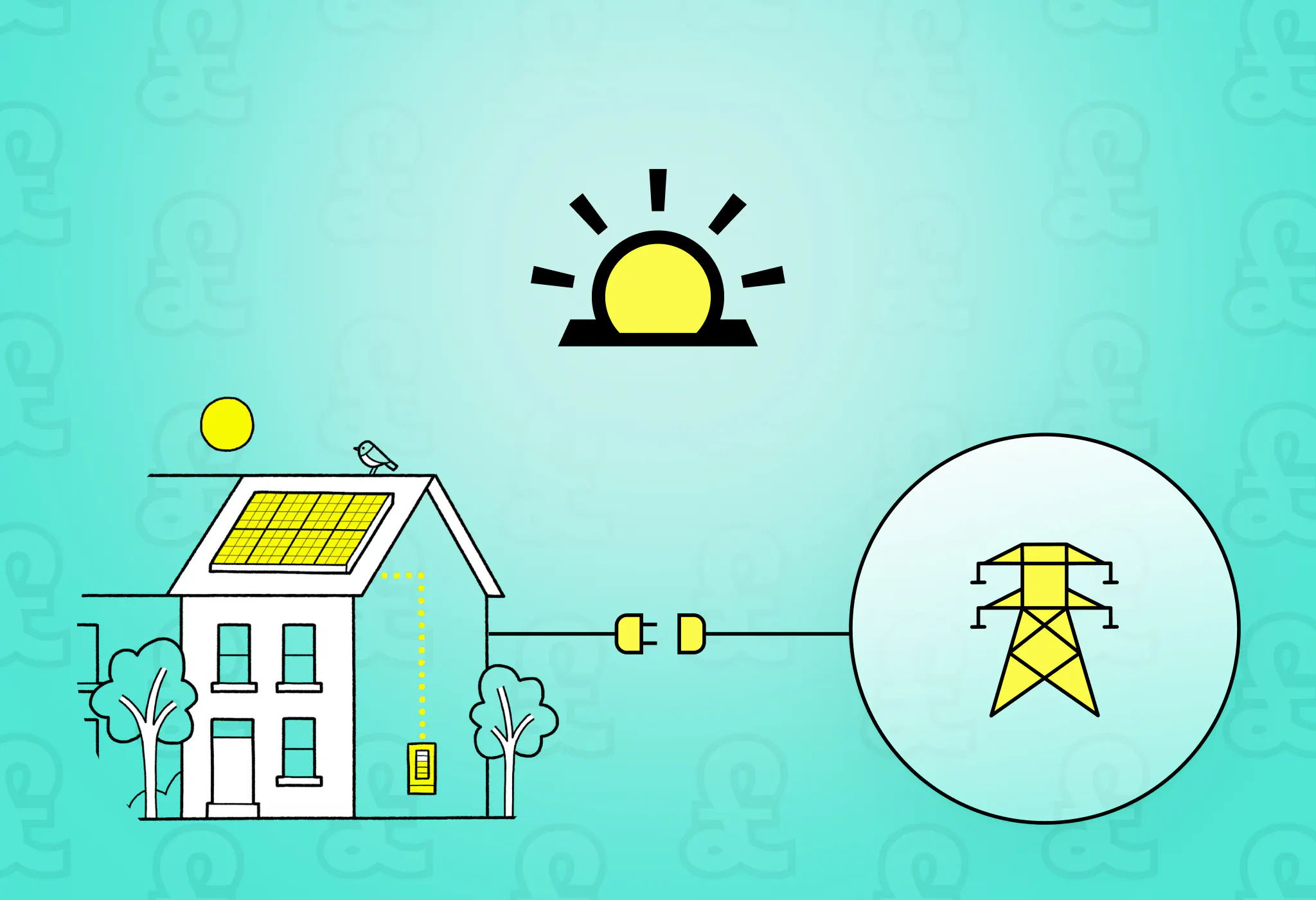
Solar & battery systems are a proven money-saver in the UK.
They reduce how much electricity you buy from the grid, and you can sell any excess via an export tariff.
But in recent years, things have become a little more complicated.
There are now also ‘time-of-use’ import tariffs which charge a cheaper rate overnight, allowing households to save significantly more — if they’re smart about things.
This means someone switching to solar needs to sign up for an export tariff and an import tariff in order to make the most of their system.
Finding the right combination of tariffs is well worth it
In our rundown of the best import/export tariff pairings, the difference between the top and bottom options is over £300 per year for a typical household.
However, there’s a dizzying range of tariffs to choose from, the signup processes can be confusing, and any delays ultimately lead to missed savings. In fact, this is one of the top sources of frustration when we survey our customers.
This means the route to maximum savings can be a little thorny if there’s nobody to help – which is where we come in.
At Sunsave, we look after our customers for the full 20 years of their subscription, which includes finding them the right tariffs and guiding them through the signup process.
Today’s tariff market is very complicated and changes often
Back in the 2010s, solar systems were much simpler.
The government paid you for all the energy you generated via the Feed-in Tariff (FiT), as well as all the excess you exported.
But the tariff market today is dramatically different.
The FiT is long gone, and the Smart Export Guarantee (SEG) has triggered a wide range of export tariffs from almost a dozen energy suppliers, each with their own unique rates, behaviours and requirements.
In fact, there were 50 different tariffs on the market between April 2024 and March 2025 , up from just 20 in the scheme’s first year.
Many tariff providers now reserve their most generous export rates for households who choose them as their energy supplier, meaning solar homes often need to switch providers to ensure they’re maximising their earnings.
These ‘tied’ tariffs have soared in popularity, and now make up 58% of the market.
There’s also a growing number of aforementioned time-of-use import tariffs with ‘peak’ and ‘off-peak’ windows, including ones that specifically cater to homes with electric vehicles or heat pumps.
According to Ofgem, the domestic uptake of smart time-of-use tariffs increased by 75% between April 2024 and April 2025.
The tariff market is also constantly changing. Providers regularly increase and decrease their rates, tweak their requirements, and launch new offerings.
We keep track of the market and tailor our recommendations
All these relentless changes are constantly affecting the ideal setup for a solar home, so we monitor the market’s every move.
When it comes to designing a system for a customer and putting together their proposal, the tariffs we choose have a big influence on estimated savings.
Several factors influence our recommendation for each customer, including the proportion of solar energy we expect them to export, and whether they have an EV or heat pump.

Getting on the right tariffs as soon as possible is important
Once we’ve installed a solar & battery system, speed is of the essence.
Every day that a customer isn’t signed up to the best tariffs, they’re missing out on savings.
And unfortunately we can’t ask our customers to sign up before installation day, because they need certain certificates that can only be obtained once a system is up and running.
This means being prepared is key.
We need each of our customers to be ready to start the tariff sign-up process the moment they get those certificates, so that they can hit the ground running.
Our tariff guides give customers a headstart
We’ve crafted detailed guides to all the best tariffs, designed to make the sign-up process as clear as possible for our customers.
These prompt the customer to get started on the steps that can happen pre-install, such as changing energy suppliers, getting a smart meter, and switching to a variable direct debit (which means they only pay for what they actually owe, and won’t have credit piling up in their account each month).
Each guide also prepares our customers for what they need to do once their system is live, and indicates how long it could take.
Once someone has requested to sign up for a specific tariff, it’s all in the hands of the provider - and some take longer than others.
We always make sure our customers are aware of this, to manage expectations.
After we’ve received all the necessary documents from the relevant third parties (which usually takes about two weeks after installation), we send them to the customer.
But this doesn’t come as a surprise to them, because they know exactly what these are and exactly what to do.
Our customers save more, sooner
By being proactive, we make sure our customers don’t waste any time once they’ve got their system.
We know that savings is the number one reason that people switch to solar in the UK, so we do everything we can to get them on the best possible tariffs as quickly as possible.
The tariff market is constantly evolving, but we’ll keep our ear to the ground and make sure our customers always have the most up-to-date recommendations.
And if a super new tariff emerges, we’ll be onto it!
Related reading

 Josh Jackman
 Josh Jackman
 Josh Jackman
 Josh Jackman
Written byAlfie Ireland
Alfie is the Director of Operations at Sunsave. With a background in green tech propositions and energy, his previous experience includes leading the world's largest domestic vehicle-to-grid trial.