"UK electricity will cost more in 2030 than after invasion of Ukraine, warns Centrica"
Financial Times, February 2026
Financial Times, February 2026

The Guardian, October 2025

Bloomberg, September 2026
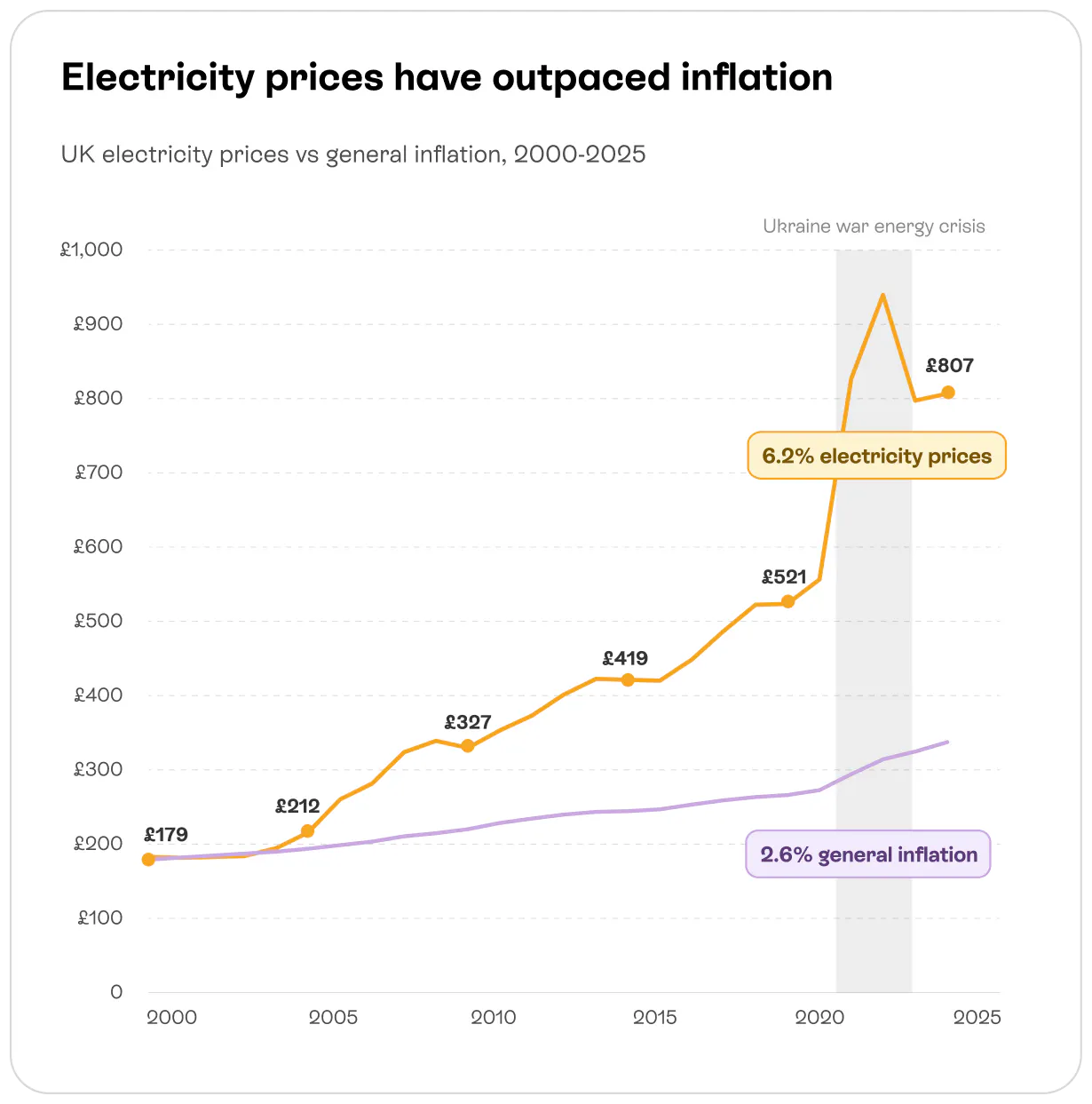

Electricity prices are rising faster than inflation. On average, prices increased by 6.2% a year between 2000 and 2025 – a 4.5x increase overall. Nobody can predict the future, but it's expected the trend will continue and bills will keep going up for reasons you can’t control.

The price cap is expected to rise by 16% in January 2027. It's set to reach £1,999 a year for a typical dual-fuel household – an increase of £276. And that’s on top of all the other increases we’ve seen recently. With wholesale energy costs being more volatile, growing demand, and the cost of keeping the grid going being passed on to bill-payers, this isn't a blip. It’s the norm.

The grid’s inefficiency increases bills. From January-October 2026, Britain has wasted just over £1.51 billion switching off wind turbines and paying gas plants to switch on. Because, although wind turbines generate enough electricity, the grid isn’t robust enough to move that energy to where it’s needed. And the cost of this waste lands straight back on household bills.
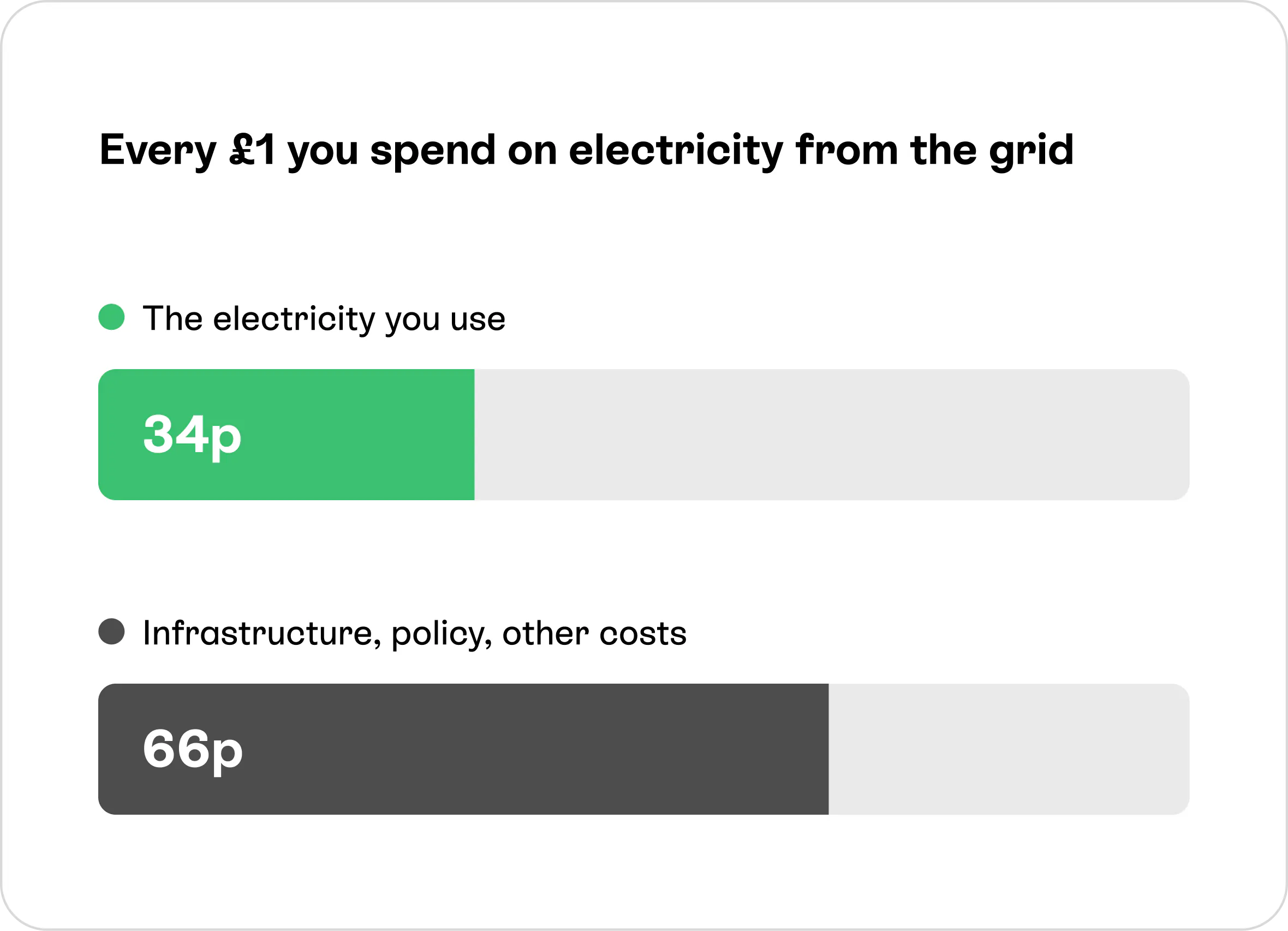

Less than 40% of your bill is made up of the electricity you use. For every £1 you spend on your bill, only 34p goes towards the electricity that powers your home. The other 66p covers a combination of things like infrastructure, government policies, keeping the grid going, and paying for its inefficiency.

There are ways to lower bills, but people are locked out. Home energy tech gives more control over bills, but its upfront costs are inaccessible. And for the people who can afford it, getting the most from it needs time, effort and expertise. Without that tech and support from experts on how to optimise it, you’re stuck paying whatever your tariff dictates – and your bills will just keep rising.

Home energy tech means people rely less on factors they can’t control. Solar panels, batteries and EV chargers let you generate your own power, store the cheapest energy, and use it exactly when you need it – so you’re less reliant and the grid. By being less reliant, you protect yourself from rising bills – and you open up new savings. (We remove the upfront costs that stop so many people getting access to this tech.)

Having the tech is just the start. To make it pay off, you need to make it work hard for you. The real value comes from having the right guidance to choose the right tariffs, make sure your battery charges on the cheapest electricity, and join networks (like our Virtual Power Plant) – which let you earn for helping the grid stay balanced.

Savings get better over time. As more of a home goes electric — heating, cooking, driving — the value the tech brings grows. It all adds on top of each other so you get more value over time, rather than it being as good as it’s going to get on day one.
If you want to own home energy tech, we can help you with solar & battery systems and battery-only systems – for £0 upfront. For a typical 4-bedroom home, Solar & Battery Plus can save £370 a year and Home Battery Plus can save £173.
You can see what your savings could be, and book a time to chat here.
If you’re not ready to own home energy tech yet, there are still a couple of things you can try. You can look into switching energy provider, avoiding price cap tariffs, and setting up a smart thermostat.
For example, by switching from a price cap tariff to a fixed one, you could save £88 a year. And Hive’s smart thermostat could save you up to £167 a year on your gas bill.

An all-in-one solar & battery package to generate, store and manage your home energy


An all-in-one battery package to store and manage your home energy
See what’s right for you
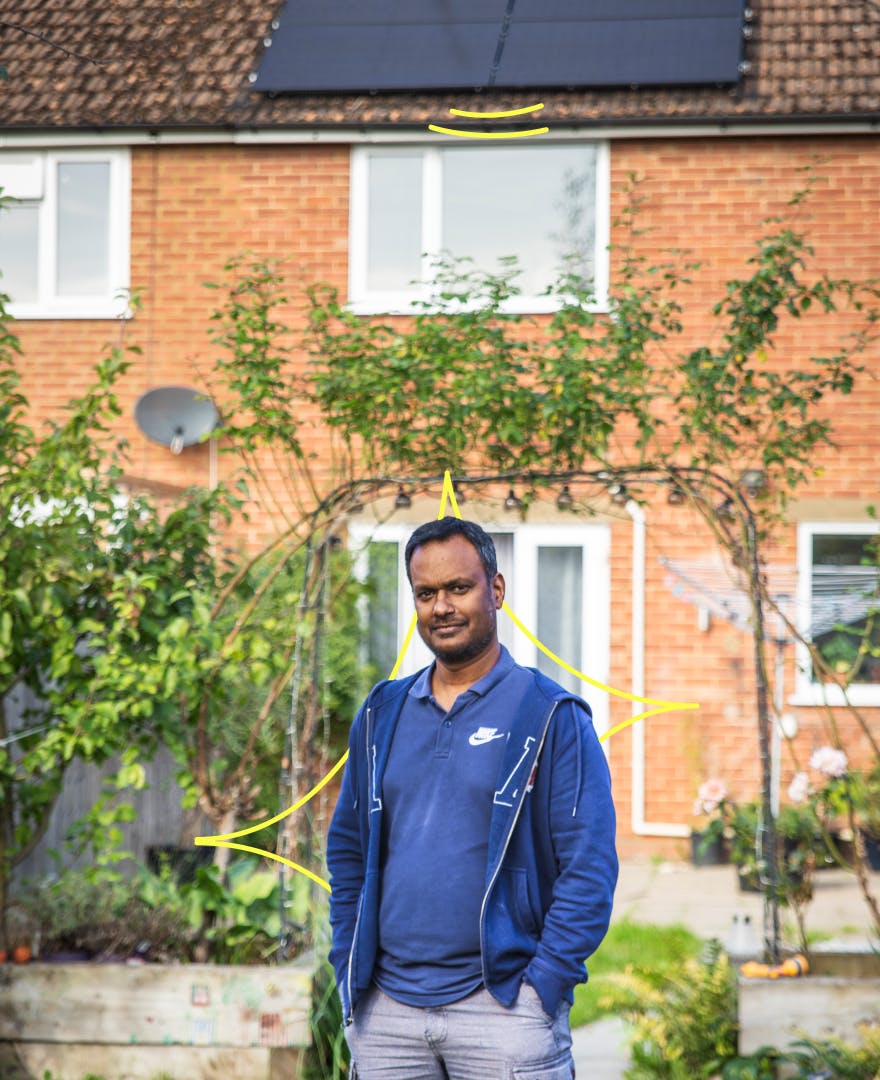
I did think about getting solar panels before, but because of the upfront cost, it just wasn't possible.
Tony
Bedfordshire, October 2026
Over this next year, I'll see hundreds of pounds worth of savings.
Riaz
Manchester, May 2026
That's why I chose Sunsave. I thought: this is real, proper data, rather than somebody pretty much guessing how much I'll save.
Michael
Crewe, July 2026
Without Solar & Battery Plus, we’d have had no chance of switching to solar.
Themis & Freya
London, January 2024
I know over the next 20 years, the system will be working as it should and any repairs or anything will be covered.
Samir
Sidcup, October 2024
We’re saving about £400 each year, which is great. My main goal through Solar & Battery Plus was to cancel out my current energy bill, but now the system is actually paying for itself.
Tim
Guildford, June 2024
The figures just added up. We were going to make a net saving every month ... it seemed like a no-brainer, really.
Jody
London, November 2024
I’ve already recommended Sunsave to a number of my neighbours who have expressed some interest. Sunsave have just been very, very good, and very helpful.
Richard
Hampshire, April 2024
I got my system three months ago. Since then I have already moved to Octopus and saved £400.
Ajith
Buckinghamshire, October 2023