Introducing Sunsave Home Battery and Sunsave Sona
We’ve launched Sunsave Home Battery and Sunsave Sona to help homes that can't go solar take control of their energy bills.


Calculate savings
What kind of home do you live in?


Calculate savings
What kind of home do you live in?
We’re on a mission to save every household meaningful money by putting power in their hands. And while we’ve helped thousands of homes go solar and save over £1.5 million on their bills, this technology isn’t right for every home.
Some people just don’t have the right roof for solar panels, for example due to lack of space, too much shade, or unsuitable tiles.
These homes need another way to protect themselves against rising energy costs, both now and in the coming years.
That’s why we've launched two new products: our all-in-one battery package Sunsave Home Battery, and Sunsave Sona, our smart algorithm, which works in the background every day to get you the best savings.
Charge up on cheap energy
In the past, home batteries were used as an add-on to solar panels – a way to store excess electricity for later use, rather than sending it to the grid.
In the late 2010s, they started to become an established sidekick, to the extent that 94% of new solar installations now include a battery.
But you no longer need to pair a battery with solar panels to make it worthwhile.
The technology now stands on its own thanks to falling hardware costs, virtual power plants, and a new generation of time-of-use tariffs.
These tariffs come with peak and off-peak periods that change the price of your electricity, depending on the time of day. They're like Economy 7 tariffs, but usually much cheaper.
You can charge your battery with off-peak electricity – generally at night – then use this cheap power during the peak period. This could cover the vast majority of your daily usage, potentially saving you hundreds of pounds per year.
In fact, we estimate that a typical household could save £809 each year with a home battery – or £173 after the cost of the battery. Homes with higher electricity usage can save even more.
So if your home isn't right for solar panels, you can still use home energy tech to save meaningful money on your bills. Click here to learn more about Sunsave Home Battery.
The households under the most pressure from rising bills have had the least access to the technology that lowers them. Going solar meant a suitable roof and thousands of pounds upfront, so the savings went to the people who needed them least. Sunsave Home Battery Plus needs neither.
Alick Dru
Co-founder and CEO of Sunsave

Start saving with no upfront cost
For many people though, the prospect of spending thousands of pounds on a battery is unappealing and unrealistic – so we've made it more accessible.
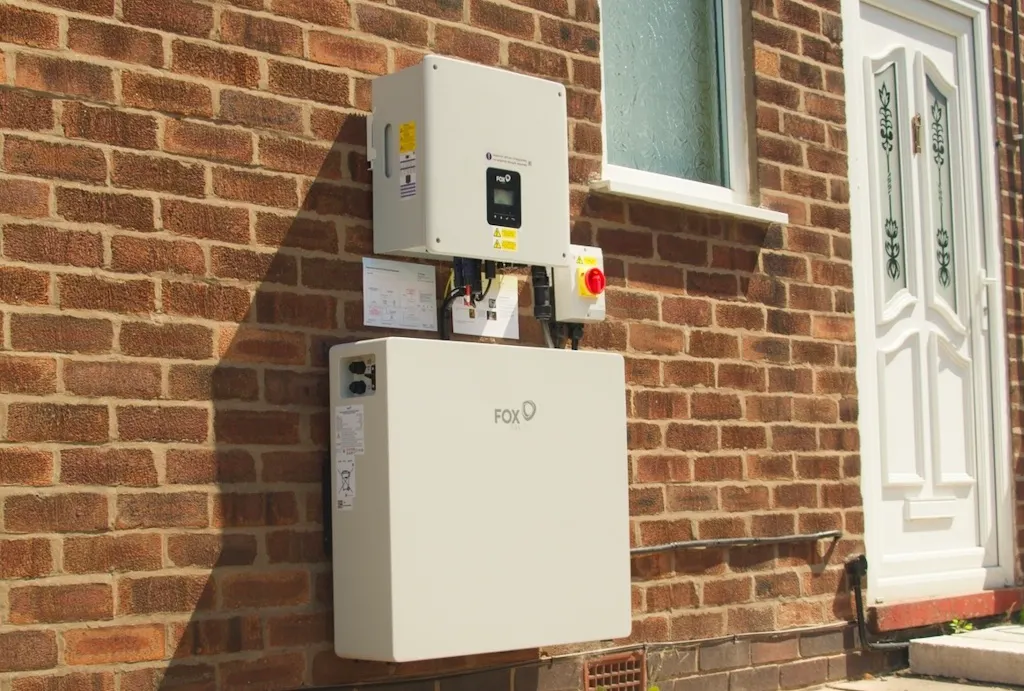
With Sunsave Home Battery Plus, you can get one with no upfront cost, so there's no need to spend a large chunk of your savings while waiting to break even.
Instead, you can make monthly payments for up to 10 years – and save more than you pay straight away.
This isn't a lease, so you'll own your system from day one, and you can pay it off (in full or in part) with no penalties – whenever you like.
And if you prefer to pay upfront, we also offer Home Battery Standard.
You’ll have long-term protection
However you choose to pay, you get a 10-year insurance-backed workmanship guarantee, and 10-year product warranties on both your battery and inverter.
Given a battery lasts around 10-12 years before it needs replacing, this means it’ll be protected for the vast majority of its expected lifespan.
Save more without lifting a finger
We’re also delighted to announce the launch of Sunsave Sona, our smart algorithm, which works in the background every day to get you the best possible savings.
Sunsave Sona uses intelligent scheduling to make sure your battery is buying the optimal amount of electricity at the lowest price available.
It also connects your battery to other Sunsave customers’ batteries, so they can work together to create a Virtual Power Plant (VPP).
To help balance supply and demand, the grid looks for extra capacity when it has extra electricity it needs to store. An individual household’s battery can’t give them much capacity, but a network of them can.
The grid borrows the extra capacity our VPP creates – and pays everyone involved for helping out.
We guarantee Sunsave Home Battery customers a minimum monthly payment of £15 for the first 12 months, so you'll receive at least £180 in your first year, on top of all your other savings.
And you may well earn more than that. We’ve been testing our VPP with customers since October 2025, and we’ve paid over the guaranteed minimum amount every month so far, with an average monthly payout of around £23.
Sunsave Sona is also available to our Solar & Battery Plus customers with compatible tariffs, and ensures that any exported electricity earns the highest price.
It's free to join Sunsave Sona, you can opt out at any time, and you can easily track your VPP earnings with the new Sunsave app.
Click here to learn more.
Is a home battery right for you?
If you already know your home isn’t right for solar panels, a home battery could be a great way to save on your bills instead.
But we know that working out which home energy tech is right for you can be complex, so we’re here to talk through your options. Just answer a few questions and book a free call.
In the meantime, take a look at how our customers Riaz and Damien are already saving with their home batteries.
Find out how much you can save
What kind of home do you live in?
Written byJosh Jackman
Josh has written about the rapid rise of home solar for the past seven years. His data-driven work has been featured in United Nations and World Health Organisation documents, as well as publications including The Eco Experts, Financial Times, The Independent, The Telegraph, The Times, and The Sun. Josh has also been interviewed as a renewables expert on BBC One’s Rip-Off Britain, ITV1’s Tonight show, and BBC Radio 4 and 5.