- Solar advice hub
- Installation
- Solar panels on east-facing and west-facing roofs
Solar panels on east-facing and west-facing roofs
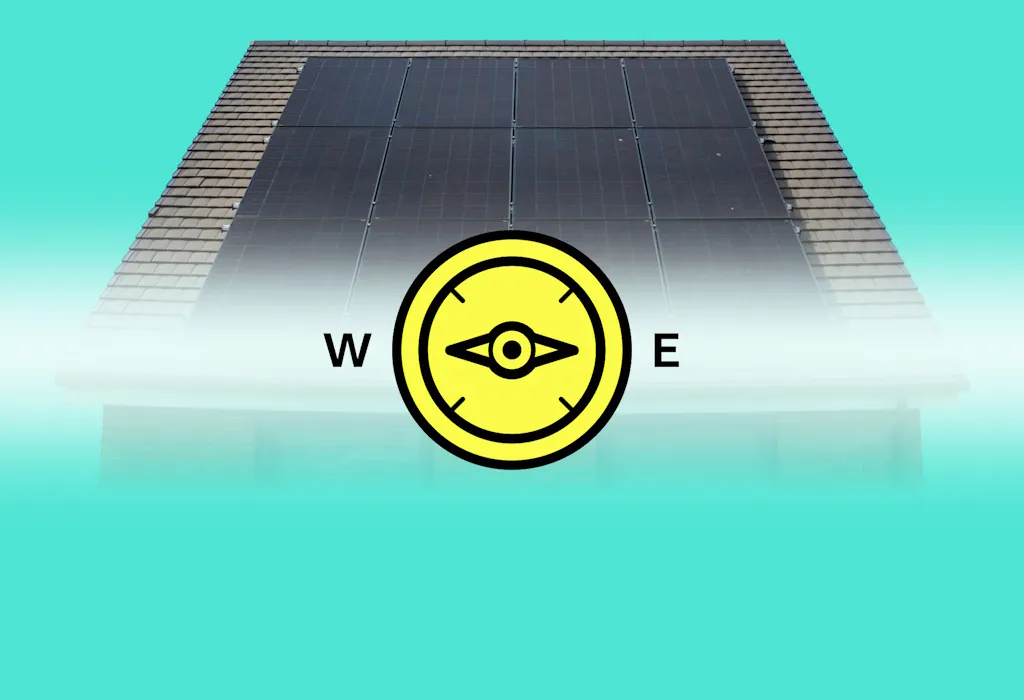
Solar panels work extremely well when they're facing east or west in the UK, thanks to technological advances. Here's everything else you need to know.


Why you can trust our content
We know that the solar industry is full of misinformation, but we only use reliable sources, including:
- Our experienced solar experts, installers and system designers
- Our own database of solar & battery system designs
- Authoritative bodies like MCS and the UK government



Calculate savings
What kind of home do you live in?


Calculate savings
What kind of home do you live in?
At a glance
For many years, households were told to get solar panels installed on a south-facing roof, or not at all. Fortunately, that’s no longer the case.
Solar panels now work extremely well on east-facing or west-facing roofs in the UK, so if that’s the only roof space you have, it’s definitely worth considering making the switch.
In this guide, we’ll go through the pros and cons of east- and west-facing systems, the rough level of output you can expect, and how an installer should design your system to make it as productive as possible.
To find out how much you could save with a solar & battery system, enter a few details below and we’ll provide an estimate.
Find out how much you can save
What kind of home do you live in?
Can you put solar panels on an east-facing roof?
Solar panels tend to work extremely well on an east-facing roof in the UK.
Your system could follow in the footsteps of east-facing wonders such as the Great Sphinx of Giza and Christ the Redeemer, which also greet the rising sun.
Solar installations used to only be suitable for south-facing roofs, but advances in solar panel technology over the past decade or so have made east-facing installations profitable.
As recently as 2018, blue polycrystalline solar panels were all the rage among UK homeowners. They were around 18%-21% efficient before they quickly fell out of circulation, dropping to 0% of global solar panel sales by 2021.
This was due to the rise of black monocrystalline solar panels. They’re now the premium choice for households, thanks to their sleek appearance, long lifespans, and 20%-25% efficiency.
Now that they’re more efficient, panels can generate even more electricity – which opens up new possibilities in terms of their positioning.
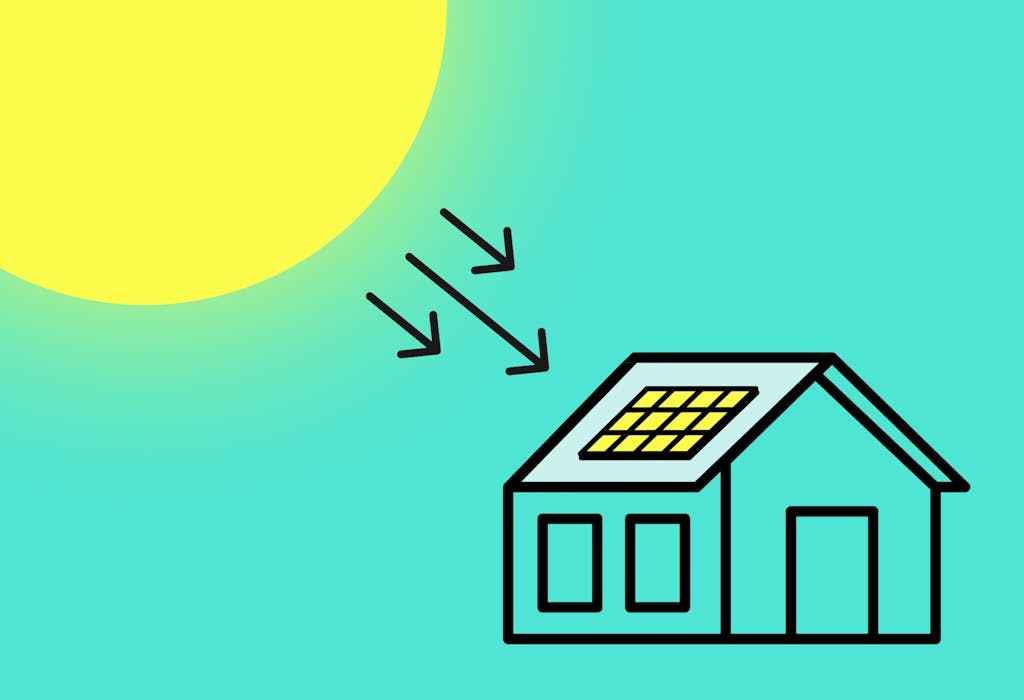
East-facing roofs are well suited to this new generation of panels, since in the UK, they receive direct sunlight from sunrise to solar noon, which occurs roughly between 12pm to 1pm.
An east-facing system will generate the bulk of its output at this time, making it good at powering the first peak of the day for most UK households, between 7am and 10am.
Whether you’re boiling the kettle, jumping into your electric shower, or playing some music to get the kids pumped up, an appropriately sized system can cover it all.
That said, the best-case scenario is still a large system on a south-facing roof, as this will produce more electricity than an east-facing array, even in the morning.
This is because the sun rises in the east, but it doesn’t stay there.
As it arcs across the sky, it moves steadily southwards – so by mid-morning in the UK, a south-facing panel is already receiving more direct sunlight than an east-facing one.
Can you put solar panels on a west-facing roof?
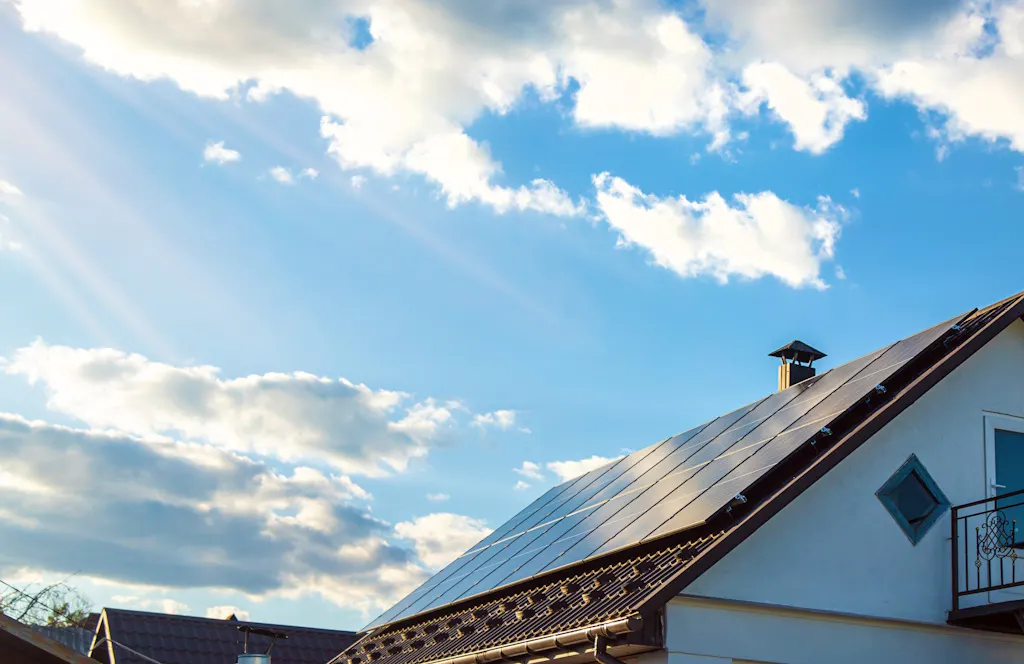
You can definitely install solar panels on a west-facing roof, for many of the same reasons that you should get an east-facing system.
Advancements in solar technology have created top-tier monocrystalline panels, which are fully capable of producing a substantial amount of electricity on a west-facing roof.
Your system can be like Cambodia’s stunning Angkor Wat temple, which also faces the setting sun.
Since they’re the opposite to east-facing panels, west-facing arrays produce most of their electricity in the afternoon and evening, from solar noon to sunset.
This is well-timed to cover much of the peak in electricity consumption that UK homes tend to experience from around 4pm to 7pm.
However, as the sun continues to arc southwards throughout the day, south-facing panels will still be in a better position to absorb more direct sunlight.
There is a brief window in the late afternoon and early evening when west-facing arrays produce almost as much electricity as south-facing systems, as the sun moves north-west to get to its setting position.
But by this point in the day, direct sunlight isn’t as intense, and since the sun is low in the sky, there’s more chance of buildings and trees blocking some of its light from reaching your panels.
South-west or south is therefore a better direction for panels to face – but again, this may not be an option for you unless you move home.
We’ve installed many east-west solar panel systems, so if you have an east-facing or west-facing roof, we’d be happy to take a look.
To find out how much you could save with a solar & battery system, enter a few details below and we’ll provide an estimate.
Find out how much you can save
What kind of home do you live in?
How much energy do east- or west-facing solar panels produce?
Solar panel system size (kWp) | Solar panel system direction ** | Annual electricity production (kWh) |
|---|---|---|
4.9 * | South | 4,513 |
4.9 | East | 3,619 |
4.9 | West | 3,693 |
4.9 | North | 2,576 |
As you can see, a south-facing system produces considerably more electricity per year than an array pointed in any other direction.
In total, south-facing panels are around 22% to 25% more productive than east-facing and west-facing arrays, and a massive 75% better than north-facing panels.
However, the average UK household uses 3,400kWh of electricity annually – and both the east- and west-facing 4.9kWp systems in this scenario generate more electricity than that.
Unfortunately, this doesn’t mean you can cover your entire usage with solar electricity. Your system will produce the majority of its output during summer, to the extent that you’ll have excess electricity you can sell to the grid via an export tariff.
And in winter, when your panels generate much less energy, you’ll need to supplement their output with grid electricity.
What is an east-west ‘split’ solar panel system?
An east-west ‘split’ solar panel system is an array that has some panels facing west, and some pointing east – rather than just one or the other.
It’s a standard technical term used in the industry for this extremely common setup, even though it could perhaps be more simply described as just an ‘east-west’ system.
Putting panels on both your east- and west-facing roofs allows you to get as many as possible, which leads to the best savings.
The recommended minimum number is usually six, but if you’re getting an average 4.9kWp system – and using 450-watt (W) panels – you’d need 11 to hit this mark.
This is too many panels for a lot of households to fit on one side of their roof, so the ideal solution is to spread them across two sides – especially if they face east and west.
If possible, your installer will usually suggest splitting the array evenly across both roofs. If they put more panels on one side than the other, it’ll likely be down to shading and available space.
An east-west system’s generation profile is relatively smooth, as east-facing panels do most of the work in the morning, then flawlessly hand over to their west-facing counterparts to perform the same role in the afternoon and evening.
This produces a flatter, longer daily output curve, rather than the sharp midday peak and short tail of a south-facing system.
How are east-west split systems designed?
Firstly, your installer won’t necessarily opt for a 50-50 split of panels across your two roofs.
They’ll base your system design on available roof space, how much shading there is on each surface, and when you tend to use more electricity.
If one slope is bigger or has less shading, or if your household electricity consumption is more concentrated in one part of the day, they may change the split accordingly.
In practice, your installer will maximise the space on both roofs, to achieve as large a system size as possible. After all, the more panels you get, the more money you should save.
Separating east from west
As east-west systems are made of panels that produce most of their electricity at different times of the day, a good installer will put each set on a different inverter string.
The vast majority of solar arrays are installed with string inverters, which usually come with up to three ‘strings’ – or Maximum Power Point Tracking (MPPT) inputs – that different groups of panels go on.
Panels on the same string will only ever generate as much electricity as the least productive one – so a shaded panel will bring down the output of every other panel on its string.
For this reason, installers will often put a group of panels that are routinely in shade on a different string from the rest of the system, to limit the reduction in generation.
The same applies here if you put the entire system on one string. The west-facing panels would bring down the east-facing array’s output in the morning, then the reverse would happen in the afternoon and evening.
To avoid this, every panel on a string should face the same direction – so any installer worth their salt will set you up with at least two strings: one for your east-facing panels, and one for your west-facing panels.
Is an east- or west-facing system worth it?
An east- or west-facing system is certainly worth it, as they can generate enough electricity to cut your electricity bills by hundreds of pounds per year.
And if you can get solar panels on both roofs, you could potentially save – and earn – even more money.
South-facing roofs used to be the only viable location for rooftop solar panels, but thanks to technological advances, east-west systems are more than suitable.
If you’re wondering how much you could save with a solar & battery system, enter a few details below and we’ll provide an estimate.
Find out how much you can save
What kind of home do you live in?
FAQs

Related articles

 Josh Jackman
 Josh Jackman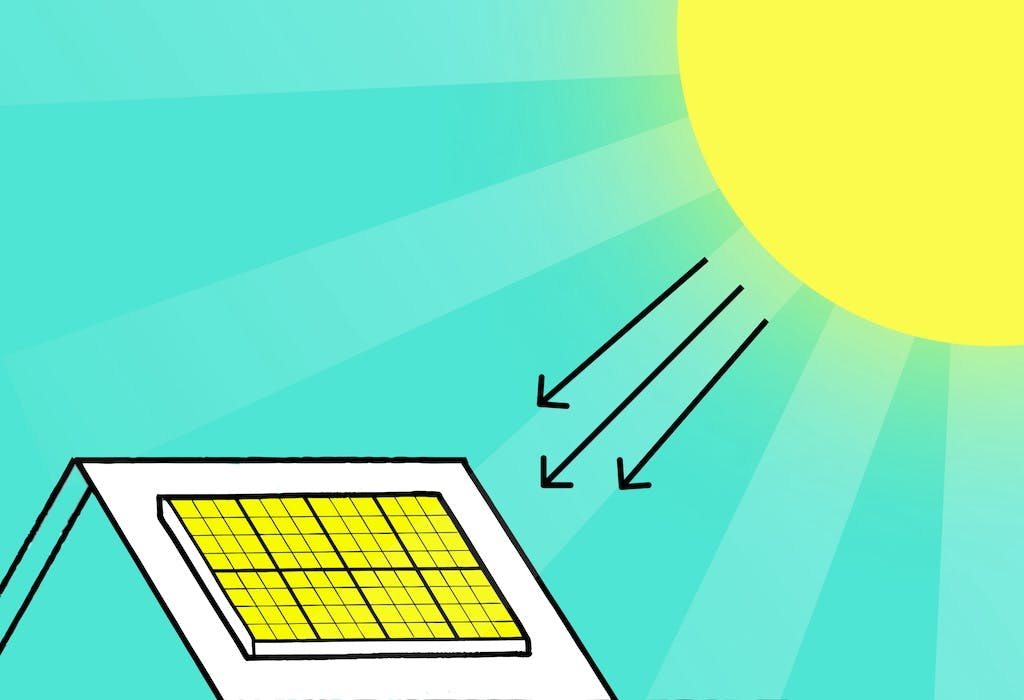
 Josh Jackman
Written byJosh Jackman
Josh has written about the rapid rise of home solar for the past seven years. His data-driven work has been featured in United Nations and World Health Organisation documents, as well as publications including The Eco Experts, Financial Times, The Independent, The Telegraph, The Times, and The Sun. Josh has also been interviewed as a renewables expert on BBC One’s Rip-Off Britain, ITV1’s Tonight show, and BBC Radio 4 and 5.