- Solar advice hub
- Solar-technology
- Can solar panels heat a house in the UK?
Can solar panels heat a house in the UK?
Solar panels can heat homes via a few different appliances. Here are their costs, how they work, and which one might suit you.


Why you can trust our content
We know that the solar industry is full of misinformation, but we only use reliable sources, including:
- Our experienced solar experts, installers and system designers
- Our own database of solar & battery system designs
- Authoritative bodies like MCS and the UK government



Calculate savings
What kind of home do you live in?


Calculate savings
What kind of home do you live in?
At a glance
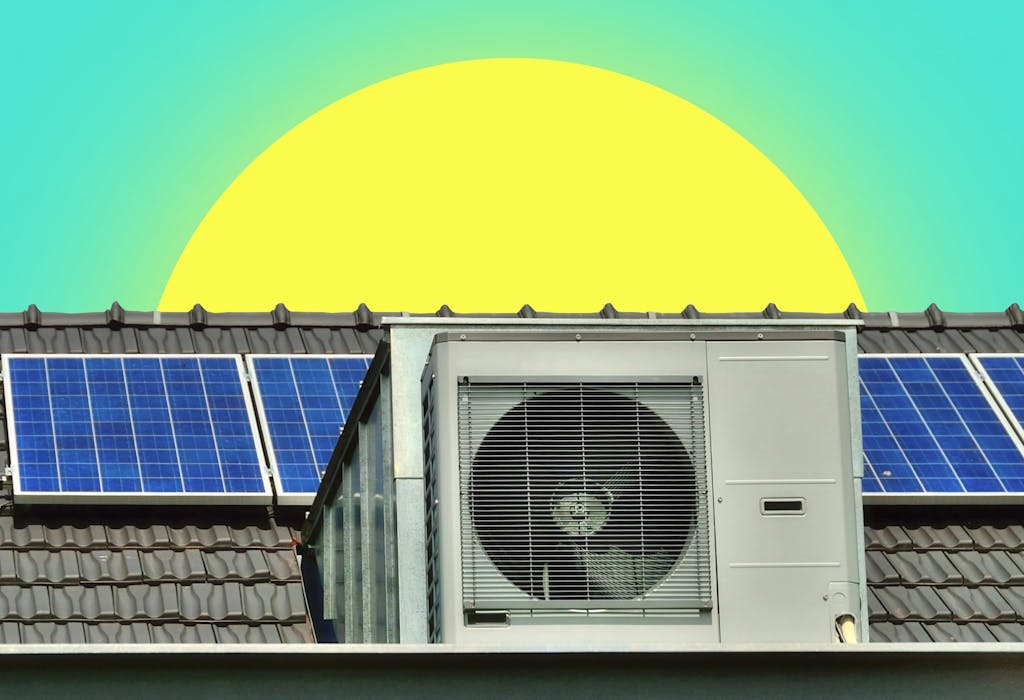
Solar panels can massively reduce your electricity bills, and what's more, they can also help power your heating.
When used alongside appliances like a heat pump or electric boiler, solar panels could save you hundreds of pounds per year on your energy bills. There are also solar thermal panels, although these aren't usually as beneficial as solar PV (as we'll go on to explain).
We’ll run through all the main ways in which you can use solar panels to heat a house, how much they'll cost and save you, and which methods make sense for different situations.
To find out how much a solar & battery system could save you in the long run, answer a few quick questions below and we'll provide an estimate.
Find out how much you can save
What kind of home do you live in?
Is it possible to heat your house with solar panels?
It is possible to heat your home with solar panels, either directly with solar thermal panels, or indirectly by powering a heating system that uses electricity.
And by combining solar panels with appliances like a heat pump or electric boiler, you can make even bigger savings on your energy bills.
You’ll probably still need to get some electricity from the grid in winter to power your heating, as solar output drops and your need for heating rises, but the potential savings would be substantial nevertheless.
Here are the main ways you can heat your house alongside solar panels, which we’ll go into more detail about below:
- Solar thermal panels
- A heat pump
- An electric boiler
- Infrared panels
- Electric space heaters
- A diverter
The average cost of heating a three-bedroom house with solar panels
1. Solar thermal panels
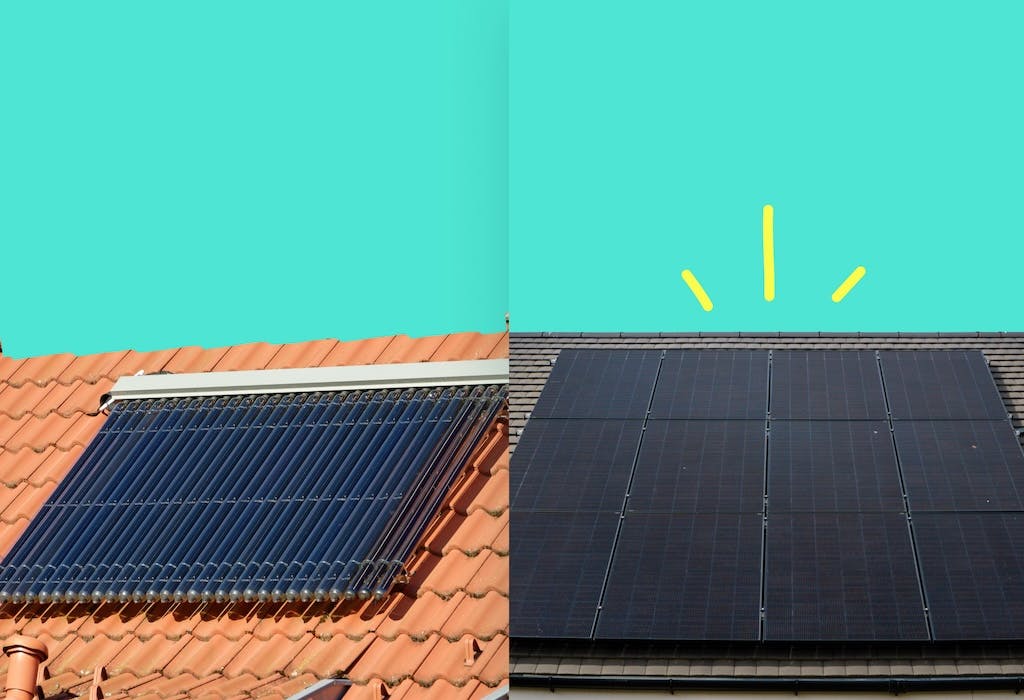
Solar thermal panels are fixed to your roof to provide your household with hot water, and typically cost around £5,300 for a three-bedroom household to buy and install, according to the Energy Saving Trust (EST).
They absorb the infrared part of sunlight, turn it into heat, and use that to raise the temperature of the liquid in the panels, which is generally a mix of water and glycol.
The panels send this warmed-up fluid through the pipes and your hot water cylinder, heating up the cold water you get from the mains as it goes.
If you have a conventional or system boiler – or an immersion heater – then solar thermal panels can typically cut your heating bills by roughly 50%, by using free solar energy to supply half of your hot water.
Only around 43,000 households in the UK have had solar thermal panels installed, and their popularity has declined further in recent years. Across the whole of 2024 and 2025, just 238 homes got a system.
Compare those figures to the more than 1.7 million UK homes that have had solar panels installed. This is perhaps down to the fact that on average, you could save 94% on your electricity bills with a solar & battery system.
This is based on projected first-year savings from a sample of over 600 systems installed by Sunsave across the UK in 2025. The average system is 5 kilowatts-peak (kWp), with 44% of solar electricity used at home and 56% exported to the grid.
Solar thermal systems also tend to come with a 10-year warranty, compared to solar panels, which come with an average 18.8-year product warranty, and typically a 25- or 30-year performance warranty.
For more information, read our guide to solar thermal vs solar panels.

Pros and cons of solar thermal panels
Pros | Cons |
|---|---|
They'll cut your hot water bills in half, roughly | You'll only save £90 per year when used alongside a gas boiler* |
They can last up to 30 years | They cost about £5,300 |
They’re low-maintenance | Combi boilers aren’t automatically compatible |
They save more than a tonne of CO2 per year** | You’ll still need a boiler or immersion heater |
2. Solar panels with a heat pump
A heat pump draws warmth from the air, ground, or water and uses it to supply hot water to your home’s radiators, showers, and taps.
Air, ground, and water source heat pumps are all around three to four times more efficient than boilers, and they all run on electricity, which solar panels supply.
There's no such thing as a ‘solar heat pump’ – heat pumps are just another appliance for your panels to power.
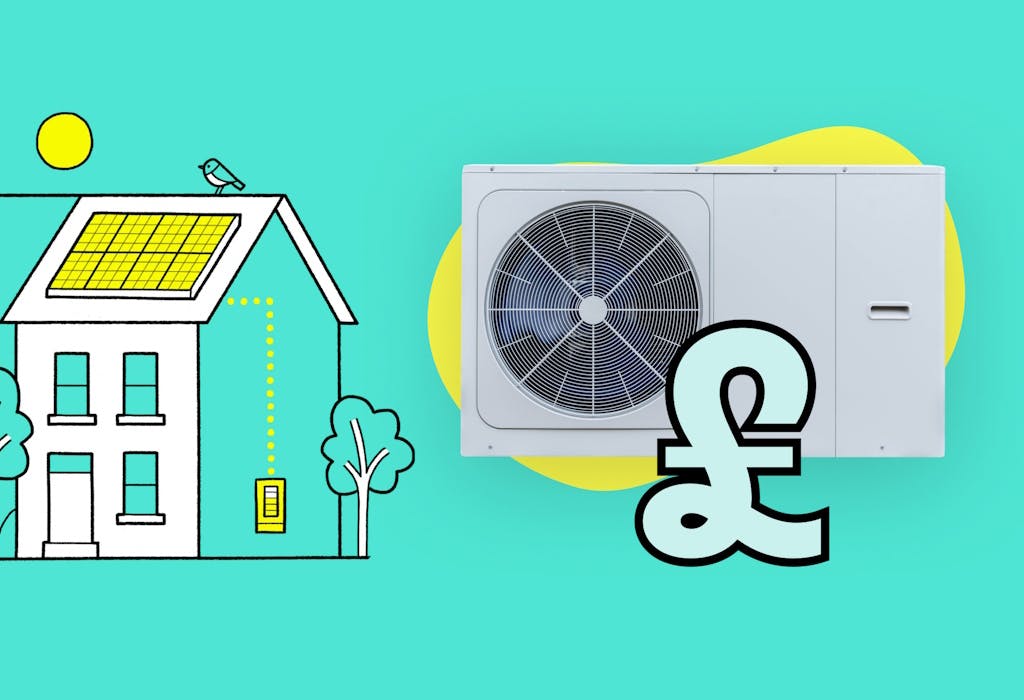
A three-bedroom household will typically pay £12,000 for an air or water source heat pump, and at least £15,000 for a ground source heat pump. It can cost significantly more, depending on the nature of the installation.
A 4.9kWp solar panel system costs around £8,000 for the average UK home, so if you choose to get an air source heat pump too, you'll pay around £20,000 overall.
Fortunately, the government’s Boiler Upgrade Scheme can reduce the cost of a heat pump by £7,500, which would cut your outlay down to £12,500.
Heat pumps are becoming increasingly popular in the UK, with more than 350,000 now installed – plus more than half of those have been fitted since December 2022.
This has led energy suppliers to introduce heat pump tariffs, which come with off-peak periods that allow you to heat and power your home for less.
Combine this with solar panels and one of the best export tariffs around, and you could save you more than £1,000 per year.
To learn more, read our guide to running a heat pump with solar panels.
Pros and cons of solar panels with a heat pump
Pros | Cons |
|---|---|
The Boiler Upgrade Scheme reduces the price tag by £7,500 | The upfront cost is still around £12,500 |
With the right tariffs, you could save more than £1,000 per year* | Heat pumps are less efficient during winter |
Heat pumps can be installed in all property types** | You’ll still need lots of grid electricity |
3. Solar panels with an electric boiler
Electric boilers cost around £3,000 to £4,200 for a three-bedroom house. Add a solar panel system for around £8,000, and you'll be spending about £11,600 overall.
They work exactly like gas boilers, except they’re powered by electricity. However, they're only slightly more efficient, meaning you’d need a lot of electricity to power your heating – and electricity is much more expensive than gas.
Solar panels can lessen that burden by providing you with your own supply of electricity.
Even a large solar panel system probably wouldn’t be able to completely power your electric boiler, due to seasonal variations in sunlight and the fact that solar panels don’t generate electricity at night.
Depending on your setup, you might never break even – though you wouldn’t break even with a gas boiler either.
Pros and cons of solar panels with an electric boiler
Pros | Cons |
|---|---|
An electric boiler can go anywhere in your home, as there’s no flue | You may never break even |
You don’t always need a hot water tank | They’re only a bit more efficient than gas boilers* |
They’re usually unsuitable for large homes | |
The standard warranty is only two to five years |
If you’re interested in how much you could save with a solar & battery system, just answer a few quick questions below and we'll generate an estimate for you.
Find out how much you can save
What kind of home do you live in?
4. Solar panels with infrared panels
Solar panels can also heat your home by supplying electricity to infrared panels, which heat you directly instead of the air around you.
These large, ingenious panels can be fixed to your ceilings or walls, where they emit infrared radiation that travels through your room until it comes into contact with an object or person.
When it hits you, it’ll sink about an inch below your skin, warming you up in the same way the sun does – which is completely safe, even if it sounds unnerving.
It typically costs around £400 to get one infrared panel installed, so enough panels for a three-bedroom house will come to about £3,200.
This rises to roughly £11,200 when you add a solar panel system.
It's sometimes possible to save money by installing infrared wall panels yourself, though not always.
With an efficiency of 100%, infrared panels need less energy than gas and electric boilers, plus it’s simple to turn off panels when you leave a room.
All of this should result in lower heating bills – but they can’t provide you with hot water.

Pros and cons of solar panels with infrared panels
Pros | Cons |
|---|---|
You may be able to set up some yourself | They don’t supply hot water |
They’re more efficient than boilers | They’re more expensive than a gas combi boiler* |
They heat humans and objects, not air | Obstructions reduce their effectiveness |
You can turn them off when you leave a room |
5. Solar panels with electric space heaters
Electric space heaters take electricity and turn it into warmth, either by using a heating element or infrared technology.
As well as the popular fan heater, this category also includes ceramic, infrared, and oil-filled heaters, all of which can be purchased for around £100, according to our research.
You can use these machines to quickly warm up an area, but you shouldn’t rely on them to heat your whole house.
Doing so in a three-bedroom household would cost at least £1,200, it wouldn’t supply you with hot water, and realistically it wouldn’t keep you warm unless you barely move around.
They’re best used as a relatively cheap, quick fix for cold spots, especially as they’re usually relatively energy inefficient. Solar panels can help soften this blow, but they can also power more efficient, whole-house solutions.
You'll typically pay around £8,000 for a solar panel system, so your overall cost would be £9,200 for a heating method that’s less than ideal.
Pros and cons of solar panels with electric space heaters
Pros | Cons |
|---|---|
It’s a cheap, quick fix for a cold spot | You can’t effectively heat a whole house |
The heaters are portable | It’s energy inefficient |
It doesn’t supply hot water |
6. Solar panels with a diverter
A solar power diverter allows you to send the excess solar electricity your panels generate to power certain appliances in your home, instead of being automatically funnelled off to the grid.
You can use this extra electricity to partly power your immersion heater, which helps keep your hot water tank at the right temperature – thus cutting your heating costs.
A diverter usually costs around £500 for a three-bedroom household, including around £100 in installation costs. A solar panel system costs £8,000 for the average home, so you’ll typically pay around £8,500 overall.
This involves fitting a small box near your hot water tank, wiring it in, and installing two clamps – one on the solar panels’ AC cable, and one on your mains import cable.
The diverter will then track your home’s electricity consumption and the solar panels’ production levels, and redirect any excess solar electricity to the immersion heater.
With an electric heating system, this can save you around £100-£200 per year, according to our calculations.
However, if you use gas, you’re better off sending your solar energy to the grid with one of the best solar export tariffs instead, as you can make at least twice as much money that way.
And even if you do have an electric heating system, it's usually a better financial decision to get a solar battery instead of a diverter.
Pros and cons of solar panels with a diverter
Pros | Cons |
|---|---|
You can use more of your solar electricity | It only makes financial sense if added to an electric heating system |
At around £500, a diverter is relatively cheap | Batteries perform the same role, but can supply electricity to any device |
Diverters don't give you access to profitable time-of-use tariffs, unlike batteries |
Summary
As you can see, there are several ways you can use solar panels to heat a house.
That means you can use this source of electricity for more than keeping the lights on – you can use it to provide warmth and comfort, too.
The only issue with using solar panels to heat your home is most of their output happens during summer, when properties generally don’t need much heating.
To help combat this fact, you can add a solar battery, which allows you to make hay while the sun shines, and save the excess for a rainy day – or nighttime.
If you’re wondering how much a solar & battery system could save you, just answer a few quick questions below and we'll provide an estimate for you.
Find out how much you can save
What kind of home do you live in?
FAQs



Related articles
 Josh Jackman
 Josh Jackman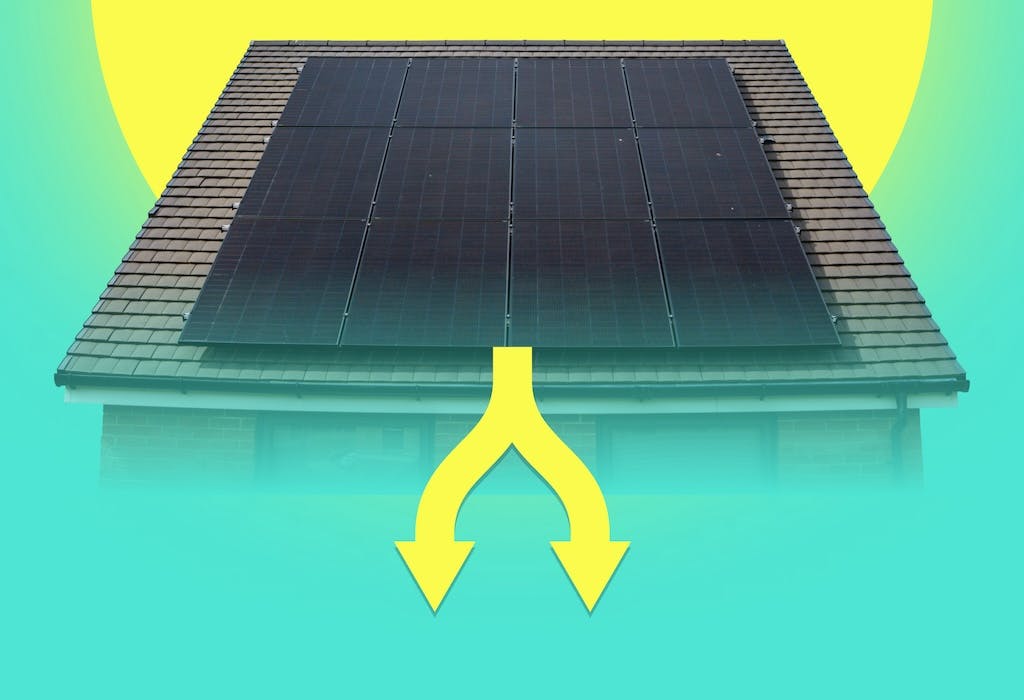
 Melody Abeni
 Josh Jackman
Written byJosh Jackman
Josh has written about the rapid rise of home solar for the past seven years. His data-driven work has been featured in United Nations and World Health Organisation documents, as well as publications including The Eco Experts, Financial Times, The Independent, The Telegraph, The Times, and The Sun. Josh has also been interviewed as a renewables expert on BBC One’s Rip-Off Britain, ITV1’s Tonight show, and BBC Radio 4 and 5.